
How much does roof and gutter cleaning cost in the UK?
Last updated October 28, 2026
Get a realistic sense of what roof and gutter cleaning costs in the UK, from routine gutter clearing to moss removal and full roof cleans. Learn what can raise the price and what should be included in your quote.
How much does roof and gutter cleaning cost in the UK?
Last updated October 28, 2026
Get a realistic sense of what roof and gutter cleaning costs in the UK, from routine gutter clearing to moss removal and full roof cleans. Learn what can raise the price and what should be included in your quote.
Written by

Gutter cleaning in the UK typically costs £75 to £350, while a full roof clean is around £550 on average.
For an everyday gutter-cleaning job, Bark’s nationwide average is £85. Prices can still move quite a bit depending on the property, especially when access is difficult or there is a heavy build-up of moss and debris.
That is also why roof and gutter cleaning are not usually priced in the same way. Gutters are often charged by length, while roof cleaners tend to quote for the whole job based on the size, condition and access involved.
With more than 1,400 roofing and guttering professionals available across the UK, you can find roofing & guttering experts on Bark and see what the work is likely to cost for your own property.
How much does gutter cleaning cost in the UK?
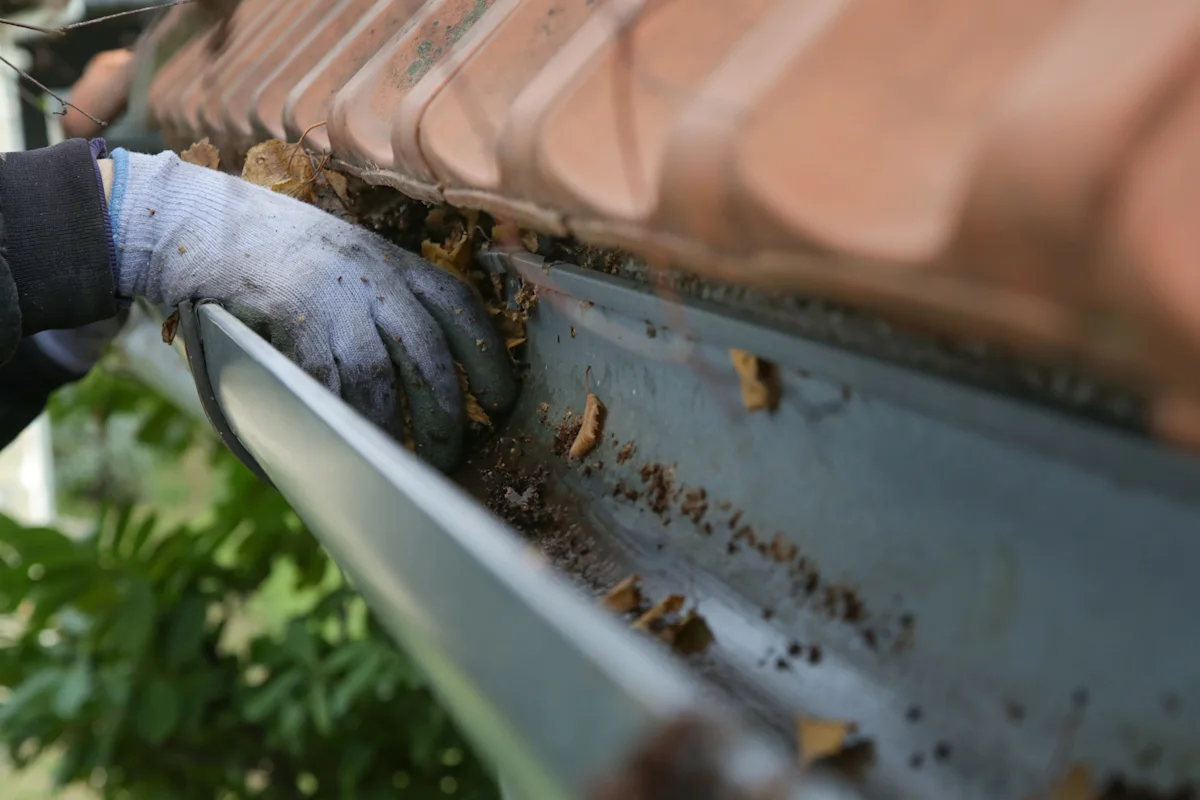
A full gutter clean covering the front and rear of a property typically costs £75 to £350.
Homes with easy-to-reach gutters and light debris usually sit towards the lower end. Taller properties, heavy blockages and difficult access can push the price higher.
Bark's average of £85 reflects the cost of many ordinary residential gutter-cleaning jobs.
Gutter cleaning cost by property type (2026, GBP)
Property or job | Typical cost |
Small, straightforward property | £75–£100 |
Typical semi-detached or terraced house | £80–£150 |
Larger detached property | £100–£200 |
Three-storey or difficult-access home | £150–£350 |
Heavy blockage or years of neglect | £150–£350 |
Access can influence the quote as much as property size.
A three-storey terrace with difficult access can cost more than a larger detached house that is easy to reach.
How much does gutter cleaning cost per metre?
Gutter cleaning usually costs around £5 to £9 per metre when access is easy and the build-up is light.
If the gutters are heavily blocked, the price can rise to about £10 per metre.
Many cleaners also charge a minimum call-out fee of around £40 to £50. So even a short section of guttering may cost close to the price of a larger job.
Gutter cleaning cost by length (2026, GBP)
Length of guttering | Approximate cost |
10 metres | £50–£90 |
15 metres | £75–£135 |
20 metres | £100–£180 |
30 metres | £150–£270 |
For a property with around 20 metres of guttering, the typical range works out to a midpoint of about £140.
That price assumes the gutters are easy to reach from the ground or with a standard ladder. If access is more difficult, the cleaner may quote for the whole job instead of charging by the metre.
What is the average cost of gutter cleaning in my area?
For a typical terrace or semi-detached home, gutter cleaning usually costs around £80 to £150, with a midpoint of about £115.
Where you live can shift that price. Labour tends to cost more in some parts of the UK, while easy access and lighter build-up can keep the job closer to the lower end.
The best way to judge what is fair in your area is to look at a few local quotes for the same type of property and the same amount of work.
How much does roof cleaning cost in the UK?
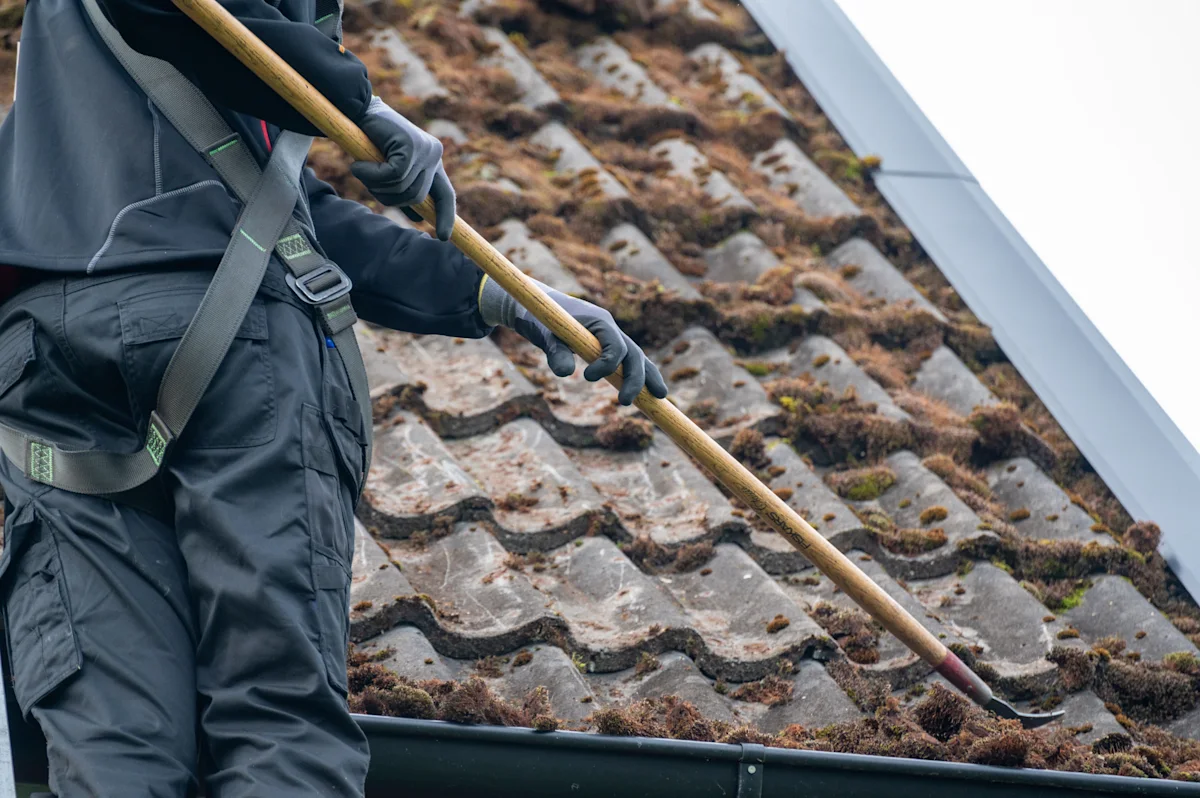
A full roof clean averages around £550 across Bark's UK network.
For a tiled roof that’s manageable with respect to access and moss build-up, you can budget around £400 to £600.
Large detached roofs, extensive moss growth or specialist access can push the cost towards £700 to £1,000 or more.
Roof cleaning cost by property size (2026, GBP)
Property | Practical budget |
Small terrace or bungalow | £300–£500 |
Typical semi-detached home | £400–£650 |
Typical detached home | £550–£800 |
Large detached or complex roof | £700–£1,000+ |
Roof cleaning is usually priced as a complete job, so a per-metre figure is less useful here.
Pitch, roof area, access and surface condition can differ considerably between properties that look similar from the street.
Treat these figures as practical planning ranges around the average rather than fixed tariffs.
How much does roof moss removal cost?
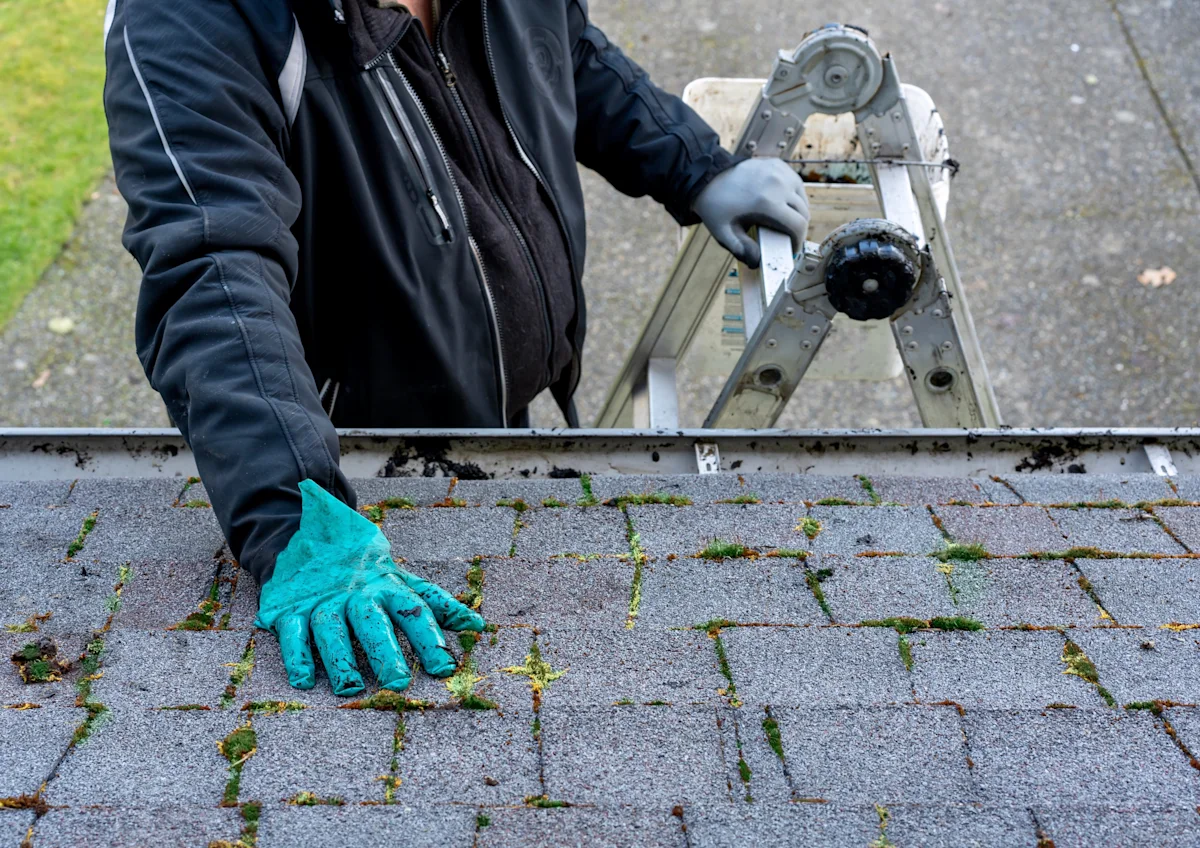
Roof moss removal typically costs around £400 to £800 for an average residential roof.
The price can rise when moss covers several slopes, has become deeply established or needs careful hand removal.
Not every patch of moss requires a full roof treatment.
The National Federation of Roofing Contractors advises that moss becomes more concerning when it affects gutters, outlets or drainage.
What can increase moss removal costs?
Heavy moss takes longer to remove, especially when it has spread across several parts of the roof. Steep roofs and difficult access can also add to the cost.
Your quote may rise further if the job includes gutter clearing, biocide treatment or extra clean-up afterwards.
Before you book, make sure the quote shows exactly what the cleaner will treat and whether the price covers part of the roof or the whole surface.
How much does it cost to clean the roof and gutters together?
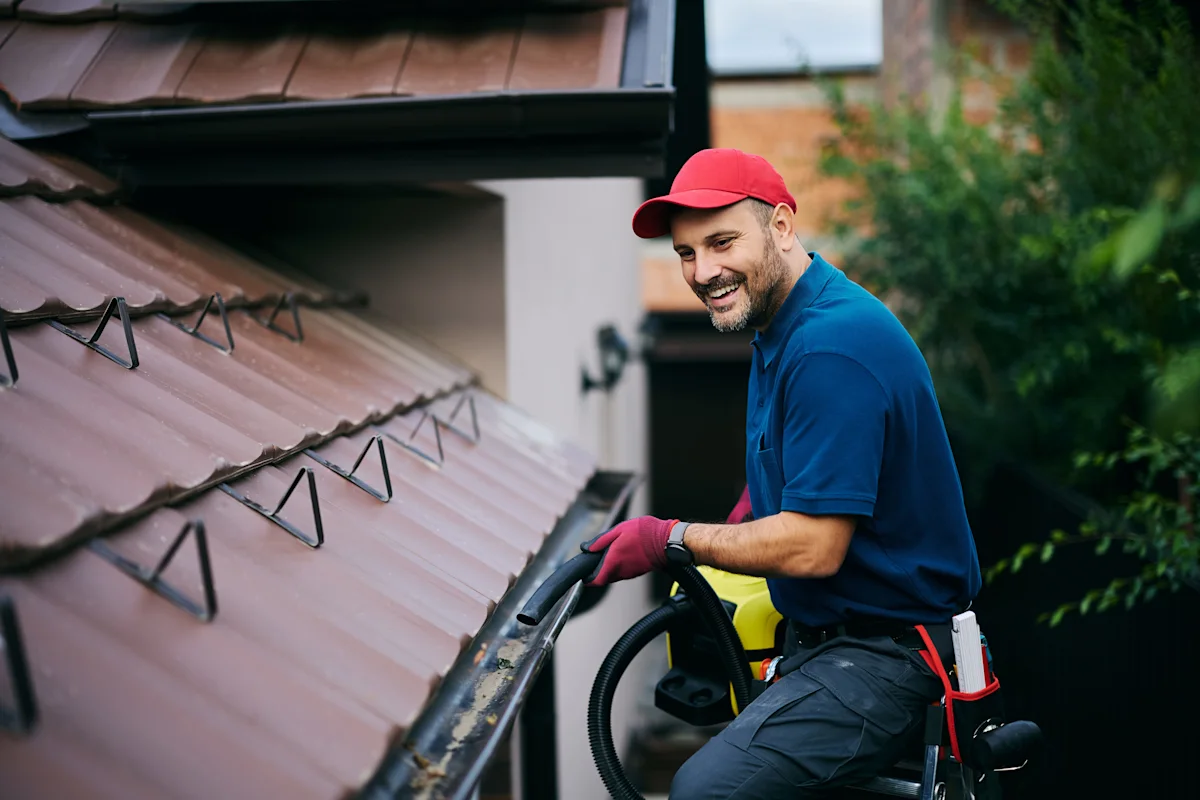
A combined clean usually costs around £500 to £900 for a typical property.
The final price depends on the size of the roof, the length of the guttering, access and how much moss or debris needs removing.
When can a combined clean make sense?
A combined quote can make sense when both areas require immediate attention - the gutters are already filled with moss, the roof is overdue for cleaning.
In such cases, the roof is usually cleaned first, then the gutters are cleared so any loosened debris is removed before the job is finished.
If you are in this situation, you can talk to experts who provide both roof and gutter cleaning services and see what the full job could cost for your property.
Will a roofer clean gutters?
Many roofers will clean gutters when it inevitably becomes part of a wider roofing job. A dedicated gutter cleaner can be a better fit for a strictly gutter-only visit.
When can a roofer-only make more sense?
A roofer may be useful when you also need to inspect damaged tiles, flashing or other roof components.
The same applies when moss removal forms part of a wider maintenance job involving the roofline.
You can connect with roofers on Bark if the job involves more than just routine cleaning.
What affects roof and gutter cleaning prices?
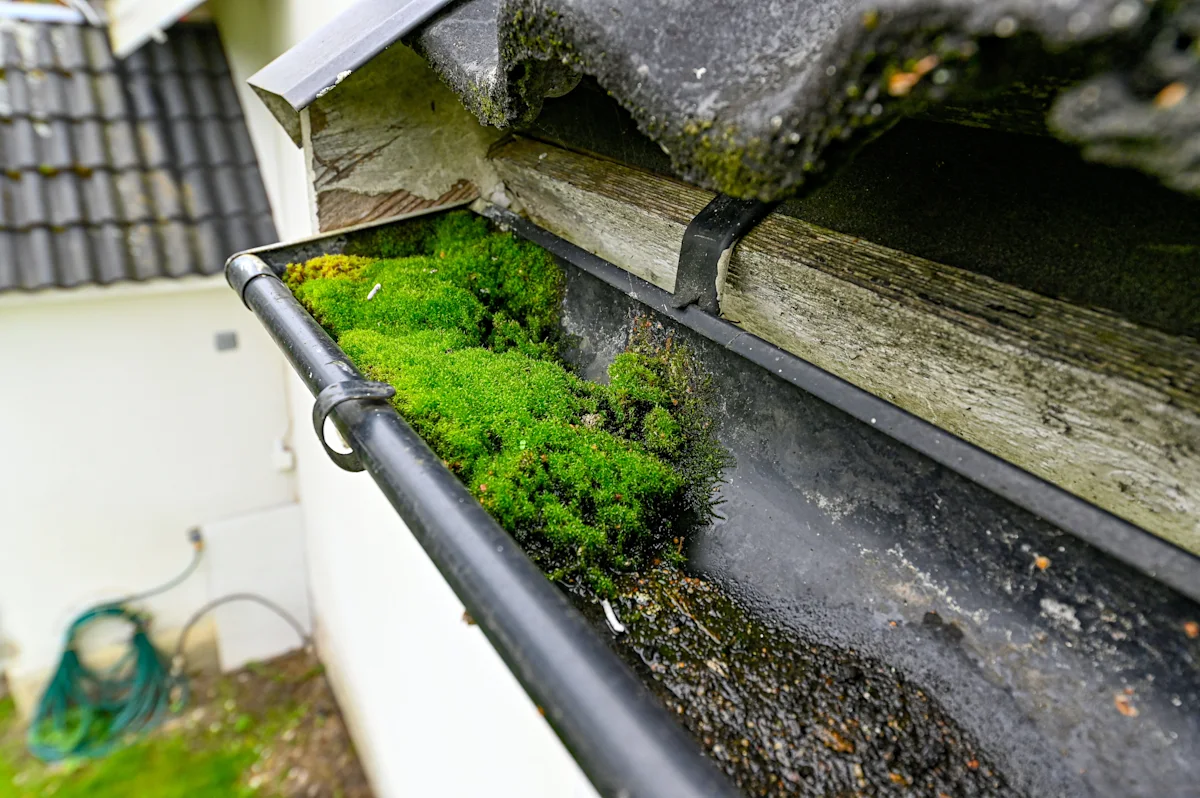
The biggest price differences usually come down to how long the job will take, how difficult the property is to work on and whether extra equipment is needed.
Property size
Larger homes usually cost more because there is more roof area and guttering to cover.
A bigger property can mean more labour, more debris to remove and a longer visit overall.
Roof height and pitch
Height and pitch affect both time and safety.
A steep or three-storey roof can cost more than a low, easy-to-reach one because the cleaner may need extra equipment and more time to work safely.
Moss and debris levels
Light leaves and loose debris are quicker to clear.
Thick moss, compacted silt or years of build-up take longer to remove, so the labour cost can rise.
Access
Easy access usually keeps costs down.
Conservatories, extensions, narrow passages or sloping ground can make the job harder to reach and may add equipment or labour charges.
Location
Labour rates vary across the UK, so the same job can cost more in one area than another.
That is why local quotes often give you a better idea of what you are likely to pay than a national average alone.
Extra repairs
Cleaning can reveal cracked tiles, leaking joints or damaged guttering that were hidden before.
Those repairs are usually charged separately, so they can increase the final bill beyond the original cleaning price.
For roof damage, a roof repair specialist is the right person to talk to before agreeing to extra work.
Is pressure washing a roof a good idea?
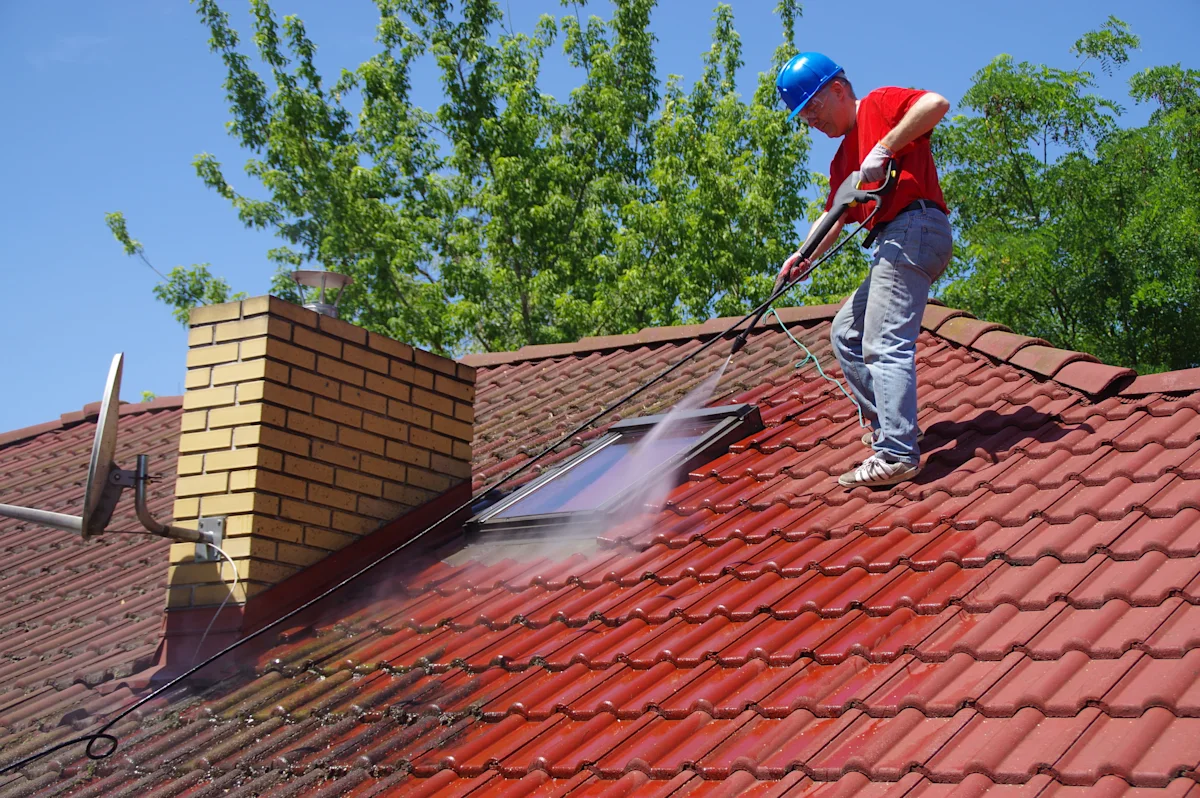
While pressure washing a roof itself is not a bad idea, it’s not suitable for every roof.
The right approach depends on the roof covering, its condition and the type of growth being removed.
The NFRC's roof-cleaning guidance warns that aggressive moss removal and power washing can damage some roofing materials.
It also highlights the risk of damage from unnecessary foot traffic on tiles.
What matters when choosing a cleaning method?
The contractor should be able to explain why their cleaning method suits your particular roof.
The method may involve manual moss removal, gentle cleaning or another treatment depending on the material and condition.
It should also be clear whether anyone needs to walk on the roof and how loose debris will be controlled.
If another part of your exterior needs cleaning, you can book a pressure-washing service separately.
Do you need scaffolding to clean a roof or gutters?
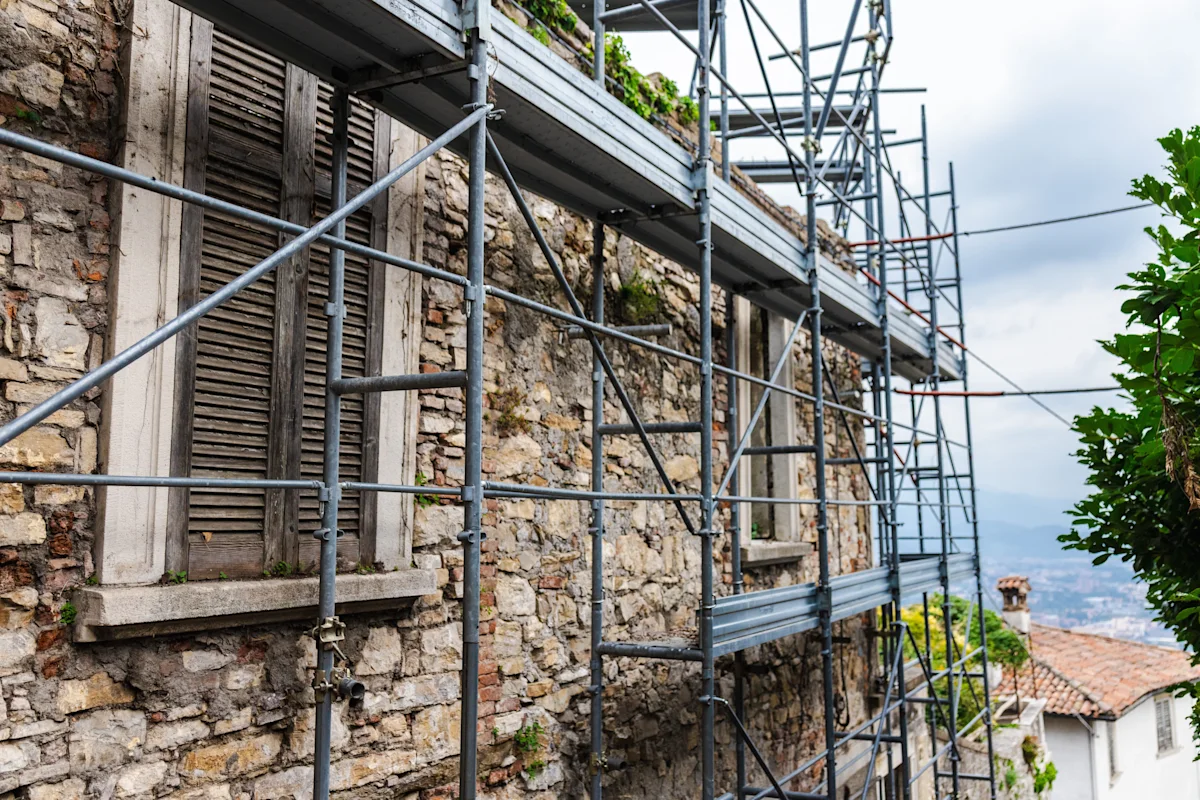
Not every roof or gutter-cleaning job requires scaffolding. The most suitable access method depends on the height, pitch, ground conditions and layout of the property.
What access equipment might be used?
The equipment depends on how high the gutters or roof are and how easily the cleaner can reach them.
For lower gutters with open access, ladders or a gutter vacuum may be enough. Taller properties or awkward areas can require roof ladders, a mobile tower or a cherry picker.
Scaffolding is usually only needed when other methods are not safe or practical.
Because access equipment can add noticeably to the price, it is worth having that cost shown separately in the quote.
If your gutters are already within reach of another high-level cleaning service, some window cleaners may also be able to clear them during the same visit.
Can other roof maintenance be done at the same time?
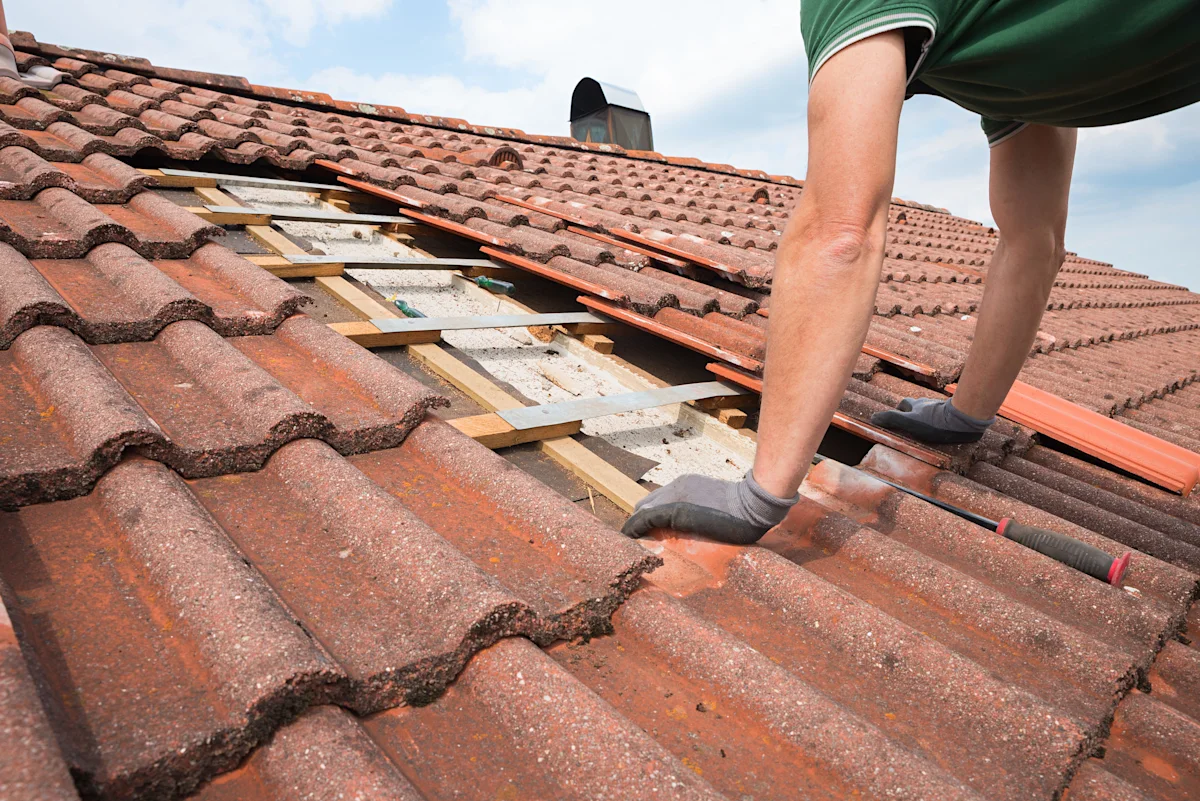
Sometimes it makes sense to deal with nearby maintenance while safe access is already in place.
For example, a contractor may notice blocked outlets, damaged roofline components or debris around a chimney.
Cleaning and repairs are different jobs, so additional work should still be priced separately. If the chimney itself needs attention, talk to a chimney-cleaning specialist rather than assuming the roof cleaner covers it.
How often should gutters be cleaned?
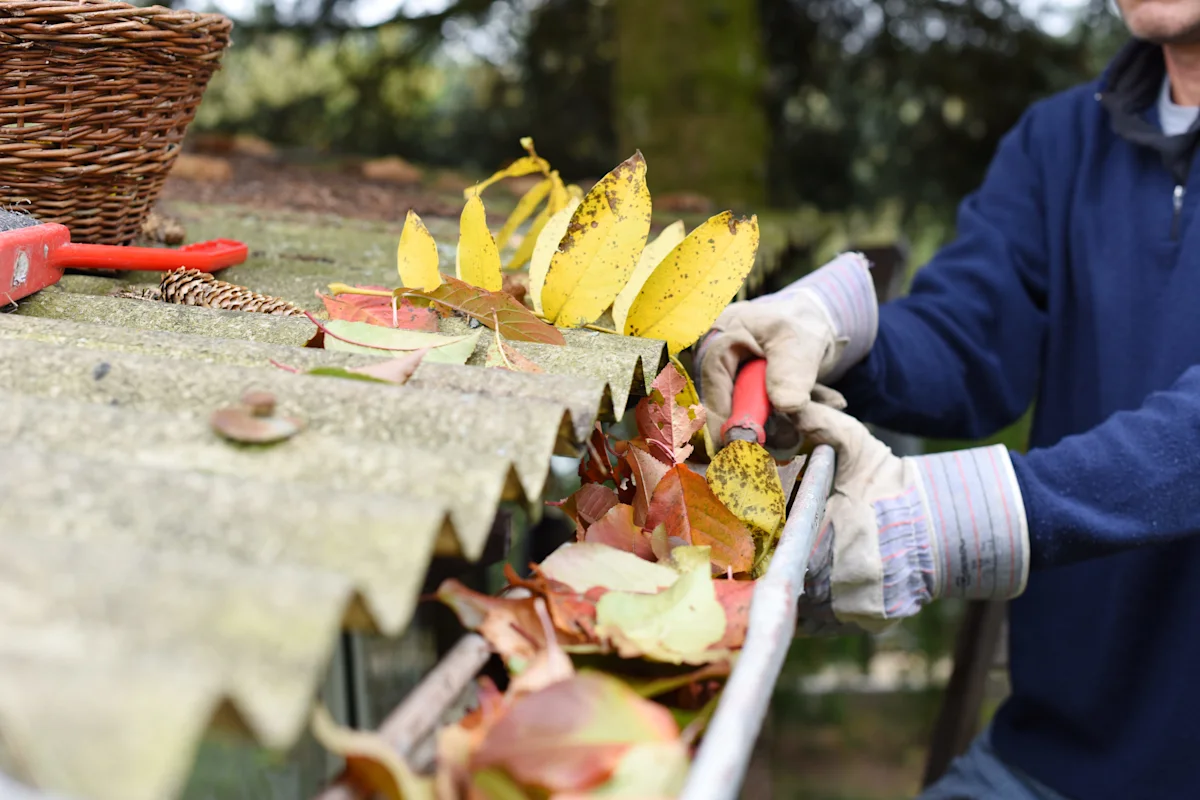
Once or twice a year is a sensible starting point for many homes. Homes near trees or mossy roofs can need attention more often.
When is a good time to clean them?
Late autumn is often a practical time to clean gutters because most leaves have already fallen by then. A spring clean can also help clear winter debris before heavier rain.
The season matters less if the gutters are already showing signs of trouble. Overflowing water, blocked downpipes, plants growing from the gutter or sagging sections are all good reasons to get them cleaned sooner.
How often should a roof be cleaned?
There is no set schedule for roof cleaning. The condition of the roof matters more than how long it has been since the last clean.
NFRC guidance highlights the risk when build-up begins to interfere with gutters, outlets or water flow.
When should you take action?
A few small patches of moss are not always a problem. It becomes more important to act when moss is spreading, debris is collecting in roof valleys or gutters keep blocking.
That way, cleaning is based on the condition of the roof rather than an arbitrary yearly routine.
What should a gutter cleaning quote include?
A useful gutter-cleaning quote should show exactly which parts of the property and service are included.
Areas and cleaning
Check | What to look for |
Gutter runs | Front, rear, side sections, garages and extensions |
Downpipes | Blockage clearing and any extra charge |
Debris | Removal from the property |
Clean-up | Paths and surrounding areas left tidy |
If the service is priced by metre, the quote should make clear which gutter runs have been included.
What happens if a downpipe is blocked?
A simple blockage can sometimes be cleared during the standard visit.
If the downpipe needs dismantling, flushing or specialist equipment, the cleaner may charge more.
The original quote should clarify how additional blockage work will be handled.
What should a roof cleaning quote include?
A roof-cleaning quote should explain what will be cleaned, how the contractor will do it and what happens afterwards.
Scope of the roof work
Cost area | What it covers |
Roof coverage | Full roof or selected sections |
Cleaning method | Moss removal, soft washing or other treatment |
Access | Ladders, towers, cherry pickers or scaffolding |
After-treatment | Biocide or similar products |
Gutters | Clearing debris after the roof clean |
Treatments and exclusions
The quote should include the type of treatment. VAT should also be clear before you compare the final price.
Repairs should also be listed separately so you can see exactly what the cleaning alone costs.
Is biocide treatment included?
Some roof cleaners apply a biocidal treatment after moss removal to slow regrowth. Others offer it as an additional service.
A detailed quote should name the product, explain why it is being recommended and note any aftercare or precautions you need to follow.
Does VAT apply to roof and gutter cleaning?
Yes, if the cleaner is VAT registered, they will normally add VAT to the price of roof and gutter cleaning. Businesses must register for VAT once their taxable turnover goes above £90,000, although some register voluntarily before reaching that point.
That means not all quotes include VAT as this depends on the value of the business at large. Check the final amount before comparing prices so you know what you will actually pay.
What if the cleaner finds minor repairs?
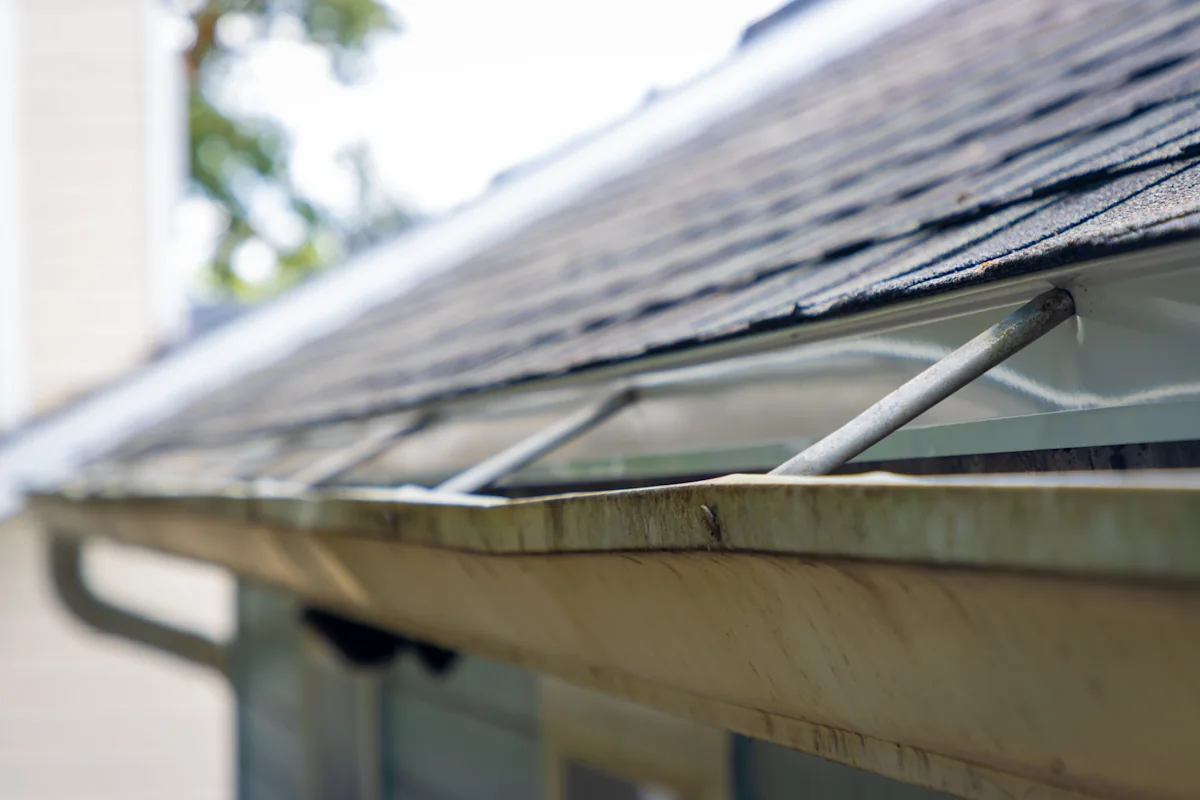
Cleaning can uncover problems that were hidden by moss, leaves or other debris.
Loose gutter brackets, leaking joints and disconnected downpipes can become easier to spot once the gutter is clear.
Roof cleaning may also expose cracked tiles or damaged seals.
Regardless, extra repairs are usually priced separately before the work goes ahead.
For simple non-specialist fixes, you can also consult with a handyman.
How should you compare roof and gutter cleaning quotes?

Two quotes can look similar while covering very different amounts of work. The easiest way to compare them properly is to give each provider the same information from the start.
Give each provider the same job details
Information to provide | Why it matters |
Property type and storeys | Shows the height and overall scale |
Roof type | Helps determine the cleaning method |
Moss or debris level | Gives an idea of the time involved |
Gutter length | Helps with per-metre pricing |
Access restrictions | Highlights any need for extra equipment |
Conservatories or extensions | Shows where access may be more difficult |
Downpipe problems | Flags any extra clearing work |
Photos | Gives the cleaner a better view of the job |
When every provider is pricing the same scope, it becomes much easier to see which quote offers better value.
Compare what each price covers
A good comparison looks beyond the total and checks what each quote actually includes.
Labour, cleaning, access equipment and waste removal can all affect the final price. For roof work, it also makes sense to check if gutter clearing or treatments are part of the service.
VAT and any possible repair costs should be listed separately so you can compare quotes on the same basis.
Keep repairs separate
Cleaning can sometimes uncover problems that were not visible beforehand.
If a cleaner finds damage, the quote should explain what needs attention, how urgent it is and what the repair will cost.
That gives you the option to approve the work, delay it or seek a second opinion before adding anything to the original job.
How much should you actually budget for a roofing and guttering service?
For gutter cleaning alone, most households can expect to pay around £75 to £150. Although larger properties, heavy blockages or difficult access can push the cost towards £150 to £350.
A full roof clean usually costs more, averaging at around £550. Larger roofs, extensive moss or specialist access can take the total towards £700 to £1,000 or more.
If the roof and gutters both need attention, a combined clean usually falls between £500 and £900.
If this is what you’re looking for, you can connect with roof and gutter cleaning professionals in moments and see what the combined job is likely to cost for your property.
FAQs
It depends on the property and the type of blockage.
A gutter vacuum works well when the gutters can be reached safely from the ground and the debris is loose enough to remove easily.
Ladder access can be more effective for compacted build-up, awkward corners or blocked downpipes that need closer attention.
Other guides you might be interested in


Explore all home maintenance and improvement guides
From the fine details of interior upkeep to the big-picture costs of structural improvements, we’ve curated the resources to help you protect your investment and love where you live.