
How much does upholstery cleaning cost in the UK?
Last updated October 28, 2026
A detailed 2026 price guide to upholstery and furniture cleaning costs across the UK, covering pricing by item, material, region and add-on services.
How much does upholstery cleaning cost in the UK?
Last updated October 28, 2026
A detailed 2026 price guide to upholstery and furniture cleaning costs across the UK, covering pricing by item, material, region and add-on services.
Written by

Professional upholstery cleaning in the UK averages £70 for a standard three-seater sofa. Office chair cleaning starts at £13, while larger items can cost around £113 or more. Based on Bark's analysis of over 627 upholstery and furniture cleaning quotes across the UK in 2026, item type and location are the biggest price drivers.
Get free quotes from vetted cleaning professionals for your furniture on Bark
A single dining chair costs a fraction of a full corner sofa clean, even though both fall under upholstery cleaning. The difference comes down to the item's size, fabric and location. Most professional sofa cleaning companies also enforce a minimum call-out charge, so booking a single small item rarely represents the best value.
This guide breaks down 2026 furniture cleaning costs in the UK by item, material, region and cleaning method. You'll also learn what affects your final price and what's typically included in a cleaning quote.
Note: All prices in this guide exclude VAT unless stated otherwise.
What is upholstery and furniture cleaning?
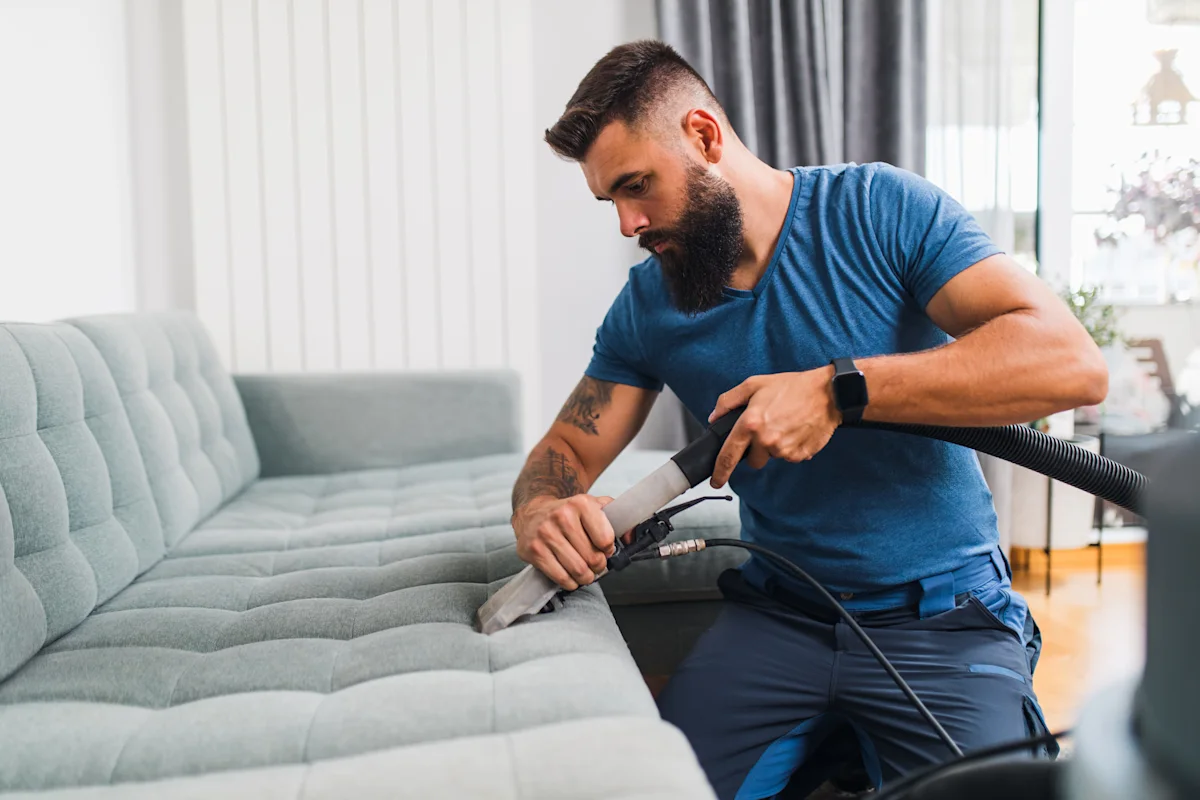
Upholstery cleaning is the professional deep cleaning of fabric or leather-covered furniture, rather than the surface vacuuming most households do themselves. It targets dirt, oils and other residues that can build up within furniture fibres and padding.
A professional visit typically uses specialist equipment that a domestic vacuum cannot replicate. The equipment and method used depend on the material, construction and condition of the furniture.
The term covers more than sofas and armchairs. Mattresses, curtains, dining chairs and office seating can all fall under professional upholstery and furniture cleaning.
What are the different types of upholstery and furniture cleaning?
Three main methods are commonly used for professional upholstery cleaning. Each method suits different fabrics and can affect both price and drying time.
Hot water extraction
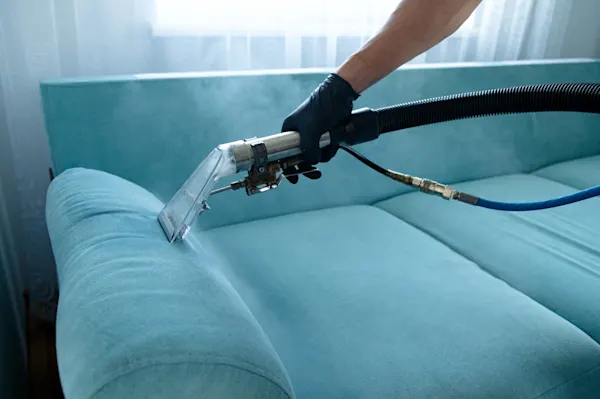
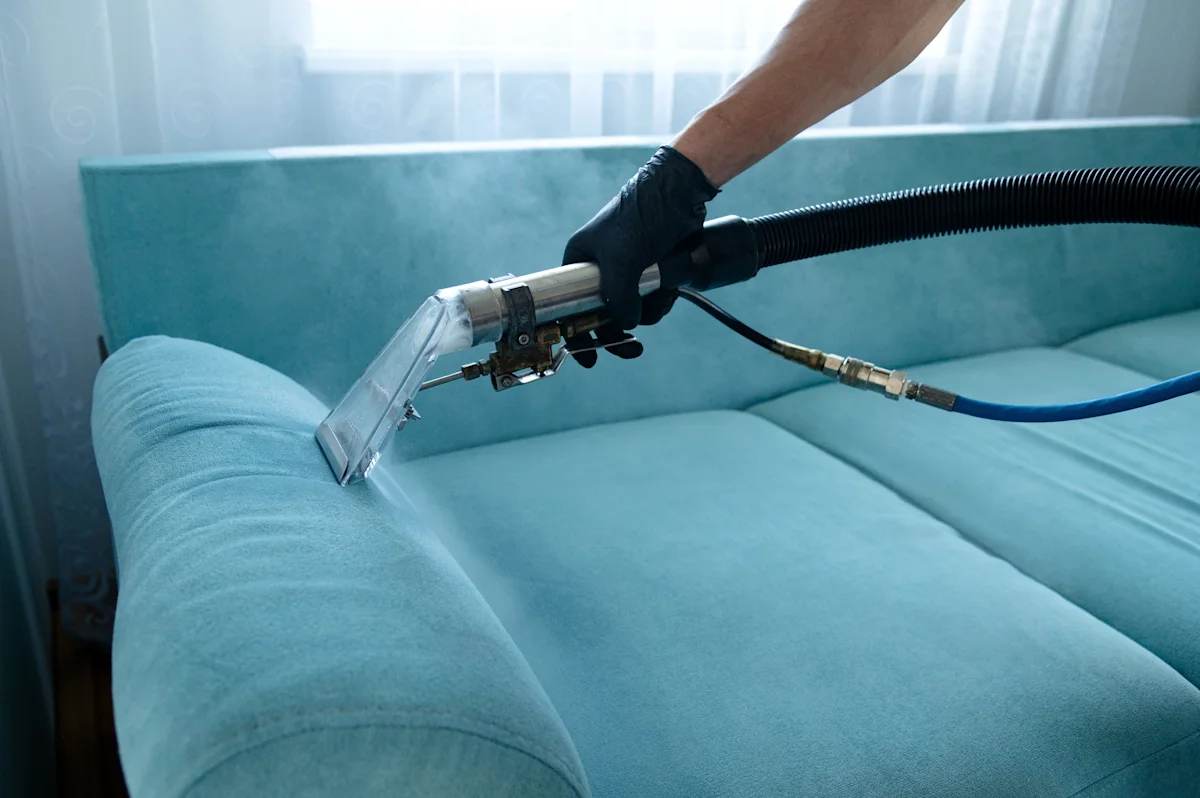
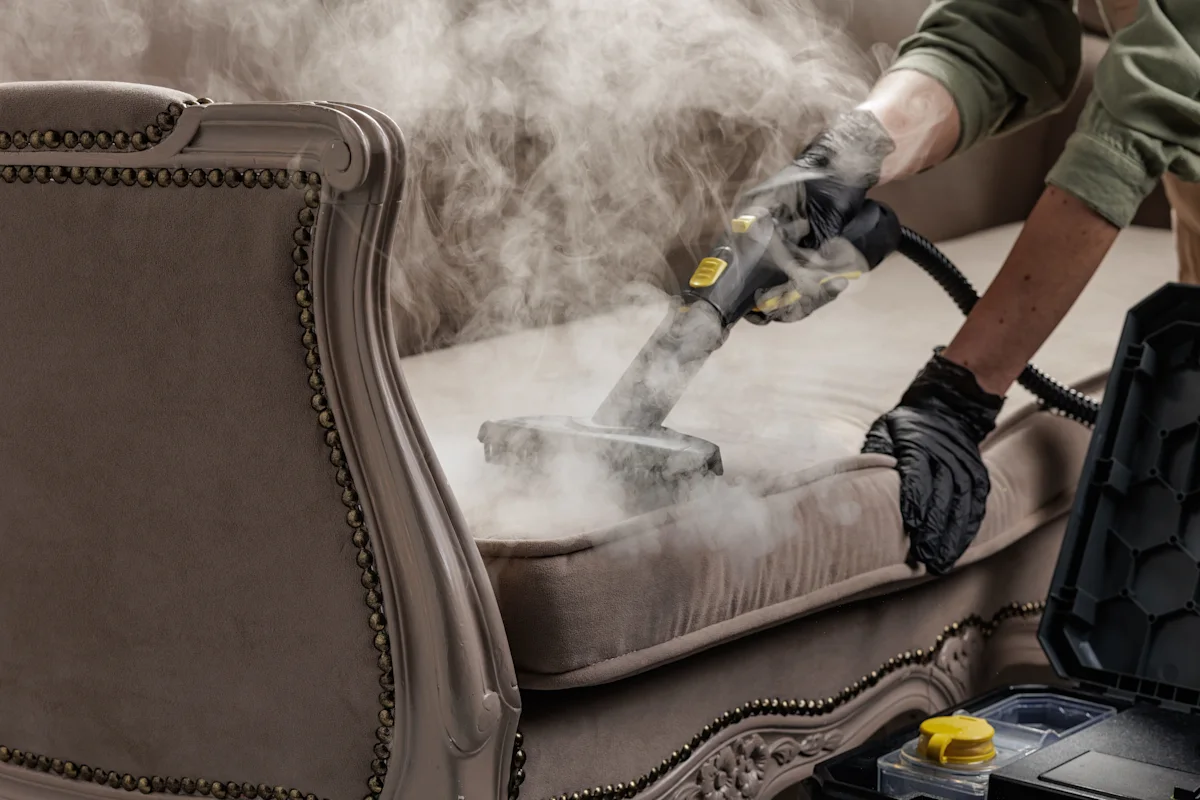
Hot water extraction, sometimes called steam cleaning, injects hot water and cleaning solution into the upholstery. The moisture and loosened soil are then removed using a powerful vacuum.
Hot water extraction is commonly used on synthetic and durable fabrics. Bark's 2026 data places its example small-room price above the other listed methods, rather than making it the cheapest option.
Dry cleaning
Dry cleaning uses a specialist solvent rather than water. It can be suitable for some delicate materials, depending on the fabric and manufacturer's care instructions.
Because these solvents and processes can require specialist products, dry cleaning can add up to 23% to the price. The actual surcharge depends on the item and cleaning requirements.
Foam encapsulation
Foam encapsulation uses a low-moisture cleaning solution that's worked into the fabric before the dried residue is removed. A brush or machine agitates the foam into the weave, where it surrounds dirt and oil particles rather than flushing them out with water.
As the foam dries, those particles crystallise into small residue flakes that lift away easily with a vacuum. This is what keeps the method so much drier than hot water extraction, since there's no rinsing stage to leave moisture behind.
It can suit fabrics that need less moisture and may offer shorter drying times, often just an hour or two rather than a full day. That makes it a practical choice for a household that can't afford a sofa to be out of use for long, or for a fabric that shouldn't be soaked too deeply.
The correct cleaning method should always be selected according to the fabric, construction and manufacturer's care guidance.
How much does upholstery and furniture cleaning cost by item and region?
Item type is the clearest starting point for understanding an upholstery cleaning quote. Location comes a close second, since the regional figures show higher prices in London.
Upholstery cleaning cost by item and region (2026, GBP, excluding VAT)
Item | Rest of UK | London |
|---|---|---|
Dining chair | £25 | £30 |
Office or commercial chair | £13 | £15 |
Cushion, each | £20 | £25 |
Armchair | £35 | £43 |
2-seater sofa | £53 | £64 |
3-seater sofa | £70 | £84 |
4-seater sofa | £70 | £85 |
Corner or L-shaped sofa | £95 | £113 |
A 2-seater sofa costs less than a 3-seater because there is less fabric, padding and frame to clean. A corner or L-shaped sofa sits at the top of the table because it has additional sections and cushions.
London prices are around a fifth higher than the rest of the UK across the items shown. That premium can reflect higher operating costs, including parking, congestion and longer travel times.
Most professional cleaners also charge a minimum call-out fee, which matters most when you're booking one small item. This is covered in the hidden costs section later in the guide.
Compare upholstery cleaning quotes from professionals on Bark in your area
How much does upholstery and furniture cleaning cost by material?
Material affects price differently from what many homeowners expect. Leather can cost around the same as standard fabric, while delicate materials can require more specialist treatment.
A leather 2-seater sofa averages around £40 to clean, and a leather 3-seater averages around £50. These figures are broadly in line with standard fabric cleaning using hot water extraction.
Leather is cleaned and conditioned with specialist products rather than standard water-based extraction. The labour involved can remain comparable with a standard fabric clean.
Delicate fabrics can require a different approach. Velvet, silk and suede may require specialist cleaning methods, depending on their construction and care requirements.
Dry cleaning can add around 23% to the price of an equivalent job on durable fabric. The exact surcharge depends on the material, item and cleaning method required.
Applied to the 3-seater sofa average of £70, a 20% mid-range dry cleaning surcharge would bring the price to £84. That's a useful figure to discuss with a cleaner before booking a specialist service.
What affects the cost of upholstery and furniture cleaning?
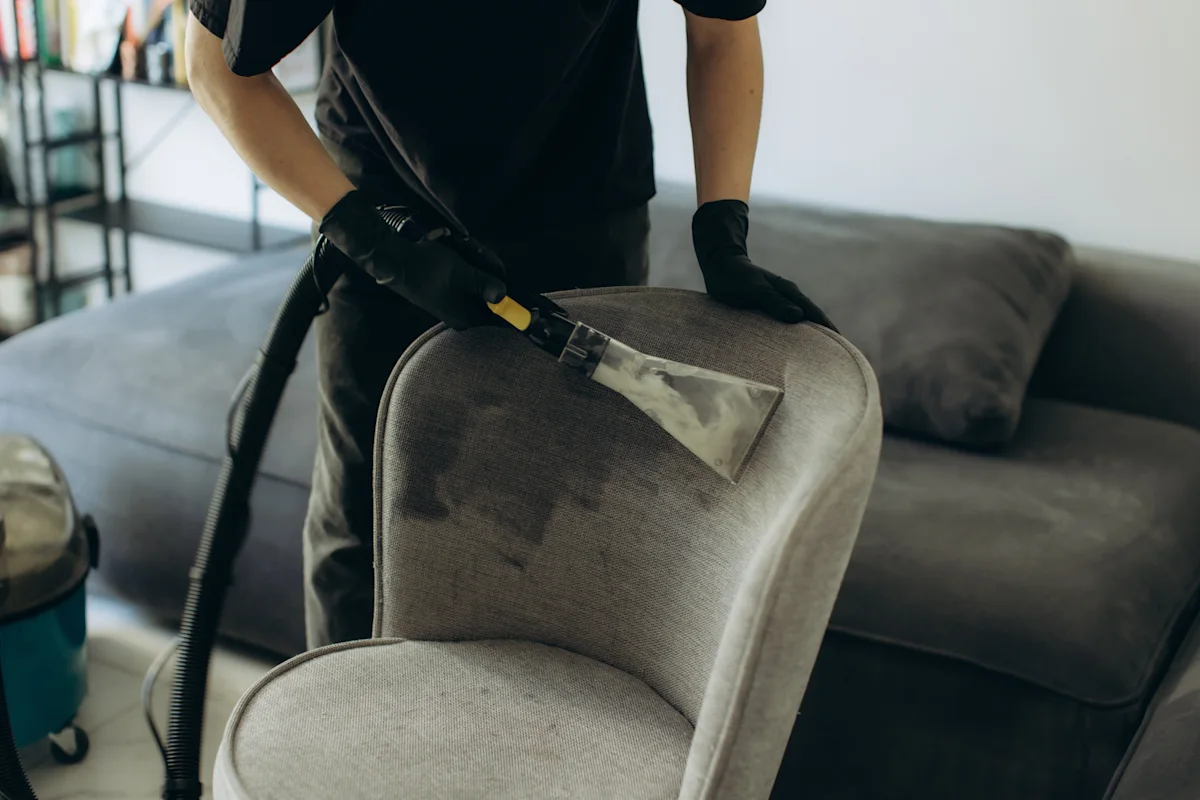
Beyond item type, material and region, several practical factors shape where an individual quote lands. Knowing these helps you understand a quote before accepting it.
- Size and seating configuration: A larger sofa has more fabric, padding and frame to clean than a smaller one.
- Fabric type: Delicate materials such as velvet, silk and suede may require specialist cleaning. This can add 15% to 30% to the standard price.
- Condition and staining: A heavily soiled or stained item takes longer to treat than one that's simply due to its regular clean.
- Access and location: Stairs, lifts and narrow hallways can add time to a booking, particularly in flats and older properties.
- Number of items booked together: Booking several pieces in one visit can reduce the average price per item compared with separate bookings.
A cleaner facing several factors at once may quote above the standard averages. A heavily stained velvet corner sofa on an upper floor requires more preparation than an unstained synthetic sofa.
Mention these details when requesting a quote. Photographs can also help a cleaner assess the work before visiting.
What's included in a quote, and what's usually not?
A clear, itemised quote protects you as much as it protects the cleaner. Knowing what's typically included helps you spot anything missing.
A standard upholstery cleaning quote usually includes:
- Pre-inspection of the fabric or leather to confirm the appropriate method.
- The main clean using hot water extraction, dry cleaning or foam encapsulation.
- Basic spot treatment for light marks discovered during the clean.
- A final grooming pass to lift the fabric pile back into place.
Several items commonly sit outside the standard price:
- Stain protection treatments, such as Scotchgard.
- Deodorising or anti-allergen treatments.
- Heavy stain or odour removal beyond a light spot treatment.
- Leather feed and conditioning for leather items.
- Moving or dismantling fixed furniture or fittings.
Always ask your cleaner to confirm exactly what's included in the headline price before booking. This helps avoid unexpected additions to the final bill.
What additional services are commonly offered?
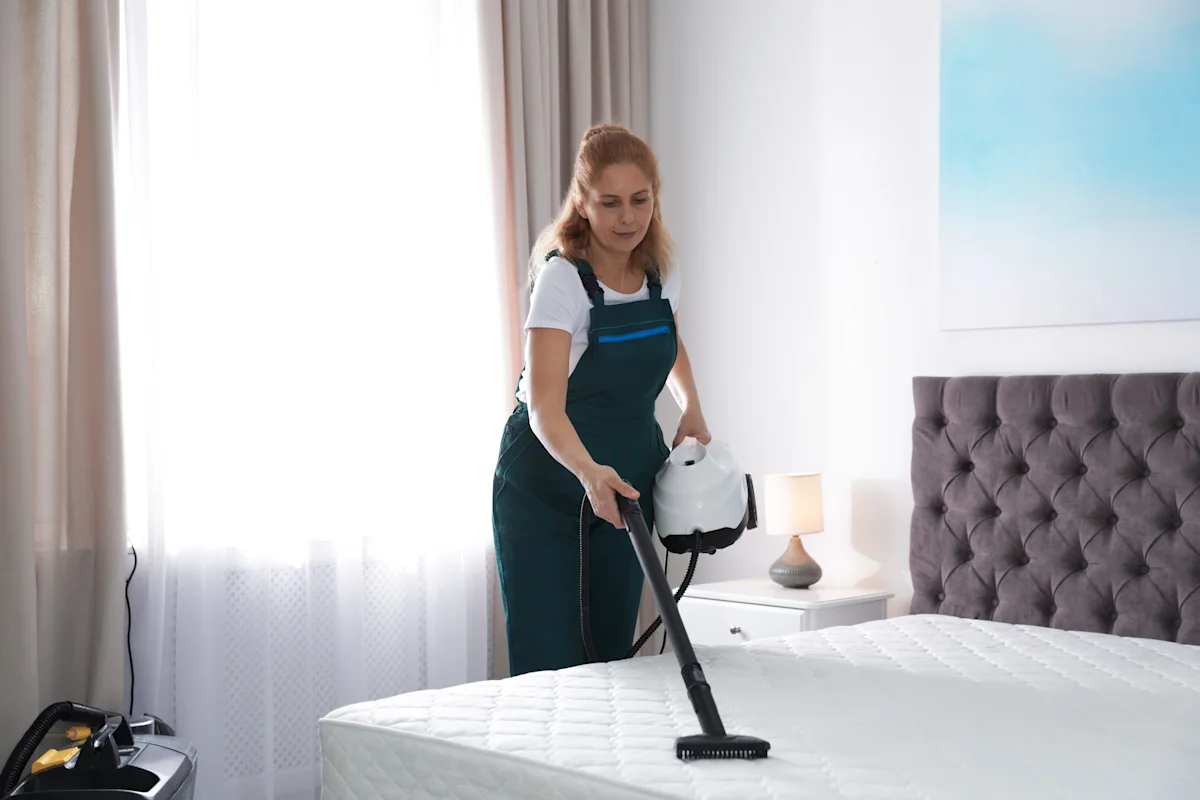
Beyond the core clean, professional upholstery cleaners can offer a range of additional treatments. These sit outside the standard price and should be considered when comparing quotes.
Additional upholstery cleaning costs (2026, GBP, excluding VAT)
Add-on service | Average price |
|---|---|
Stain protection treatment (e.g. Scotchgard), per item | £23 |
Stain and odour treatment, per item | £25 |
Deodorising or anti-allergen treatment, per item | £23 |
Single mattress clean | £33 |
Double mattress clean | £40 |
King-size mattress clean | £50 |
Curtains, per pair | £45 |
Roller or Roman blinds, each | £23 |
Stain protection treatment
Stain protection is one of the commonly recommended add-ons, particularly for households with children or pets. It can create a protective barrier that helps resist future staining, depending on the product used. The price reflects the extra product and application time on top of the core clean.
Stain and odour treatment
This service sits above standard stain protection because it targets marks or smells already embedded in the fabric. Removing a set-in stain or odour takes more time and often a stronger treatment than a preventative barrier. That extra effort is reflected in the slightly higher price.
Deodorising or anti-allergen treatment
This treatment neutralises odours and allergens trapped deep in the fabric rather than sitting on the surface. It typically needs its own product and dwell time separate from the main clean. The price sits close to stain protection because both involve a similar level of extra work.
Single mattress clean
A single mattress sits at the bottom of the mattress pricing because it has the smallest surface area to treat. Less fabric means less time spent on extraction and drying for the cleaner. This keeps the price below the double and king-size options.
Double mattress clean
A double mattress costs more than a single simply because there's more surface area to clean thoroughly. The extra size also means more cleaning solution and a longer drying time. Both add to the labour involved compared with a single mattress.
King-size mattress clean
A king-size mattress costs around 52% more than a single, reflecting its considerably larger surface area. Bulkier mattresses also take longer to manoeuvre and access on all sides. That combination of size and handling time explains the jump in price.
Curtains, per pair
Curtains are priced separately because they're rarely included in a standard upholstery quote. Cleaning a full pair involves considerably more fabric than a single sofa cushion or chair seat. Heavier or lined curtains can also take longer to treat and dry properly.
Roller or Roman blinds
Blinds are priced individually rather than as a "pair" since most rooms only have one per window. The price reflects the smaller surface area compared with curtains, alongside the careful handling needed around slats or folds. Delicate blind materials can also limit which cleaning method is suitable.
Is it cheaper to clean your upholstery yourself or hire a professional?
DIY upholstery cleaning avoids labour costs, but you still need to pay for equipment and cleaning solution. A domestic upholstery cleaning machine typically costs around £28 a day to hire, plus cleaning solution.
A hired machine can also perform differently from professional equipment. Results vary between machines, cleaning systems and the person operating them.
DIY cleaning can make sense for lightly soiled, durable fabric when you have suitable equipment and enough time. It can be harder to manage successfully on delicate fabrics, leather or heavily stained items.
The wrong cleaning method can damage some materials. Always check the manufacturer's care instructions before attempting DIY cleaning.
What are the benefits of hiring a professional upholstery cleaner?
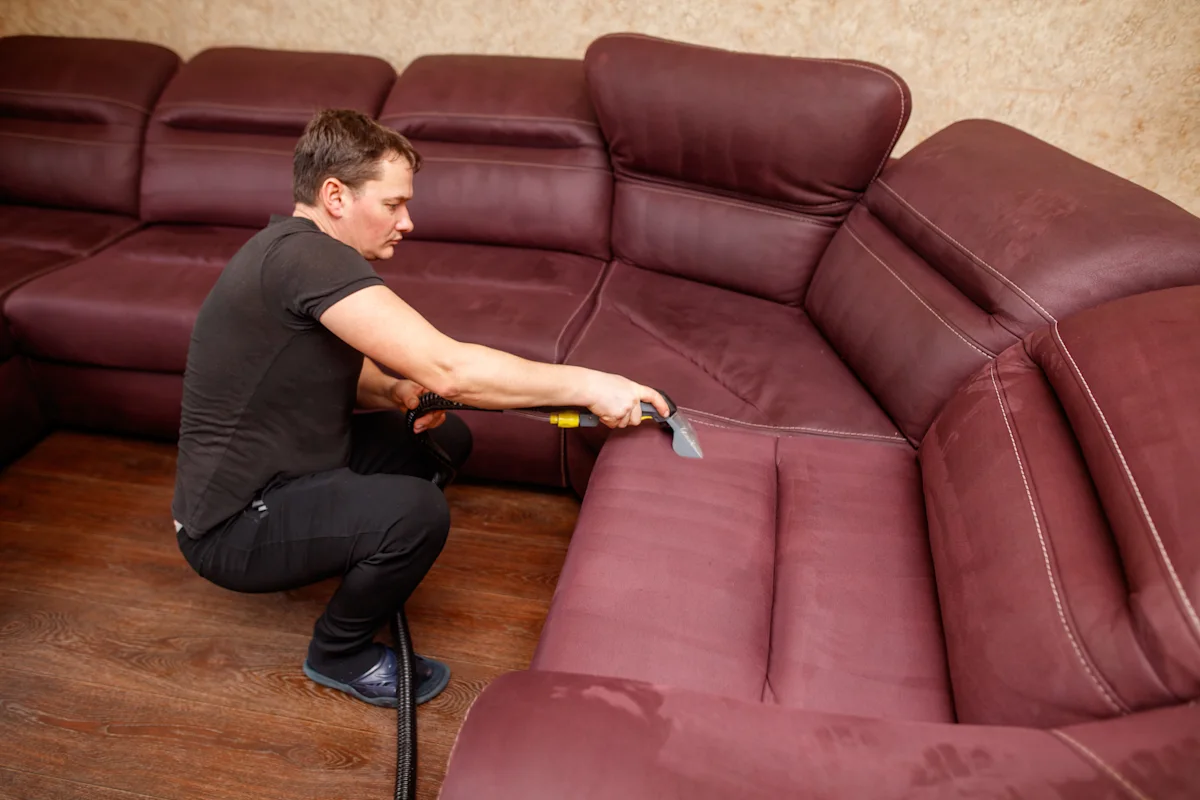
A professional clean can remove dirt and residues that routine vacuuming does not reach. The results depend on the cleaning method, products, furniture condition and technician's skill.
Professional cleaning can also help maintain furniture between routine cleanings. Regular maintenance reduces soil build-up and can help prevent premature wear on some fabrics.
Professional cleaning can be particularly useful for delicate or high-value furniture. The cleaner can select products and techniques according to the material and item's condition.
WoolSafe recommends appropriate products and techniques for wool and other sensitive fibres. Its approved service providers have specialist training and use approved products when cleaning wool.
Insurance is another useful point to check before booking a professional. Not every cleaning provider will have identical cover, so don't assume it is included.
Ask whether the business carries suitable insurance for accidental property damage. Citizens Advice recommends checking a trader's insurance before work begins.
If you need wider household cleaning, you can also compare professional house cleaning services on Bark.
Receive quotes for allergen removal and specialist upholstery cleaning services on Bark
How can you save money on upholstery cleaning?
A few practical habits can help you avoid paying more than necessary. None require compromising on the quality of the clean.
- Book multiple items together, since this can reduce the average price per item.
- Ask whether bundling upholstery cleaning with another service reduces the overall price.
- Confirm the minimum call-out charge before booking a single small item.
- Vacuum regularly between professional visits to reduce soil build-up.
- Get at least three quotes for anything beyond a single small item.
Comparing quotes side by side is one of the most effective ways to assess value. A quote that looks cheaper can still cost more if it excludes important treatments or services.
For a more comprehensive clean across the property, you can also compare deep cleaning services on Bark.
How do you hire a good upholstery cleaner?
A short checklist before booking can protect you from a poor result and an unexpectedly high final bill. None of these checks should take more than a few minutes.
- Confirm which cleaning method suits your specific fabric or leather.
- Ask for an itemised quote covering labour, add-ons and VAT treatment separately.
- Check whether the company carries insurance for accidental damage.
- Confirm the minimum call-out charge if you're booking a small item.
- Ask how long the item will need to dry before it can be used again.
A written quote covering each point gives you a clear record to refer back to later. It also makes it easier to compare one cleaner's charges against another's on a like-for-like basis.
How often should you clean your upholstery?
Most households benefit from professional upholstery cleaning approximately every 12 to 24 months, depending on use and soiling. This range is consistent with IICRC guidance for periodic professional upholstery cleaning.
Homes with children, pets or heavy daily use may need more frequent cleaning. Routine vacuuming and prompt treatment of spills can help reduce soil build-up between professional visits.
A noticeably soiled, stained or odorous item may need cleaning sooner. Waiting too long can allow soil to become harder to remove.
How should you prepare your upholstery before cleaning, and care for it afterwards?
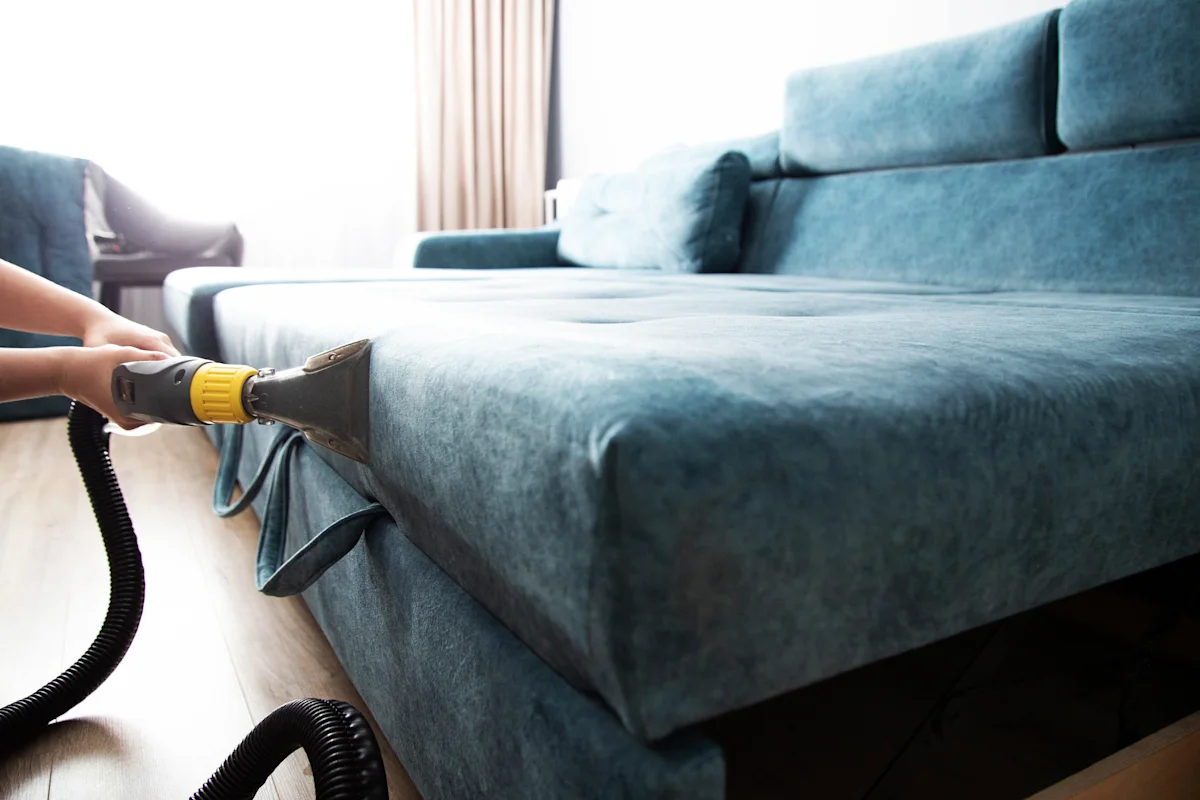
A little preparation helps a professional cleaner do the best possible job on your first visit. Clear the area around the furniture and remove loose cushions, throws and personal items beforehand.
Point out specific stains or problem areas when the cleaner arrives. Mentioning how long a stain has been present can help the cleaner choose an appropriate treatment.
Once cleaning is finished, avoid using the furniture until it is fully dry. Good airflow, such as an open window or suitable fan, can help speed up drying.
Upholstery cleaning in the UK averages £70 for a standard three-seater sofa, with smaller items such as dining chairs averaging £25. Material, region and cleaning method can shift that figure, with delicate fabrics adding 15% to 30%.
London prices are around a fifth higher than the rest of the UK across the items shown. Add-ons such as stain protection and mattress cleaning sit outside the core price and should be confirmed upfront.
If you're booking more than one item, get at least three itemised quotes and compare cleaning methods, including services, additional treatments and VAT treatment. A clear quote should leave you knowing exactly what you will pay.
Get free, no-obligation quotes from reviewed furniture cleaning professionals on Bark today.
FAQs
Most professional cleaners enforce a minimum call-out charge of around £60 outside London and £80 within the capital. This covers the cost of providing a service, regardless of how small the item is.


