
How much do ironing services cost in the UK?
Last updated October 26, 2026
A practical guide to ironing service prices in the UK, including costs by weight and item, collection fees, laundry add-ons and regular household budgets.


How much do ironing services cost in the UK?
Last updated October 26, 2026
A practical guide to ironing service prices in the UK, including costs by weight and item, collection fees, laundry add-ons and regular household budgets.
Written by

Ironing services in the UK typically cost £5.50 to £7.50 per kg, £1 to £3 per everyday item or around £12 to £18 per hour. A mixed household order often comes to £20 to £35, while larger loads with bedding or formal clothes can reach £40 to £60 or more.
Over 5,000 customers across the country have used Bark's ironing services in the recent past. You can connect with 1,600+ ironing experts on the platform and compare quotes to find the service that suits your requirements and budget.
The final cost, however, will depend on how the service charges, what’s in your basket and whether you need collection, laundry or a faster turnaround. This guide breaks down the main pricing methods, common extras and what to check before booking.
What do ironing services cost at a glance?

There’s no single pricing method for professional ironing. Some services charge by weight, others by garment and home-based ironing is often priced by the hour.
For a large basket of everyday clothes, a kilogram rate can be straightforward. A few shirts, dresses or pieces of bedding are often easier to price individually.
Typical ironing service prices in the UK (2026, GBP)
Service | Typical cost |
Ironing by weight | £5.50–£7.50 per kg |
Ironing by the hour | £12–£18 per hour |
T-shirt or simple top | £0.75–£1.50 |
Shirt or blouse | £1.20–£3.25 |
Trousers or jeans | £1–£2.50 |
Dress | £1.75–£5+ |
Bedding | £0.50–£10+ per item |
Mixed household order | £20–£35 |
Large household order | £35–£60+ |
Wash, dry and iron | £8.50–£10 per kg |
Collection and delivery | Included, minimum spend or separate charge |
These are indicative prices rather than fixed national rates. The quote for your own basket is more useful than comparing headline prices in isolation.
How are ironing services priced?

An ironing business may use more than one pricing method.
Everyday clothes might be charged by weight, while shirts, dresses, bedding and delicate garments are priced separately. Someone ironing in your home may instead charge for their time.
Ironing by weight
A reasonable budget is £5.50 to £7.50 per kg.
At this rate, the cost of a mixed basket would look roughly like this:
Load size | Approximate cost |
2kg | £11–£15 |
3kg | £16.50–£22.50 |
5kg | £27.50–£37.50 |
7kg | £38.50–£52.50 |
10kg | £55–£75 |
Weight doesn’t tell you exactly how many garments you can send. Five kilograms of lightweight tops is a very different basket from five kilograms containing jeans and bedding.
Some services also exclude delicate or time-consuming pieces from their standard kilogram price. Confirm these exceptions beforehand.
Typical household orders
A regular mixed household basket commonly costs around £20 to £35. Here's a rough breakdown:
Order size | Typical cost |
5–8 mixed items | £12–£20 |
10–15 mixed items | £20–£30 |
20–30 mixed items | £35–£45 |
Large family load with bedding | £40–£60+ |
The type of clothing matters as much as the item count. Ten basic tops generally take less work than ten formal shirts or large duvet covers.
Shirt ironing prices
Professional shirt ironing usually costs around £1.20 to £3.25 per shirt. The cost would look like the table below for an increasing number of shirts.
Number of shirts | Approximate cost |
5 | £6–£16 |
10 | £12–£32 |
15 | £18–£49 |
20 | £24–£65 |
Some services charge differently depending on whether shirts are folded or returned on hangers. It’s worth checking this before comparing prices.
Per-item ironing
Per-item pricing works well when you only have a handful of garments or your basket contains pieces that take very different amounts of time. Here's an example:
Item | Typical cost |
T-shirt | £0.75–£1.50 |
Polo shirt | £0.80–£1.50 |
Shirt | £1.20–£3.25 |
Blouse | £1–£3.25 |
Trousers | £1.20–£2.50 |
Jeans | £1–£2.50 |
Jumper or sweatshirt | £0.75–£2.50 |
Skirt | £1–£3 |
Standard dress | £1.75–£3.50 |
Detailed or long dress | £3.50–£5+ |
Children’s clothing | £0.75–£1.50 |
More detailed garments tend to cost more because pleats, embroidery and delicate materials take longer to press properly.
Bedding ironing prices
Bedding may be charged separately even when ordinary clothing is priced by weight. Take a look at the item-wise costing for this particular ironing request:
Bedding item | Typical cost |
Pillowcase | £0.50–£1.80 |
Single sheet | £1.50–£5.90 |
Single duvet cover | £1.60–£6 |
Double sheet | £2.60–£7.90 |
Double duvet cover | £2.70–£8 |
King-size sheet | £3.70–£9 |
King-size duvet cover | £3.80–£9 |
Super king bedding | £4–£10+ |
Tablecloth | £1.30–£6 |
Large sheets and duvet covers generally cost more because they take longer to handle and reposition while ironing.
Hourly ironing services
Hourly ironing usually costs around £12 to £18 and is most common when someone comes to your home or combines ironing with other domestic work.
If you already have someone cleaning your home, it may be worth asking whether ironing can be added to the same visit instead of booking a separate service.
What you get through in an hour will depend on the clothes involved. A basket of T-shirts can be much quicker to work through than the same number of formal shirts, so the hourly rate alone does not always tell you the final cost.
Is ironing cheaper by weight or by item?

Neither method is always cheaper.
A 5kg basket at £6.95 per kg costs £34.75. Twenty simple garments at £1.35 each cost £27. For those type of clothes, per-item pricing would be cheaper.
Change the basket to formal shirts and the result can reverse. Fifteen shirts priced at £2.85 each would cost £42.75.
The best comparison is to describe the same basket to each provider and ask what charging method they would use.
How much do collection, express and laundry services add?
Convenience can make a noticeable difference to the final bill.
A service that collects from your home, returns everything pressed and handles the washing as well is doing more than an iron-only drop-off service.
Collection and delivery
Some providers include collection once you reach a minimum spend. Others charge separately for travel or limit free collection to a particular area.
Minimum spends of around £25 to £32 are common among collection-based services.
For a full household basket, included collection can offer good value. It’s less useful if you only want two or three shirts pressed.
Check the minimum order, delivery area and return arrangements before booking.
Express ironing

Same-day or priority ironing generally costs more than standard turnaround.
Providers may add an express fee or increase the price-per-item, so check the charge before choosing a faster service.
Ask what the ordinary turnaround is first. A standard 24 to 48-hour service may already suit your schedule.
Wash, dry and iron
A combined wash, dry and iron service typically costs £8.50 to £10 per kg.
That’s more than ironing alone because the provider is also washing, drying and handling the clothes before they’re pressed.
This is what the price range for separate & combined services may look like:
Service | Typical cost |
Iron only | £5.50–£7.50 per kg |
Wash, dry and iron | £8.50–£10 per kg |
Shirt wash and iron | Around £3–£4.50 each |
Check whether detergent, stain treatment, fabric conditioner, folding and collection are included in the quoted price.
What affects the cost of an ironing service?

Two baskets weighing the same can take very different amounts of time to finish. Several factors affect the difference.
The clothes in your basket
Basic tops and casual clothing are usually quicker to press than formal, pleated or tailored garments. Detailed construction, embroidery and large linen items can all increase the price.
Bedding
Sheets and duvet covers take more space and need repeated repositioning. That’s why a large duvet cover can cost several times more than a simple item of clothing.
Delicate fabrics
Silk, wool, lace and decorated garments need more careful handling and temperature control.
Check the care information on the garment where available and tell the provider about any special requirements before handing it over.
Folding and hangers
Some services charge more to return shirts folded rather than on hangers because folding adds another stage.
Others may ask you to provide hangers yourself. Confirm how your clothes will be returned if that matters to you.
Your location
Labour and travel costs vary around the country, so national prices are best treated as a starting point. The most relevant figure is the quote for your postcode and the service you need.
Do ironing services have a minimum order?

Many ironing services that collect and return clothes set a minimum order value, often around £25 to £32.
That can make a difference if you only have a small amount of ironing. For example, if your clothes would normally cost £12 to £15 to press, you may still need to pay the £25 minimum.
Regular household loads are more likely to reach the minimum naturally, so collection services often make better financial sense for larger or recurring orders.
How much can regular ironing cost over a year?
A weekly or fortnightly ironing service can become a meaningful household expense over 12 months. Looking at the annual figure gives you a clearer idea of what a regular service will cost.
Regular ironing budgets in the UK (2026, GBP)
Routine | Average per month | Approximate annual cost |
£20 every two weeks | £43 | £520 |
£25 every two weeks | £54 | £650 |
£30 every two weeks | £65 | £780 |
£30 every week | £130 | £1,560 |
£40 every week | £173 | £2,080 |
These monthly averages use 52 weeks across the year rather than assuming exactly four weeks in every month.
Someone spending £30 each week would therefore pay around £1,560 a year.
You can bring that figure down by sending only the clothes that take the most time or need the neatest finish.
What should an ironing service include?
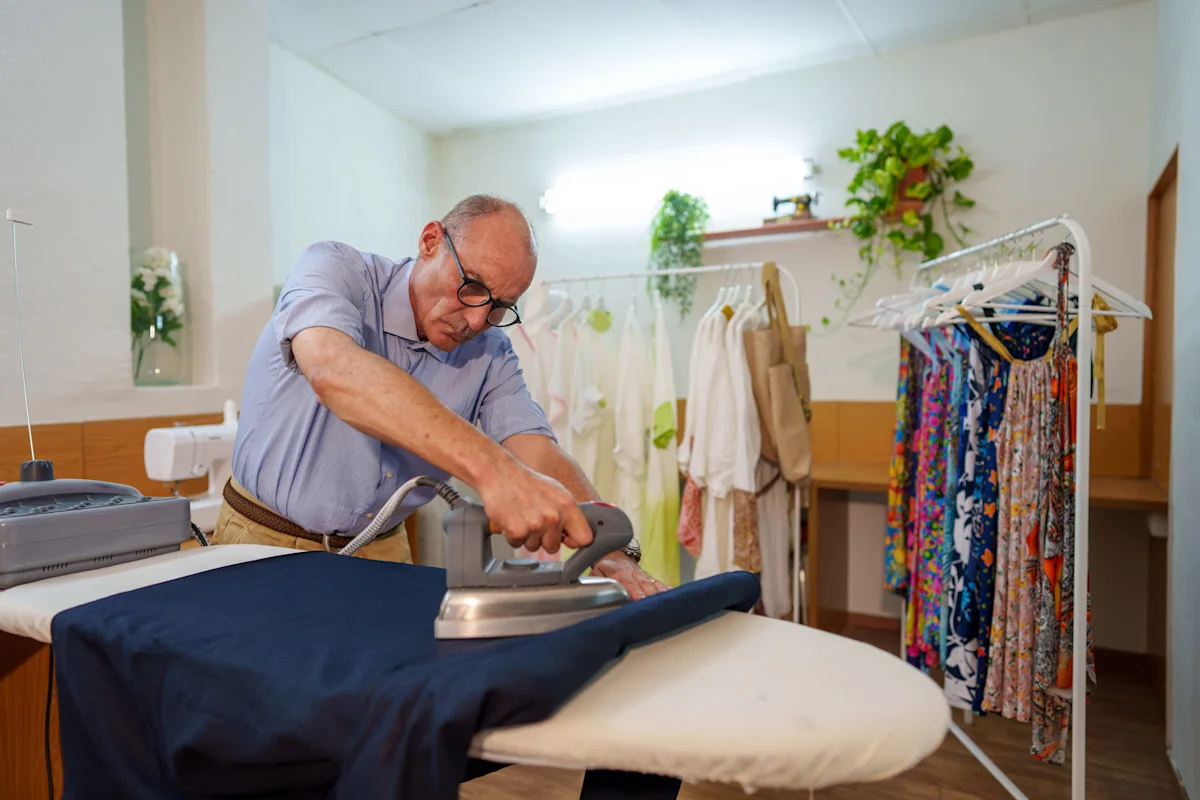
For ironing only, clothes are normally expected to be clean and dry when they’re handed over.
The service should press the agreed garments and return them folded or hung as arranged. Collection, washing and express turnaround should be clearly stated if they’re part of the booking.
Things to confirm before handing over your clothes
Check | What to ask |
Pricing | Is the order charged by weight, item or hour? |
Minimum spend | Is there a minimum order? |
Garments | Are any clothes excluded or charged separately? |
Delicates | How are special fabrics handled? |
Turnaround | When will the order be ready? |
Collection | Are collection and return included? |
Damage | What happens if an item is damaged? |
Point out existing stains, tears or other damage before your clothes are collected.
When the order comes back, check it reasonably promptly so any missing or damaged items can be raised with the provider.
What are your rights if an ironing service damages your clothes?

When you hand clothing over to an ironing service, the business is responsible for carrying out the work with reasonable care and skill under the Consumer Rights Act 2015.
If an item comes back scorched, stained, torn or otherwise damaged, contact the business as soon as possible. Explain what happened, include photographs where useful and keep your booking confirmation, receipt and any messages about the service.
What you can reasonably ask for will depend on the problem. Consumer law allows for remedies such as repeating a service or reducing the price when a service has not been carried out properly. In some circumstances, other remedies may also be available where the poor service has caused a financial loss.
With damaged clothing, repeating the ironing obviously will not undo physical damage, so the discussion may instead centre on an appropriate refund or compensation. The age, condition and value of the garment can all become relevant when agreeing a resolution.
Start by raising the issue directly with the ironing business and clearly state what outcome you are seeking. If you cannot resolve the complaint, GOV.UK directs consumers to the relevant consumer advice service for their part of the UK, such as Citizens Advice in England and Wales.
How should you compare ironing service quotes?

Start with the same basket each time.
Tell each provider roughly how many clothes you have and whether the order includes shirts, bedding or delicate garments. That makes the prices much easier to compare.
Compare the complete price
A quote should make clear whether the service is charged by weight, item or hour. It should also show any minimum spend and additional charges.
Possible extra | What to check |
Formal wear | Whether shirts or detailed garments cost more |
Bedding | Whether it’s included in a kilogram rate |
Delicates | Any specialist handling charge |
Collection | Whether pickup and return are included |
Express service | Any same-day or priority fee |
Laundry | Whether washing and drying are separate |
Finishing | Charges for folding or hangers |
A slightly higher headline rate can still work out cheaper if collection and other extras are already included.
Look at turnaround as well as price
A collection service that returns everything within 48 hours may be more convenient than a cheaper provider requiring two journeys.
Think about the time involved as well as the amount on the invoice.
Check experience with the clothes you’re sending
General domestic-service reviews don’t necessarily tell you how someone handles delicate fabrics or expensive workwear.
Ask about relevant experience when the basket includes clothes that need particular care.
How can you spend less on regular ironing?

A few small changes can make professional ironing more affordable without sending everything in your wardrobe out to be pressed.
- Prioritise the items that take the most time, such as work shirts, bedding and formal clothing.
- Send a fuller basket where possible, especially if the service has a minimum spend.
- Book before you need something urgently, as last-minute turnaround can cost more.
- Consider a regular weekly or fortnightly schedule if you use the service often.
- Combine household help where it makes sense. An errand-running or concierge service may be useful if you want to outsource several tasks at once.
Is professional ironing worth the cost?
For most people, the decision comes down to how much ironing they have and how much time it takes each week.
A £20 to £35 household order may be worthwhile if it clears a regular pile of shirts, school clothes or bedding.
If you only have a few straightforward garments, an ongoing service may make less sense, particularly when a minimum spend applies.
Professional ironing can also be useful when mobility or health makes ironing difficult or uncomfortable.
Final thoughts
Professional ironing in the UK typically costs £5.50 to £7.50 per kg, £1 to £3 for everyday garments or around £12 to £18 per hour. A regular household basket often costs £20 to £35, while bedding, laundry and faster turnaround can increase the total. Comparing the same basket across providers gives you a much clearer idea of what you’ll actually pay.
For a few shirts, per-item pricing may work well. For a larger household load, compare kilogram rates and check which garments are charged separately.
You can also talk to local cleaners who may provide ironing services too. Ensure to read reviews and request free quotes for rate comparison before booking.
FAQs
Turnaround depends on the size of the load and how busy the service is. Some businesses offer next-day or 48-hour turnaround, while larger loads may take longer.
If you need clothes back for a particular date, confirm the collection and return times before booking rather than assuming a standard turnaround.


Other guides you might be interested in


Explore all home maintenance and improvement guides
From the fine details of interior upkeep to the big-picture costs of structural improvements, we’ve curated the resources to help you protect your investment and love where you live.