
Do I need a web designer or a web developer? How to choose for your Australian business
Last updated July 23, 2026
Not sure whether you need a web designer or a web developer? Learn the differences between the two roles, when to hire each, what they cost and how to choose the right professional for your Australian business.


Do I need a web designer or a web developer? How to choose for your Australian business
Last updated July 23, 2026
Not sure whether you need a web designer or a web developer? Learn the differences between the two roles, when to hire each, what they cost and how to choose the right professional for your Australian business.
Written by

What is the difference between a web designer and a web developer?
A web designer shapes how a website looks and feels, including layouts, colour schemes and the overall user experience. A web developer writes the code that brings those designs to life in a browser. Think of it like an architect and a builder: one draws the plans, the other constructs the structure. Most business websites need input from both, though the balance depends on your project's complexity. Based on Bark’s analysis of over 280 web design and development quotes across Australia in 2026.
The challenge for many business owners isn't understanding the difference, but knowing which professional their project actually needs. Hiring a developer when you need visual polish can leave you with a site that works but doesn't convert. Hiring a designer when you need custom functionality can leave you with something attractive that can't take a booking or process a payment.
This guide helps you understand the difference between a web developer and a designer and figure out which professional fits your project. We cover what each role does, when to use one or both, and what to look for when choosing. Whether you're building your first site or upgrading an existing one, you'll know who to turn to for the skills your project requires.
Note: All prices in this guide exclude GST unless stated otherwise.
What does a web designer do?
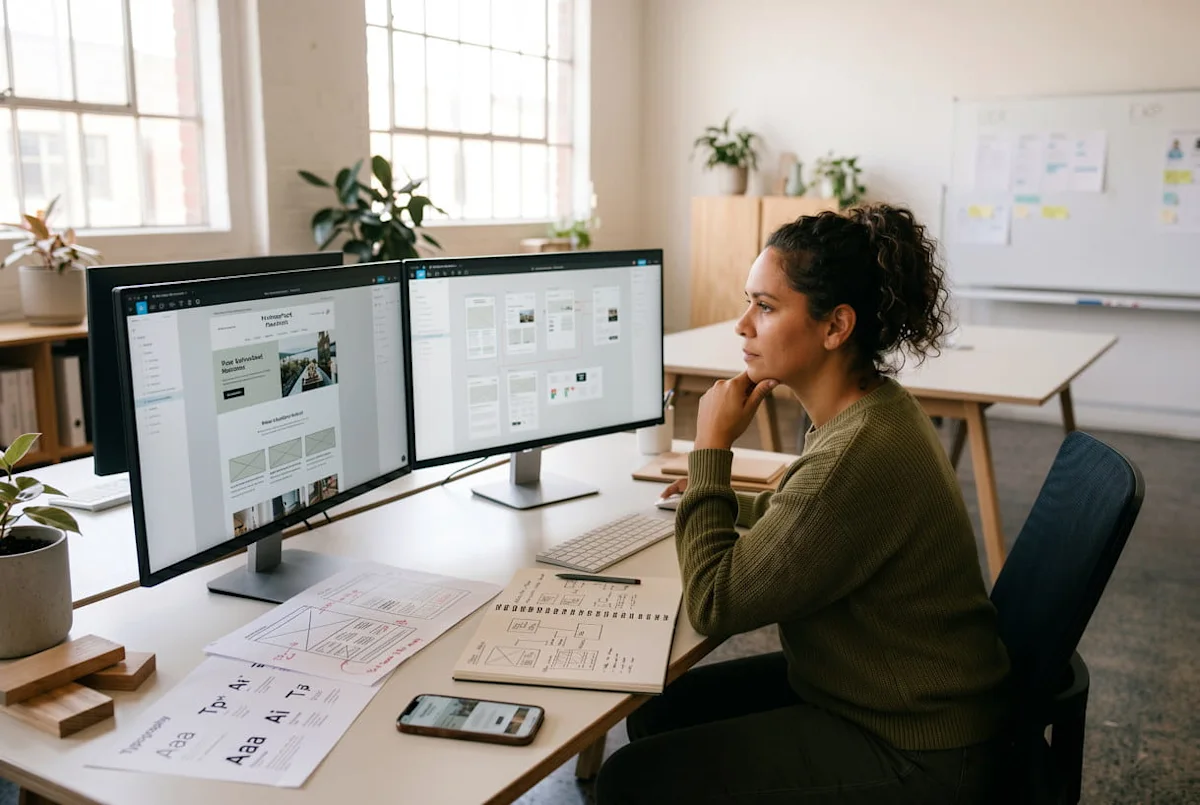
A web designer is responsible for how your website looks, feels and guides visitors through their journey on the page. Their work covers layouts, colour palettes, typography, imagery and the overall visual presentation of your site. They typically deliver wireframes, mockups and design systems before any code is written.
Web designers work with tools like Figma, Adobe XD and Sketch to prototype ideas before they're built. Many come from a background in graphic design or user experience (UX). Their goal is to make your site not only attractive but easy for visitors to navigate and act on.
Strong web design directly affects how visitors perceive your business. Research from Stanford University found that nearly half of all consumers judge a website’s credibility based on its visual design. A well-designed site builds trust before a visitor reads a single word of your copy.
First impressions happen quickly.
According to Sydney-based website professional Oliver, visitors typically decide within the first few seconds whether a website resonates with them. A strong visual design can help establish trust before a prospective customer reads a single line of copy.
What does a web developer do?

A web developer takes a visual design and turns it into a working website using code. They write HTML, CSS and JavaScript, manage databases and make sure everything runs reliably across different devices and browsers. Their work is largely invisible to the end user but essential to how a website performs.
Web developers typically specialise in one of three areas: front-end, back-end or full-stack.
- Front-end developers build what users see and interact with directly.
- Back-end developers manage servers, databases and the logic behind features such as bookings, user logins and payment processing.
- Full-stack developers handle both front-end and back-end work, making them capable of building a complete website from the interface down to the server.
Site performance sits firmly in a developer's hands. Google reports that 53% of mobile users abandon a website that takes more than three seconds to load. A skilled developer ensures your site loads quickly, stays secure and works correctly across all browsers and devices.
Performance is about more than aesthetics.
One website professional interviewed by Bark noted that the websites that perform best are often the simplest, provided they load quickly and make it easy for visitors to find what they need.
How do web designers and web developers compare?
The difference between a web developer and a designer shows up clearly when you compare their core skills and deliverables side by side.
Web designer vs. web developer: key differences
Web designer | Web developer | |
|---|---|---|
Primary focus | Visual design and user experience | Functionality and performance |
Core skills | Layout, typography, colour theory, UX | HTML, CSS, JavaScript, back-end languages |
Typical tools | Figma, Adobe XD, Sketch, Photoshop | VS Code, GitHub, React, PHP, Python |
What they deliver | Wireframes, mockups, branding | Working, coded website |
When you need them | Visual identity, UX improvements, rebrands | Features, integrations, technical fixes |
Freelance rate (AU) | $50 to $200+/hr | $60 to $250+/hr |
It's a common misconception that developers are simply 'more technical' designers. The two roles require entirely different skill sets and training paths. More complex projects, such as custom e-commerce platforms or membership portals, sit firmly in a developer's territory.
Do I need a designer or developer for a small-business website?

For most small business websites, the decision comes down to what the site needs to do.
If you're building a brochure-style site with a few pages, a content management system and information about your services, a web designer working within a platform like WordPress, Squarespace or Wix is often enough. These platforms handle the underlying code, so specialist development work isn't always required.
More complex functionality requires a developer. This includes things like payments, booking systems or CRM integrations. The more your website behaves like software, the more technical work it requires.
A useful rule of thumb: if your site's main job is to inform or attract visitors, start with a designer. If it needs to transact, automate or integrate with other systems, start with a developer.
When should you hire a web designer?
Hire a web designer when the visual experience is the priority and the technical requirements are straightforward.
The most common scenarios include:
- Your current site looks dated and is hurting your brand's credibility
- You're launching a new brand and need a site that reflects its visual identity
- Your site structure works, but the layout feels confusing for visitors
- You want to improve how well your site converts visitors into enquiries or bookings
Oliver says one of the clearest signs a redesign is overdue is when business owners no longer feel confident directing people to their website, or when the site simply isn't delivering the results it once did.
Small businesses using platforms like Wix, Squarespace and pre-built themes often find that a designer is all they need for a meaningful refresh. A strong designer can dramatically improve how a site feels without writing a single line of custom code.
If you run a service business, a restaurant, a trade, a healthcare practice or a retail shop where the site's main job is to present and convert, a web designer is typically your best starting point.
When should you hire a web developer?
A web developer becomes essential when your site needs custom functionality that a standard template or plugin can't provide.
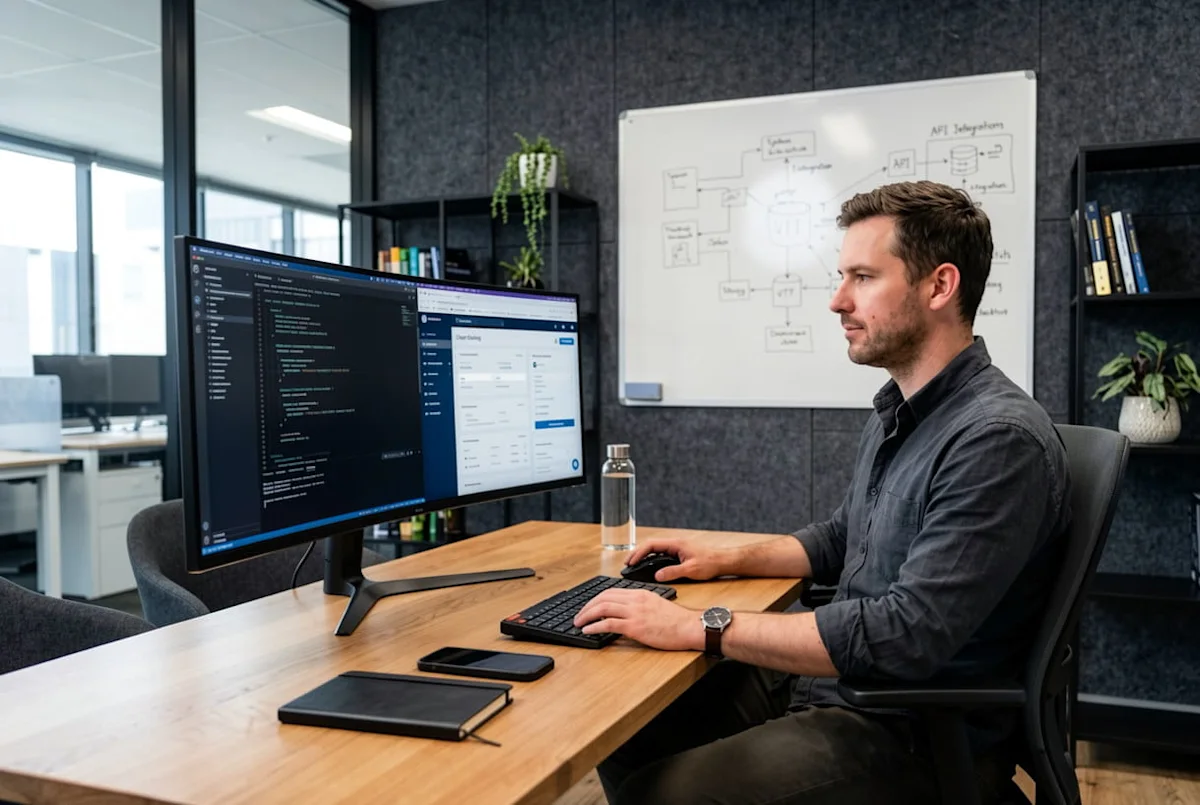
Common scenarios include:
- You need to build a custom e-commerce store with unique pricing or inventory logic
- A booking, scheduling or payment system needs to integrate directly with your site
- Your business requires a membership area or subscription portal for customers
- Your site has persistent technical bugs, stability issues or requires a platform migration
If your business has outgrown its website template and needs functionality built around your specific processes, a developer is the right hire.
Developers are also the right call when security or compliance is a concern, such as a healthcare site handling patient data or a legal practice managing sensitive documents.
Find a web developer on Bark who can build the custom features your business needs to grow
Can one professional do both?
Yes, professionals who work as both a web developer and designer do exist, and they're often called 'unicorns' in the industry.
Hiring a single person who handles both roles can be cost-effective for smaller projects where the scope doesn't justify two separate specialists.
That said, most professionals lean more heavily in one direction. Someone who presents as a web developer and designer may be stronger on design with working code knowledge, or vice versa. Always review their portfolio carefully to understand where their skills are the strongest.
For larger or more complex projects, splitting the roles between two specialists often produces better outcomes. A dedicated designer goes deeper into UX and visual design, while a dedicated developer builds a more technically sound back end.
When do I need a full-stack developer?
A full-stack developer handles both front-end and back-end development, covering the complete technical build of a website or web application.
You'll typically need one when your project requires custom server-side logic alongside a polished front-end experience.
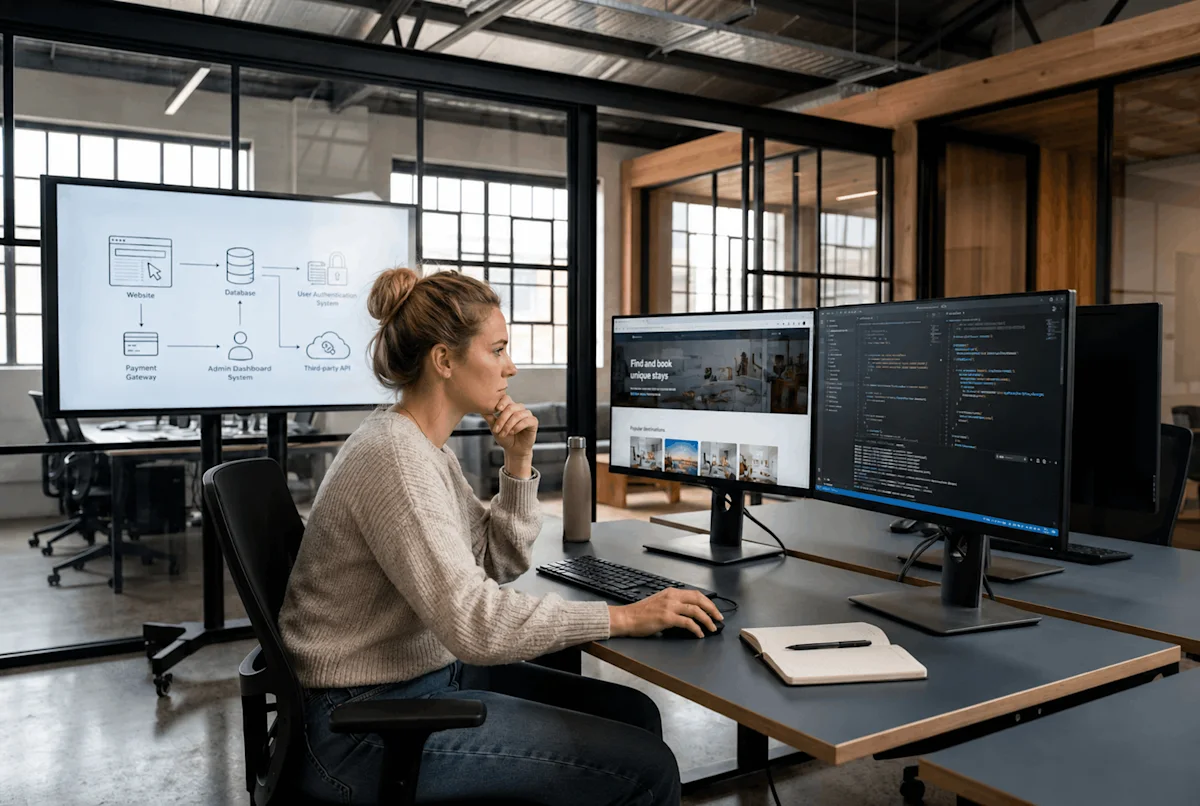
Common projects that call for a full-stack developer include:
- Marketplaces
- Booking platforms
- Custom e-commerce solutions
- Sites requiring user authentication
- Dynamic content systems
- API integrations
Full-stack developers charge a premium over specialists, typically because of the breadth of their skill set.
If your project is ambitious but your budget is limited, some agencies bundle a designer-developer team for a fixed project rate. This can be more cost-predictable than hiring multiple contractors separately.
What about website builders like WordPress, Wix and Shopify?
Website builders have changed the equation for many small Australian businesses.
Platforms like Squarespace, Wix and Shopify come with built-in design systems that reduce the need for custom coding. For some businesses, they remove the need for a developer entirely.
There is a ceiling to what these platforms can do. If your business needs features that fall outside what the platform natively offers, you'll hit limitations only a developer can resolve.
According to professionals interviewed by Bark, factors such as professional design, clear messaging, user experience, page speed and search visibility typically have a greater impact on results than the choice of website builder alone.
Plugins can extend functionality, but custom integrations, unique checkout flows or complex membership logic often need hands-on development work.
The right platform also depends on your business model:
- Shopify suits product-based businesses
- WordPress suits content-heavy or service-based businesses
- Squarespace suits visual-first brands that value simplicity
A good web designer or developer will recommend the right fit before any build begins.
How much does it cost to hire a web designer or developer in Australia?
Rates vary based on experience, specialisation and location.
Here's a general guide to what Australian businesses can expect to pay.
Web design and development rates in Australia (AUD, excluding GST)
Role | Hourly Rate | Typical Project Cost |
|---|---|---|
Web designer (freelance) | $80 to $120/hr | $1,000 to $15,000+ |
Front-end developer (freelance) | $60 to $180/hr | $2,500 to $25,000+ |
Back-end developer (freelance) | $80 to $220/hr | $3,000 to $40,000+ |
Full-stack developer (freelance) | $100 to $250+/hr | $5,000 to $75,000+ |
Web design and development agency | $160 to $250/hr | $5,000 to $100,000+ |
For a straightforward small business brochure site of five to eight pages, budget between $2,000 and $8,000 for a designer-led build on a CMS platform. Custom-built sites with unique functionality start from around $15,000 and can rise significantly based on complexity. For a full breakdown of what you'll pay, check out Bark’s web design cost guide for Australian businesses.
How do you choose the right professional for your project?

Start by writing down what your website needs to do, not just how it should look. That list will quickly reveal whether you need a designer, a developer or both.
'I need visitors to book and pay for appointments online' points clearly to development work. 'My site looks unprofessional' points to a designer.
Ask to see portfolios and case studies from projects similar to yours in size and industry. A web designer's portfolio should show strong visual thinking. A developer's portfolio should include working sites with features that match what you need.
Oliver recommends gathering examples before you even start speaking with professionals. Bringing three websites you like and three you dislike can help communicate your preferences far more clearly than trying to describe them verbally.
Don't hire based on aesthetics alone when your project has specific technical requirements. Checking reviews matters too.
Several professionals interviewed by Bark highlighted that business owners often focus heavily on visual design while overlooking factors such as user experience, page speed, SEO and site structure. These behind-the-scenes elements often have a greater impact on long-term website performance than design trends alone.
A website designer or developer with verified reviews from Australian clients is more likely to deliver on time and within scope. Bark makes it easy to compare multiple professionals with real client feedback before you commit.
Ultimately, the choice between a web designer and a web developer comes down to what you need your website to achieve. Designers handle how it looks and feels, and developers handle how it works. For most small Australian businesses, a designer within a CMS platform is enough, but complex, feature-rich sites need a developer or a combined team.
Whether you're working with a designer, developer or agency, the most successful projects start with clear goals. Knowing what your website needs to achieve will make it easier to choose the right professional and avoid paying for features that don't support your business objectives.
If your site needs to look better or feel more trustworthy, start with a designer. If it needs new functionality, integrations or custom features, start with a developer.
FAQs
Many agencies and freelancers offer design and development as a combined service. You can find professionals who specialise in one or both disciplines on Bark. Compare portfolios, read verified Australian reviews and receive free quotes from multiple experts at once.
Explore all guides about growing your business
Scale your business with the right experts. Explore step-by-step guides on hiring web designers, planning work events, office cleaning, and legal services with Bark.