
What should I charge as an electrician in Ireland?
Last updated November 3, 2026
A detailed 2026 guide for Irish electricians on setting hourly, day and job rates, covering regional pricing, VAT, EV charger and rewiring jobs and how to quote work that wins.
What should I charge as an electrician in Ireland?
Last updated November 3, 2026
A detailed 2026 guide for Irish electricians on setting hourly, day and job rates, covering regional pricing, VAT, EV charger and rewiring jobs and how to quote work that wins.
Written by

Electricians in Ireland typically charge an average of €65 an hour for standard scheduled work, or around €400 for a full eight-hour day. Call-out and minimum charges average €110, while Dublin, after-hours and specialist work command higher rates. Based on quote data from over 1,195 electricians on Bark across Ireland in 2026, hourly and day rates remain common ways to price standard work.
List your rates and start winning jobs on Bark
Your rate isn’t just a number; it needs to cover your labour, overheads, van, insurance and the years it took to become Safe Electric registered. A rate that only covers materials and diesel isn't a rate but a subsidy for the client. Consistently undercharging also makes it harder to price future jobs profitably.
This guide breaks down real 2026 rates for electricians across Ireland, by job type, region and pricing model. You'll also see how to structure quotes that win work, rather than simply offering the cheapest price.
Note: All prices in this guide exclude VAT unless stated otherwise.
What factors should you consider when setting your electrical rates?
Six things consistently separate electricians charging €45 an hour from those charging €80 for similar work. None of them are arbitrary.
Location
Dublin-based electricians can sustain higher rates than rural counterparts because operating costs, from van insurance to yard rent, run higher in the capital. A Cork electrician doing identical work typically charges 10 to 20% less.
Experience and certification
Safe Electric registration is a legal requirement for restricted electrical works in domestic premises, not a nice-to-have. Clients increasingly ask to see it, and it supports a rate above unregistered or unverified competitors.
Property age and access
Rewiring a 1990s semi with dry lining is faster than chasing cable through solid stone walls in a period cottage. Older properties and difficult access both add real hours, so your rate should reflect this before work begins.
Urgency
Same-day and after-hours work costs you more through disrupted scheduling and lost sleep. Most electricians price this at a 20 to 30% premium above their standard day rate.
Specialism
EV charger installation, solar integration and commercial fit-outs command higher rates than general domestic maintenance. These jobs demand ongoing training and specific certification that general call-outs don't.
Materials and markup
A basic socket costs under €10, while a premium finish with USB-C charging can run €40 to €50. Pricing materials at cost without a handling margin quietly erodes your day rate on every job.
What hourly, daily and call-out rates should electricians charge?
Rates for electricians in Ireland cluster fairly tightly once you strip out outliers. The table below reflects the middle of that market and gives you useful benchmarks.
Standard electrician rate structure (EUR, excluding VAT)
Rate type | Average price |
|---|---|
Standard hourly rate (scheduled work) | €65 per hour |
Call-out or minimum charge | €110 |
Full day rate (8-hour shift) | €400 |
Emergency or out-of-hours rate | €115 per hour |
Apprentice or second pair of hands | €35 per hour |
An electrician's rate per hour of €65 assumes scheduled, daytime work with reasonable access and no unusual complexity. Anything below that starts to compress your actual take-home once fuel, materials handling and admin time are factored in.
Your electrician call-out fee protects against short jobs that don't justify a full hourly rate on their own. A call-out charge around €110 typically covers travel and the first hour of diagnostics or a minor repair.
Day rates make sense once a job runs past four or five hours, since they usually offer a modest discount to the straight hourly equivalent. If you consistently do full days on-site, a day rate gives clients cost certainty and gives you predictable billing.
How do electrical rates vary across Ireland?
Location changes what you can charge more than almost any other factor. The gap between counties is wider than many electricians assume.

The table below shows real regional averages by hourly and day rate.
Electrician rates by region (EUR, excluding VAT)
Region | Average hourly rate | Average day rate |
|---|---|---|
Dublin | €68 per hour | €385 |
Cork | €75 per hour | €300 |
Galway | €70 per hour | €285 |
Limerick | €70 per hour | €275 |
Rural and West | €58 per hour | €240 |
Dublin's day rate sits well above the rest of the country, driven by higher demand and operating costs in the capital. Cork, Galway and Limerick sit broadly in line with each other, generally 10 to 20% below Dublin on like-for-like jobs.
If you work rurally, a travel surcharge of around €35 per job is common practice rather than an unusual add-on. Factor this in separately rather than absorbing it into your standard rate, since rural call-out travel can easily exceed the job itself.
Electricians relocating between regions or expanding coverage into a new county should reprice rather than carry their old rate with them. A Dublin rate charged in rural Mayo can price you out of most quotes before the client sees your work.
Compare your rates on Bark and see what clients in your area are being quoted
What should you charge for different types of electrical work?
Beyond your baseline hourly or day rate, most electricians build a mental price list for common jobs. Having this written down speeds up quoting and keeps your pricing consistent from client to client.
Common electrical job prices (EUR, excluding VAT)
Job | Average price |
|---|---|
Socket or switch replacement | €110 |
New double socket (surface run) | €155 |
Light fitting installation | €120 |
Outdoor or security lighting | €225 |
Six-downlight ring | €450 |
Electric shower circuit | €340 |
Interlinked smoke alarms (3 units) | €325 |
The gap between a socket replacement and a new socket isn't padding, it reflects genuinely different work. A replacement reuses existing wiring behind the wall, while a new socket usually means running fresh cable, which takes longer and uses more material.
Light fitting installation sits at a similar price to a socket for the same reason: it's mostly swap-and-connect work on an existing circuit. Outdoor and security lighting costs more because it involves exterior-rated fittings, cable routing outside the building envelope and often a separate switched circuit.
A six-downlight ring costs more again, not because each downlight is expensive on its own. Ceiling access, cable runs to six points and testing the finished circuit all add real hours. Pricing it as six times the single-fitting rate would undercharge for the setup and testing time shared across the whole job.
An electric shower circuit carries a higher price than most single-room jobs. It's a dedicated high-current circuit with its own isolation switch and specific cable rating. Getting this wrong isn't a minor snag, it's a safety issue, and the price should reflect that responsibility.
Interlinked smoke alarms cost more than a single alarm fitted on its own. Interlinking means running signal cable between units so each alarm triggers the others. A full interlinked smoke and heat alarm system across multiple floors averages around €550, including extra heat detectors and longer interconnecting cable runs.
Consistent pricing on these smaller jobs also protects you from appearing to charge differently between clients for the same work. If two clients ever compare notes on a socket swap, matching prices build trust, while unexplained differences invite exactly the kind of price negotiation you want to avoid.
These figures all assume straightforward access and no unusual wiring faults uncovered mid-job. Build in a standard clause for additional work found on-site, covered later in this guide, so a socket swap doesn't quietly turn into an unpaid rewiring diagnosis.
How should you price a house rewiring job?
Rewiring is where pricing mistakes cost electricians the most, because the scope varies enormously between properties described the same way by clients. A standard rewire and a comprehensive rewire are genuinely different jobs.
House rewiring cost by scope, 3-bed semi (EUR, excluding VAT)
Rewire scope | Average price |
|---|---|
Partial rewire (1 to 2 circuits) | €1,650 |
Standard rewire (like-for-like, minimal opening up) | €5,500 |
Comprehensive rewire (full strip-out, new consumer unit, full compliance) | €11,600 |
A standard rewire generally means replacing cabling on a like-for-like basis without extensive wall opening or replastering. A comprehensive rewire includes full compliance upgrades, a new consumer unit and typically seven to ten days on-site.
Always clarify which scope a client is asking for before quoting. The price gap between the two is enormous, so unclear expectations can create disputes at completion.
Dublin rewires tend to sit at the upper end of the comprehensive range, often closer to €12,500 for a 3-bed semi. Factor your own region's baseline into your pricing rather than relying solely on a national average.
How should you price EV charger installation?
EV charger installation has become one of the most consistently underpriced jobs in Irish domestic electrical work. A standard 7.4kW installation averages around €1,150 before any SEAI grant is applied.
EV charger installation cost (EUR, excluding VAT)
Installation type | Average price |
|---|---|
Standard 7.4kW charger (before grant) | €1,150 |
Smart or tethered charger | €1,500 |
Consumer unit upgrade if required | €450 |
The SEAI grant reduces the client's net cost by up to €300, which is worth explaining clearly in your quote. About 70% of Irish homes need no electrical upgrade before a 7.4kW charger is installed.
Around a quarter of properties need a consumer unit upgrade alongside the charger, while only a small minority face major rewiring costs. Price the assessment visit separately from the installation itself, since diagnosing the property's requirements takes real time.
Smart and solar-ready chargers cost more to fit and typically carry a higher margin. Clients are paying for functionality beyond a basic installation, even when labour hours are similar.
Get matched with EV charger installation leads on Bark
What should you charge for electrical inspections and reports?
A Periodic Inspection Report, more commonly called an EICR, is a distinct service from repair work and should be priced separately. Property size is the main cost driver, since larger properties have more circuits to test.
Electrical inspection (EICR) cost by property size (EUR, excluding VAT)
Property size | Average price |
|---|---|
1 to 2 bed apartment | €200 |
3-bed semi-detached | €275 |
4 to 5 bed detached | €400 |
Commercial premises | €600 |
A 3-bed semi-detached inspection costing around €275 to €450 reflects genuine variation in how different electricians test and document. A rushed EICR that skips proper testing isn't cheaper. It's a liability with your name and registration number on it.
Bundling an EICR with remedial work quoted from the same visit is common practice and can be efficient for both sides. Make sure the inspection fee stands alone if the client decides not to proceed with follow-up work.
What should you charge for emergency and out-of-hours work?
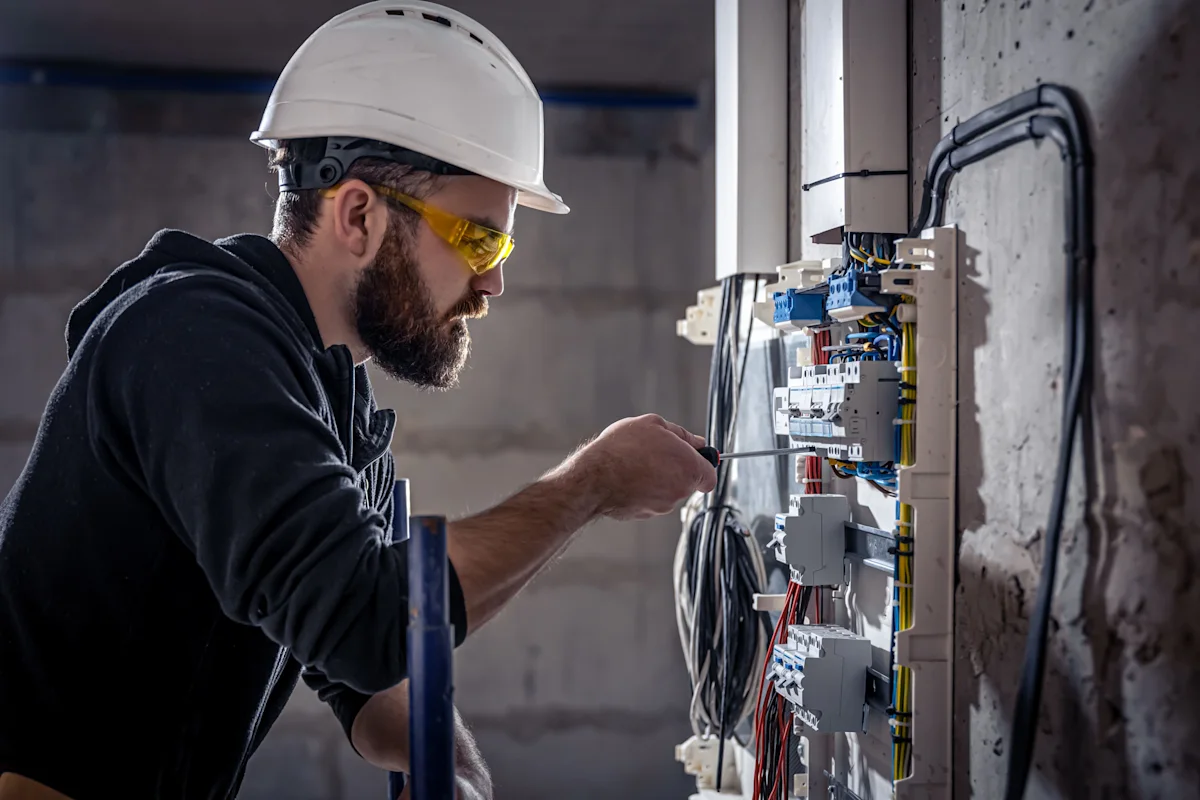
Emergency call-outs justify a real premium because you're disrupting your schedule and often your evening or weekend to attend. Most electricians price emergency work at 20 to 30% above their standard day rate.
A typical emergency call-out charges an initial fee of around €150 for the first hour, with additional time billed at the standard emergency hourly rate. Be explicit about this structure upfront, since disputes over emergency pricing often stem from unclear expectations.
Genuine emergencies include a tripped board with no power restored, a burning smell or exposed live wiring. A client who simply forgot to book ahead for non-urgent work doesn't need the same rate.
Treating every call-out as an emergency can also erode trust with regular clients.
How should you price materials and markups?
Materials pricing is where many electricians quietly lose money, mostly by pricing at supplier cost with no handling margin. Sourcing, transporting and warranting materials all take real time that deserves compensation.
There's no single standard markup percentage across the trade, since it depends heavily on your supplier relationships and the materials involved. What matters more is consistency: pick an approach and itemise it clearly rather than burying materials inside a vague lump sum.
Itemising labour and materials separately on every quote also protects you when a client asks why a job costs what it does. A €40 premium socket next to a €10 basic one is easy to justify when both are listed clearly.
Always price from your own actual costs first, not by guessing what a competitor might charge. Competitor-based pricing leaves you exposed when your overheads, insurance or fuel costs shift.
Should you charge by the hour, day or job?
There's no single correct answer, and the market reflects that split. Roughly half of Irish trade quotes are priced per job, around 40% hourly and the remaining 10% by the day.
Per-job pricing suits well-defined work like socket replacement or smoke alarm installation, where you already know roughly how long it takes. It gives clients cost certainty upfront and protects you from looking slow on a job that takes longer than expected.
Hourly pricing suits diagnostic work and jobs where the scope genuinely can't be known until you're on-site. Fault-finding call-outs are a good example, averaging around €250 nationally once diagnosis and repair are both included.
Day rates suit larger jobs like rewires and full renovations, where hourly billing can create friction over every small task. Pick the model that matches the job rather than defaulting to one model for everything.
How should you set your electrical rates?
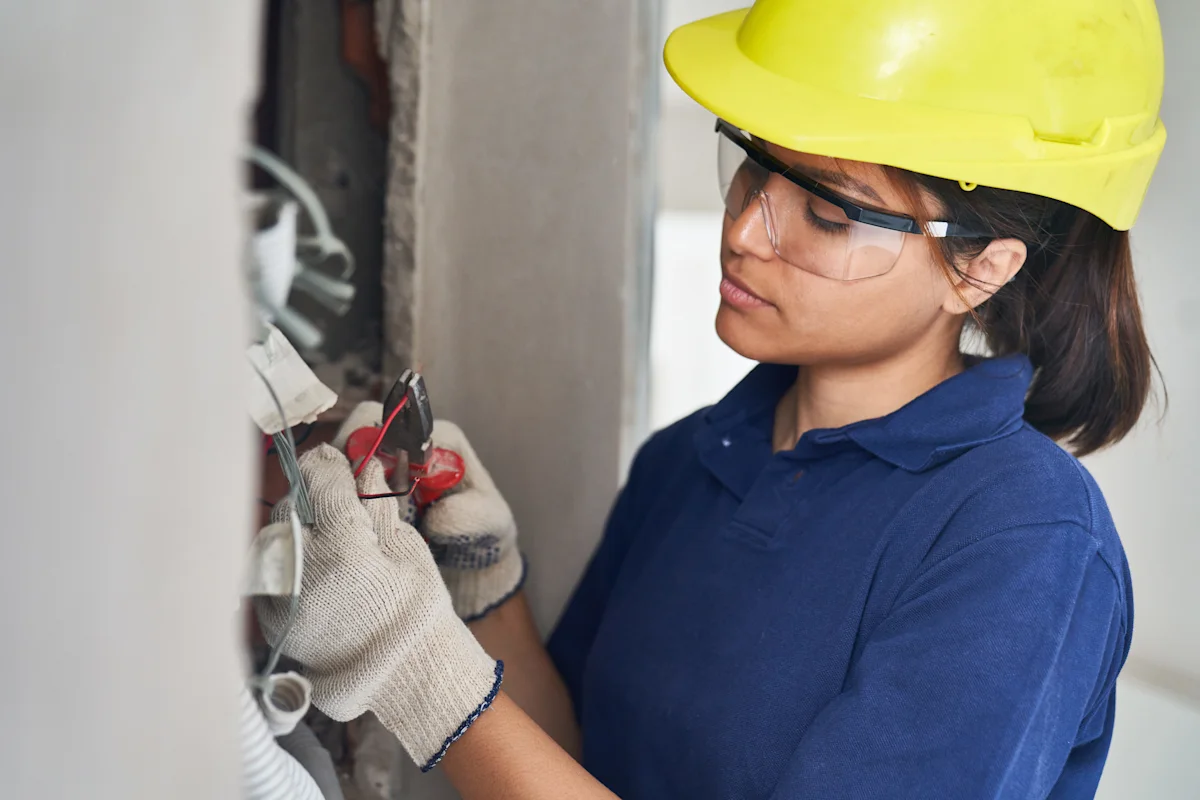
Work backwards from the income you actually want, not forwards from what feels like a reasonable hourly figure. Start with your target take-home, add your annual running costs, then divide by the hours you can realistically bill.
Self-employed electricians in Ireland typically take home somewhere between €45,000 and €65,000 a year after costs. Experienced sole traders and those doing specialist or commercial work generally sit toward the higher end.
Once you've calculated your number, check it against the going regional rate rather than the other way around. If your required rate sits well above the local market, look at your overheads or specialism rather than simply underpricing yourself.
A higher average job value, a Dublin postcode, a specialism like EV or commercial work, or genuinely lean overheads can all push that number upward. Review the calculation at least once a year, since your costs rarely stay flat even when your rate does.
How can you build a quote that wins work?
A quote that wins work isn't necessarily the cheapest one. It's the clearest one.
Clients choosing between electricians frequently pick based on how confident and specific the quote looks, not purely on the bottom line.
Itemise the job clearly: labour, materials, call-out or day rate, and anything explicitly excluded. A vague one-line quote invites price-shopping, while a detailed one gives the client something concrete to compare.
State your VAT treatment explicitly on every quote, since an unclear VAT position can create billing disputes. Confirm whether the quoted figure is inclusive or exclusive of VAT before the client signs off.
Speed matters more than many electricians assume. Clients who receive a same-day quote are more likely to book because they have less time to collect competing quotes.
Respond to new leads faster with Bark's professional tools
How often should you review your rates?

Annually, at minimum, and ideally tied to a specific point in your business calendar. Construction sector costs for materials and wages rose 3.2% in the year to June 2026.
If your rate hasn't moved in that time, your real margin has quietly shrunk by roughly that amount. Review your rate card alongside supplier price lists, insurance renewals and fuel costs, since all three can affect your margins.
A rate review doesn't have to mean a dramatic increase every year. Sometimes it confirms your current rate still holds up, which is useful information in itself.
Electricians in Ireland average €65 an hour or €400 for a full day, but your best rate depends on the work you take on. Dublin, emergency work and EV specialism can command a premium, while rewiring and inspection work need their own pricing approach.
Use these benchmarks as a starting point, then adjust your rates for the scope, location, complexity and urgency of each job. The biggest pricing mistake isn't charging too much, but using one rate for every type of work.
Create your free profile on Bark and start quoting jobs that match your work.
FAQs
A normal day rate for a qualified electrician in Ireland averages around €400 for a full eight-hour shift. Dublin-based electricians typically charge closer to €385 to €450, while rural rates tend to run lower.


