
How much do kitchen projects cost in Ireland?
Last updated November 2, 2026
A detailed 2026 price guide to kitchen projects costs across Ireland, covering size, kitchen type, materials, region and how to budget properly.


How much do kitchen projects cost in Ireland?
Last updated November 2, 2026
A detailed 2026 price guide to kitchen projects costs across Ireland, covering size, kitchen type, materials, region and how to budget properly.
Written by

A kitchen renovation in Ireland typically costs €18,500 for a mid-range fitted kitchen. A basic flat-pack refresh averages €7,500, while a large or premium kitchen averages €37,500. Based on over 545 kitchen renovation quotes on Bark in Ireland in 2026, kitchen size and specification are the biggest cost drivers.
Get free quotes from kitchen fitters on Bark and compare prices for your project
A small apartment kitchen refresh costs a fraction of what a large open-plan kitchen with an island costs. The difference comes down to cabinet quality, worktop material and whether the layout changes. Moving a sink or cooker adds plumbing and electrical costs that a like-for-like refresh can avoid.
This guide breaks down kitchen renovation prices in Ireland by size and spec of kitchen. You'll also learn what fitting quotes should include and how to budget properly.
Note: All prices in this guide exclude VAT unless stated otherwise.
How much does a kitchen renovation cost by size and scope?

Kitchen size and scope set the baseline for almost every renovation quote. Larger kitchens generally require more cabinets, worktops and labour than smaller ones.
Kitchen renovation cost by size and scope (2026, EUR, excluding VAT)
Kitchen tier | Average total project cost | Typical scope |
|---|---|---|
Budget or basic refresh | €7,500 | Flat-pack cabinets, standard worktop and unchanged layout |
Mid-range fitted kitchen | €18,500 | Rigid or pre-assembled cabinets, mid-range worktop and appliances |
Large or premium kitchen | €37,500 | Larger layout, possible island, premium worktop and integrated appliances |
A budget refresh keeps the existing layout and uses flat-pack cabinets. A mid-range fitted kitchen usually includes rigid or pre-assembled cabinets and a broader installation scope.
A large or premium kitchen often includes an island, integrated appliances and premium worktops. These features increase both labour requirements and material costs. These figures cover the full project, including cabinets, worktop, appliances and installation.
What does the cost of a kitchen renovation actually cover?
Understanding where your kitchen budget goes helps explain why similarly sized kitchens can have very different prices. Cabinets, worktops, labour and appliances usually account for much of the spend.
Cabinets are often the highest individual cost, while worktops and installation labour can also make up a substantial part of the budget.
Bark data puts labour-only installation at €2,500 for a small kitchen, around one-third of the €7,500 average budget for a basic refresh. On larger, higher‑spec kitchens, installation is often a smaller share of the overall budget. Cabinets, worktops, appliances, plumbing and electrical work can add substantially to the total.
A contingency of around 9% is worth building into your budget. Uneven walls, outdated wiring and other issues can emerge after the old kitchen is removed.
Compare fixed-price kitchen fitting quotes on Bark and see what's typically included
How does kitchen type affect the cost?

Beyond size, the type of kitchen you choose has a major bearing on the final price. Three broad categories cover many Irish kitchen projects, and knowing where a supplier's offering sits between them helps you compare quotes properly.
Flat-pack kitchens
Flat-pack kitchens arrive as pre-manufactured cabinet panels for on-site assembly. They generally sit at the more affordable end of the market, since you're paying for standardised parts rather than a made-to-measure design.
This category includes well-known suppliers like IKEA and B&Q, and it suits homeowners with a fairly standard kitchen layout. Assembly can be completed by a professional fitter or as a DIY project, although professional installation can provide a more consistent finished result.
Pre-assembled kitchens
Pre-assembled kitchens arrive with cabinets already built and ready for installation. They generally cost more than flat-pack options because more manufacturing and assembly work has already been completed.
The main benefit is faster installation, with fewer on-site assembly steps. Pre-assembled cabinets are also less prone to the small alignment issues that can occur when panels are built on-site. This can be particularly useful in kitchens with several units in a row.
Fitted kitchens
Fitted kitchens are custom-measured and manufactured for a client's space. This category ranges from mid-range fitted kitchens to fully bespoke handmade designs, so it covers the widest price spread of the three.
A mid-range fitted kitchen typically uses rigid cabinets built to your exact measurements, rather than a standard modular size. A fully bespoke kitchen goes further again, often including handmade cabinetry, non-standard proportions and design input from a dedicated kitchen designer.
Where the categories blur
The boundaries between these categories aren’t always clear. Many Irish suppliers offer rigid or semi-custom cabinets between standard pre-assembled and bespoke options.
This middle ground often gives the best value for homeowners who want a properly fitted kitchen without paying for a fully bespoke design. Ask what is included in the supplier's definition of a fitted or bespoke kitchen, as these terms can vary between suppliers.
How much do kitchen fitting materials cost in Ireland?
Worktop material is one of the clearest ways similarly sized kitchens can end up with different prices. The material chosen can shift the total cost by thousands of euro.
Worktop cost by material (2026, EUR, excluding VAT)
Worktop material | Average price per linear metre |
|---|---|
Laminate | €75 |
Solid wood | €225 |
Quartz or engineered stone | €400 |
Porcelain slab | From €400 |
Natural granite | €475 |
Laminate is generally faster and easier to cut and fit. Solid wood needs careful sealing and levelling for a durable finish.
Quartz, granite and porcelain require precision cutting and specialist fabrication, which can increase installation costs.
Appliance prices vary widely by brand and specification. A basic built-in single oven can start around €200, while premium models can exceed €900.
Appliance installation is usually charged separately from the appliance itself. An electric single oven typically costs €40 to fit, while a gas hob can cost around €200. If your renovation involves domestic gas work, it must be completed by a Registered Gas Installer (RGI).
What affects the cost of a kitchen renovation?

Several practical factors shape where an individual quote lands beyond size and kitchen type. These factors can explain substantial differences between otherwise similar projects.
- Cabinet type: Flat-pack, rigid and bespoke cabinets occupy different price points, with bespoke options carrying the highest premium.
- Worktop and appliance specification: Premium materials and integrated appliances can increase the overall project cost.
- Wall and floor condition: Uneven walls or floors can require remedial work before installation.
- Access: Narrow hallways, stairs and restricted entrances can increase installation time.
- Removal requirements: A full strip-out adds labour beyond fitting into an already cleared space.
- Location: Dublin and some other urban areas can sit above the national average.
Does location affect the cost of a kitchen renovation?
Where you live in Ireland can affect what you pay for a kitchen renovation. Dublin generally sits above the national average.
Dublin kitchen renovation prices typically run around 18% above the national figure. Based on the €18,500 mid-range average, this puts a typical Dublin project at just over €21,800.
Cities including Cork, Galway and Limerick generally sit closer to the national average than Dublin. Rural counties can also fall at or below the national baseline.
What additional costs should you look out for?
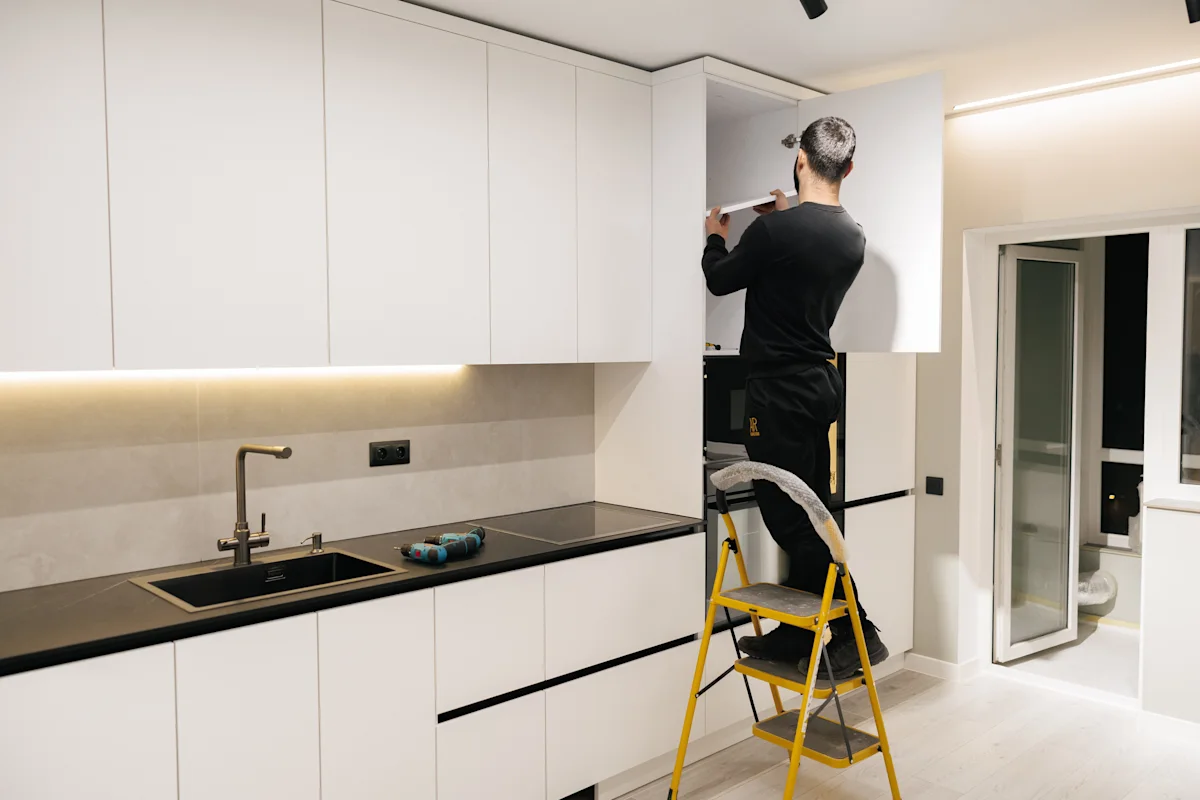
Several costs sit outside the core cabinet, worktop and labour price. Confirming these items before work begins can prevent unexpected additions to your budget.
Additional kitchen renovation costs (2026, EUR, excluding VAT)
Cost item | Average price |
|---|---|
Skip hire, delivery and old unit removal, per job | €750 |
Mini skip hire alone | €180 |
RSJ installation to open up a wall | €3,000 |
Skip hire, delivery and old unit removal
Removing an old kitchen involves labour and disposal costs, not just skip hire. The price can cover stripping out cabinets and appliances, loading waste and arranging suitable disposal. Difficult access, glued units and tiled surfaces can increase removal time and costs.
Mini skip hire alone
A mini skip on its own costs less because it only covers the hire and collection of the container, not the labour to fill it. This option suits a smaller job, such as replacing a single run of units, where a full strip-out and disposal service isn't needed.
A mini skip holds less waste than the larger skip typically needed for a full kitchen removal. Check the required size before booking to avoid additional collection costs.
RSJ installation to open up a wall
Structural work adds substantial cost to a standard renovation because it involves calculations, materials and specialist labour. An RSJ installation to open a wall, such as for an open-plan kitchen, averages €3,000.
This cost can include the structural engineer's assessment, steel beam and specialist installation labour. Confirm whether these costs are included in your renovation quote or priced separately.
Exclusions worth confirming
Major electrical upgrades, plumbing relocation and extensive tiling can also sit outside standard fitting quotes. These may need to be completed by separate specialists and can add to the overall project cost.
Confirm these exclusions in writing before accepting a quote. This makes it clear which work is covered and which costs you may need to budget for separately.
Find kitchen fitters who can provide clear quotes with additional costs included
What money-saving tips actually work for a kitchen renovation?
Several practical choices can reduce your final bill without compromising the finished result. None require cutting corners on essential installation quality.
- Compare kitchen and worktop prices: Ask your fitter or supplier for different material options and compare the costs before making your final choice. A mid-range option can deliver a similar look without the premium price of high-end materials.
- Keep your existing layout: Leaving the sink, cooker and appliances where they already are avoids much of the plumbing and electrical cost that comes with moving them. This is one of the most effective ways to keep a project closer to the lower end of the price range.
- Get at least three quotes: For anything beyond a small refresh, comparing three quotes gives you a clearer view of fair pricing for your specific property. A single quote gives you no real way to judge whether a price is high, low or reasonable.
- Order appliances and materials early: Check lead times for appliances and made-to-measure worktops before installation begins. Delays can leave your fitter unable to complete the work and may extend the project timeline.
- Ask what's included before comparing prices: A cheaper quote can simply be missing a service another quote already includes, such as old kitchen removal or appliance fitting. Confirming scope first makes any price comparison genuinely like-for-like.
What should a kitchen fitting quote include?
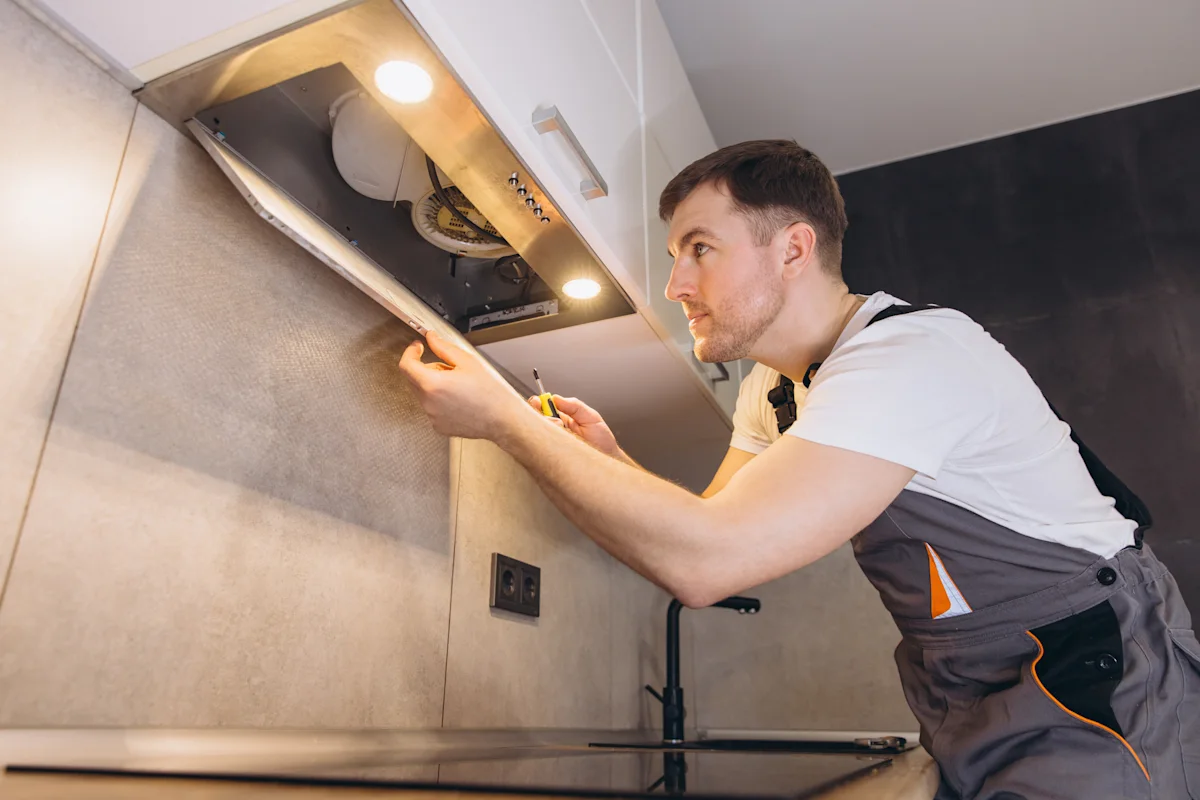
An itemised quote makes it easier to compare different kitchen fitters on a like-for-like basis. It should clearly show what is included and which costs you may need to pay separately.
A complete kitchen fitting quote should cover:
- Labour, stated as a day rate or fixed price
- Cabinet assembly and unit installation
- Worktop supply and fitting
- Appliance fitting and connection
- Removal of the old kitchen and waste disposal
- Plumbing and electrical work, including whether specialist work is subcontracted
- VAT, clearly stated as included or excluded
Some projects also require tiling, flooring, plastering or decorating, so confirm whether these trades are included in the quote.
Check whether VAT is included and ask the fitter to list any exclusions or potential extra costs, such as structural work, electrical upgrades or plumbing changes. These could include structural work, electrical upgrades, plumbing changes or waste disposal.
How can you get an accurate kitchen fitting quote?
The more information you provide, the more accurate your kitchen renovation quote is likely to be. A vague description of a new kitchen leaves too much scope for uncertainty.
- Share the kitchen's exact dimensions. Accurate wall-to-wall measurements help the fitter estimate the number of units and worktop length before visiting your home.
- Confirm whether the layout is changing. State clearly whether the sink, cooker and appliances are staying put or moving, since this single detail has one of the biggest effects on the final price.
- Mention your preferred worktop material. Laminate, solid wood, quartz and granite all carry very different price points, so naming one upfront avoids a quote based on the wrong assumption.
- Note your appliance specification. A budget electric oven and a premium gas range need different connections and different installation time, so flagging this early keeps the quote realistic.
- Expect a site visit before a fixed quote: A property inspection can reveal issues such as uneven walls or hidden pipework that may affect the final price.
How long does kitchen fitting take?

Kitchen renovation timelines involve design, manufacturing and on-site installation. These stages should be considered separately when planning the project.
A full kitchen project typically runs four to eight weeks from initial design to completion, including one to two weeks for design and quotation. Manufacturing can take another two to four weeks. Installation itself can then take one to two weeks, depending on the project's complexity.
A small kitchen typically takes three to five days on site, while a standard or mid-range kitchen can take around five to seven days. Large or bespoke kitchens can take considerably longer, as custom joinery and multiple subcontractors can extend the installation period.
Why is it worth planning a kitchen installation carefully?
Careful planning protects both your budget and your timeline. Many costly surprises result from late decisions rather than genuinely unpredictable problems.
Confirming the layout before quoting helps avoid duplicated plumbing work. Ordering materials and appliances early can also reduce delays. A contingency of around 9% gives you room for unexpected issues, as problems such as damp subfloors or outdated wiring can emerge after removal begins.
Comparing several detailed quotes is more useful than simply choosing the lowest headline price. Check that each quote covers the same work before comparing totals.
A kitchen renovation in Ireland averages €18,500 for a mid-range fitted kitchen. A basic refresh averages €7,500, while a large or premium kitchen averages €37,500, with figures varying by project scope and specification. Cabinet type, worktop material, layout changes and location can all affect your final quote.
When comparing quotes, check whether removal, appliance fitting and VAT treatment are included. A lower headline figure may simply exclude work covered by another quote.
Get free, no-obligation quotes from reviewed kitchen fitters on Bark today
FAQs
Buying appliances through your kitchen supplier can be more convenient because delivery and installation can be coordinated. Buying separately may give you more choice or access to different prices, but check dimensions and delivery dates with your fitter first.


