
How much does tree surgery and care cost in Ireland?
Last updated November 2, 2026
A detailed breakdown of tree surgery and removal costs across Ireland in 2026, covering tree size, pruning, stump grinding, regional pricing, planning rules and choosing a qualified tree surgeon.
How much does tree surgery and care cost in Ireland?
Last updated November 2, 2026
A detailed breakdown of tree surgery and removal costs across Ireland in 2026, covering tree size, pruning, stump grinding, regional pricing, planning rules and choosing a qualified tree surgeon.
Written by

Tree surgery in Ireland averages €500 for removing a small tree and rises to around €4,000 for a large or structurally complex removal. Most medium-sized jobs cost about €950. Based on Bark's analysis of over 742 tree surgery and removal quotes across Ireland in 2026, tree size and site access are the two biggest factors behind the final price.
Get free quotes from qualified tree surgeons on Bark
A Leylandii in a back garden and an oak overhanging a house are both technically a tree job, but the work involved is completely different. One might take an hour with a chainsaw and wheelbarrow, while the other might require rigging equipment, a crane, road closures and a full team. Whether you're searching for tree surgery cost figures Ireland-wide or a more specific tree surgeon cost for Dublin, size and access decide almost everything.
This guide breaks down real tree surgery and removal prices by tree size, service type and county. You'll also learn what's legally required before you cut down a tree and what a fair quote looks like.
Note: All prices in this guide exclude VAT unless stated otherwise.
How much does tree surgery cost in Ireland?
Tree size is the single biggest factor in the price of any removal job. The table below shows average tree removal costs in Ireland by size, based on verified pricing from multiple Irish tree surgery providers.
Tree removal cost by size (EUR, excluding VAT)
Tree size | Average cost |
|---|---|
Small (under 6m / 20ft) | €500 |
Medium (6m to 12m / 20ft to 40ft) | €950 |
Large (12m to 18m / 40ft to 60ft) | €1,850 |
Extra large or structurally complex (18m+ / 60ft+) | €4,000 |
These figures cover felling, cutting the trunk and branches into sections and clearing the immediate work area. They don't include stump grinding or full waste removal from site, which most providers price separately.
A small tree in an open front garden with no obstacles is usually a straightforward same-day job. A large tree overhanging a roof, boundary wall or power line needs far more careful sectional dismantling, which is why the price jumps sharply once a tree passes the medium size band.
Compare tree removal quotes for your exact tree size on Bark
What factors influence the cost of tree removal?
Beyond size, five things consistently move the price up or down, and each one is worth understanding before you request a quote.
Tree species and condition
A dense hardwood like oak or beech takes longer to cut and section than a softer species like birch or Leylandii of the same height. A dead or storm-damaged tree can also cost more, since unstable branches need extra care to bring down safely.
Location and accessibility
A tree beside a driveway with room for a wood chipper and a truck is far cheaper to remove than one boxed in behind a house with no vehicle access. When equipment can't reach the tree, timber often has to be carried out by hand, which adds labour hours.
Proximity to structures
Trees hanging over a roof, a shed, a boundary wall or a neighbour's garden require slower, more deliberate sectional dismantling to avoid damage. This precision work adds time compared with felling a tree in open ground.
Required equipment
Jobs needing a crane, cherry picker or specialist rigging cost more than a straightforward chainsaw felling job. Whether a wood chipper can fit into the garden also affects the price, since hauling branches out manually takes longer.
Site access for waste removal
If a truck can back straight up to the tree, waste removal is quick and cheap. If timber has to be wheelbarrowed a long distance to the road, that additional labour is usually reflected in the final invoice.
What does a full tree surgery cost breakdown look like?
Not every job is a full removal. Pruning, crown work and stump treatment are priced differently, and it helps to see each service on its own rather than as one bundled figure.
Tree pruning cost by tree size (EUR, excluding VAT)
Tree size | Average cost |
|---|---|
Small (under 6m / 20ft) | €250 |
Medium (6m to 12m / 20ft to 40ft) | €450 |
Large (12m to 18m / 40ft to 60ft) | €700 |
Extra large (18m+ / 60ft+) | €1,150 |
Pruning is generally cheaper than removal for the same tree size, since the tree stays standing and there's less to cut, section and clear. It's the right choice when a tree is healthy but overgrown, unbalanced or blocking light.
Tree surgery service cost breakdown (EUR, excluding VAT)
Service | Average cost | What it involves |
|---|---|---|
Crown reduction | €600 | Reducing the overall size of the canopy |
Crown thinning | €475 | Removing selected branches to let light and wind through |
Pollarding | €550 | Cutting back to a framework of branches, usually on mature street or boundary trees |
Deadwood removal | €400 | Removing dead or dying branches for safety |
Height reduction | €650 | Lowering a tree's overall height without removing the crown |
Stump grinding | €310 | Grinding the stump below ground level after removal |
Stump grinding is rarely included in a standard tree removal quote. It's priced separately because it needs different equipment, and the cost depends on the stump's diameter and how far the roots have spread. Very small stumps can sometimes be ground for as little as €100, while wide, established stumps cost closer to the top of the range.
Get a quote for crown reduction or pruning on Bark
What additional services and charges should I expect?
Beyond the core removal or pruning price, a handful of standard charges appear on most invoices, and it's worth knowing about them before you book.
Most tree surgeons apply a minimum call-out charge of around €250 to cover travel, insurance and basic setup, even for small jobs. This is consistent across the providers we checked and applies whether the job takes ten minutes or two hours.
Genuine emergencies, such as a storm-damaged tree resting on a roof or blocking a road, typically cost more. Emergency call-out charges average around €450, reflecting the need for a crew to attend outside normal working hours or at very short notice.
Where a crew bills by the hour rather than by the job, a team of two or three typically charges around €130 an hour between them. Because most jobs take at least a few hours once travel and setup are factored in, hourly billing rarely works out cheaper than a flat quote for anything beyond a very small task.
If a tree needs a formal health or safety assessment, perhaps because a mortgage lender, insurer or local authority has asked for one, an arborist report or tree survey typically costs around €250. This is separate from any cutting work and is usually commissioned before a decision is made on removal.
Do tree surgery costs vary by county?
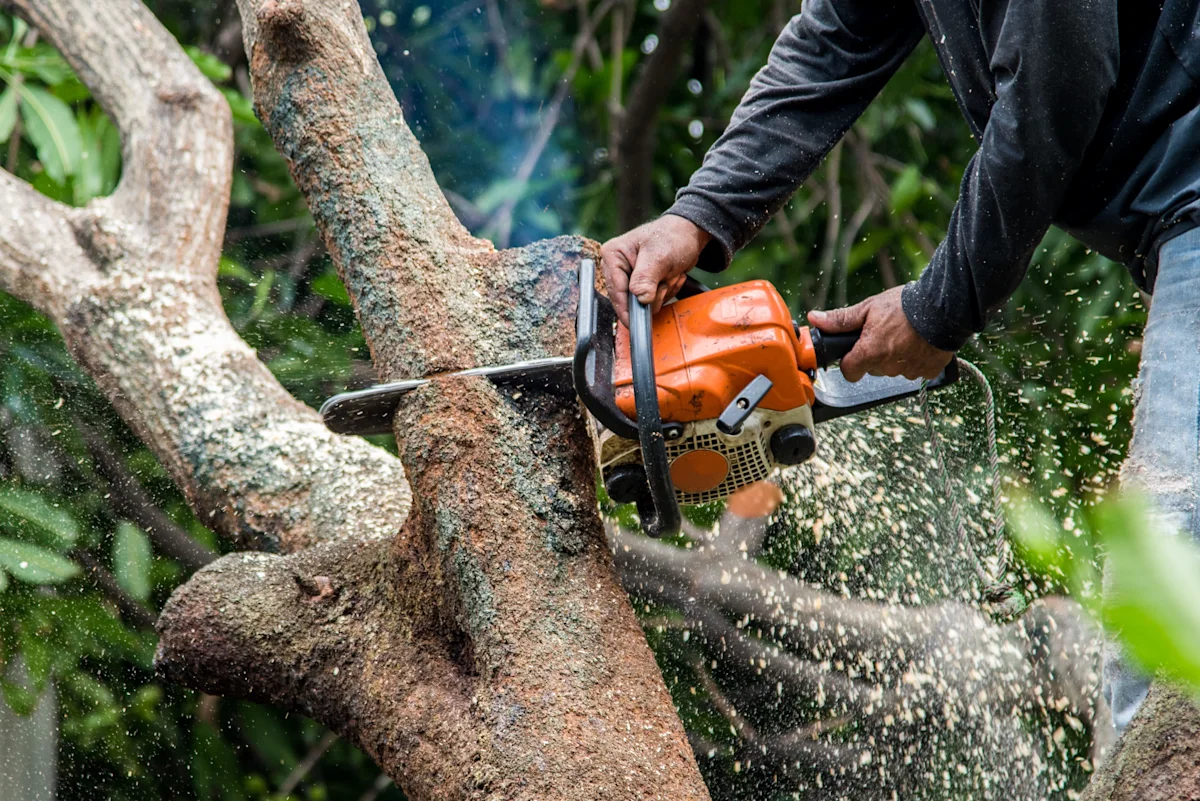
Location changes the price of tree work in Ireland, much as it does for most trades. Dublin sits at the top of the national range, with typical jobs averaging around €1,700 including VAT once size and access are factored in.
Cork, Limerick and Galway generally come in below Dublin for like-for-like jobs, reflecting lower operating costs outside the capital. This pattern holds across most home service trades in Ireland, not just tree surgery, and it's consistent across the providers we reviewed.
Rural areas add a different variable. A small job in a remote part of the country can attract a travel surcharge, since a crew may have to drive well beyond their usual coverage area for a single small tree.
If you live in a rural county, it's worth asking a few local providers for a quote rather than only contacting companies based in the nearest city. A tree surgeon already working in your area that week may quote lower than one making a special trip.
What are the rules around removing a tree in Ireland?
Most trees in a private residential garden can be removed without planning permission. The two main exceptions are trees protected by a Tree Preservation Order and trees covered by a planning condition attached to your property.
A Tree Preservation Order is placed by your local county or city council on a tree, group of trees or area of woodland considered to have real amenity value. Councils hold a public register of protected trees, and carrying out work on a TPO tree without consent is a criminal offence with real fines attached.
Separately, felling trees in Ireland can require a felling licence under the Forestry Act 2014, regardless of whether a TPO applies. Section 19 of the Act sets out exemptions that cover most typical garden situations.
- A tree standing in a designated urban area
- A tree within 30 metres of a building, excluding buildings built after the tree was planted
- Fruit trees such as apple, pear, plum and damson, outside a forest setting
- Trees under 20cm in diameter, measured 1.3 metres above ground level
Even where a felling licence exemption applies, it doesn't cancel out other legal protections. A tree can still be exempt from licensing under the Forestry Act while remaining protected under a TPO or the Wildlife Acts. It's worth checking both before booking work.
If your property sits near a designated conservation area, or your original planning permission included conditions about existing trees, contact your local authority's planning department. Do this before any work begins. A reputable tree surgeon will usually flag this during the quote stage rather than after the job's booked.
When shouldn't you cut down a tree?
Bird nesting season is the clearest legal restriction on timing. Under Section 40 of the Wildlife Act 1976, cutting vegetation in a hedge or ditch is prohibited between 1 March and 31 August to protect nesting birds during breeding season.
Reputable tree surgeons apply the same caution to general tree work during this window, not just hedges. Disturbing an active nest is an offence at any time of year, regardless of the calendar date. Enforcement is real: the National Parks and Wildlife Service brought seventeen prosecutions under Section 40 in 2025, with one Co. Laois case resulting in a €14,000 fine.
Structurally unstable or storm-damaged trees are the main exception to seasonal caution, since public safety takes priority over timing restrictions in a genuine emergency. Trees growing close to overhead power lines are another case where the usual rules change, because the electricity network takes precedence over normal scheduling.
Anywhere near ESB Networks' infrastructure, a six-metre hazard zone applies around poles, wires and other equipment. Neither homeowners nor tree surgeons should cut within that zone. ESB Networks offers a free tree-cutting assessment through its online account, typically actioned within four to six weeks.
A genuinely dangerous tree resting on live lines should be reported to ESB Networks immediately rather than left for a routine booking.
How much does commercial tree surgery cost?
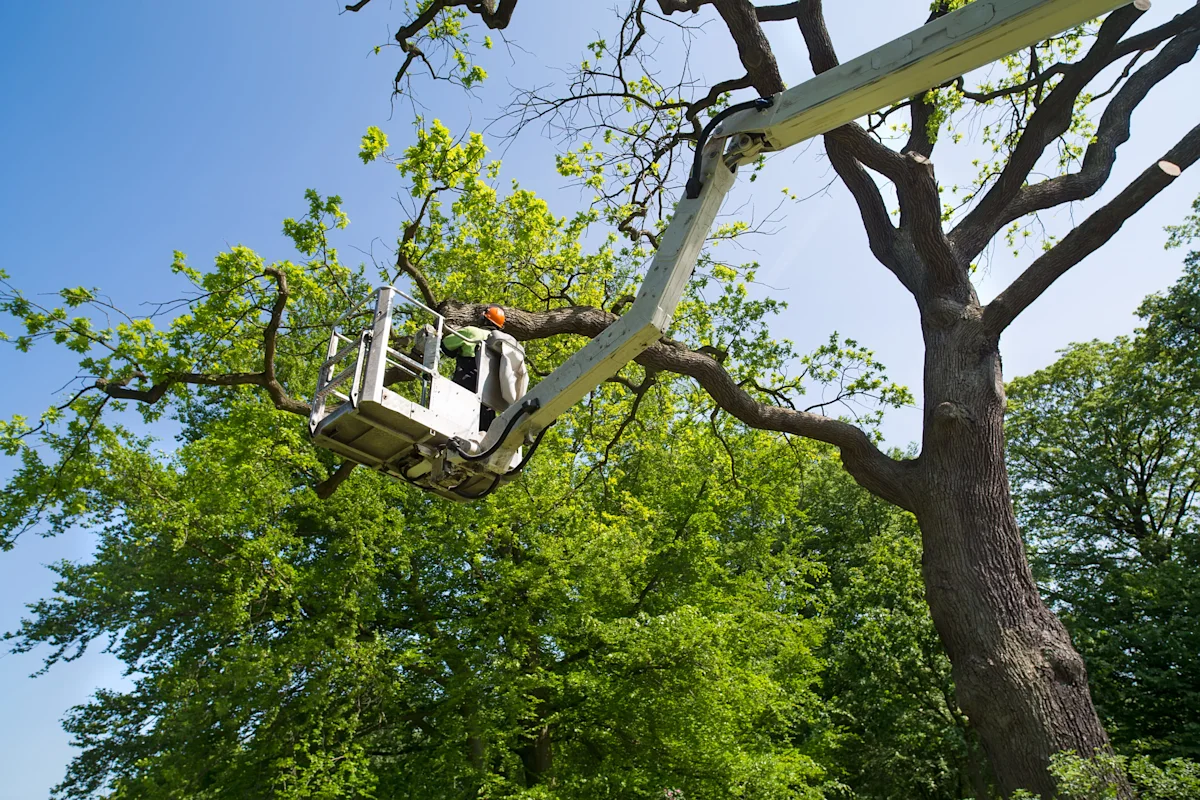
Commercial tree surgery follows a different pricing structure to residential work, even though the underlying cost drivers, such as tree size and access, stay the same. Facilities managers, property developers and business owners typically choose between two contract types.
A one-off project quote suits a single clearance job or site preparation ahead of construction. An ongoing maintenance contract suits a business with grounds to look after year-round, and it usually comes with a documented tree survey that's valuable if liability ever becomes a question.
For any multi-tree commercial project, reputable providers price by site survey rather than over the phone. The variation between properties, in tree count, species mix and access, is simply too wide to estimate accurately without seeing the site.
If you manage a commercial property, budgeting for a survey-based quote rather than a fixed headline price will give you a far more accurate figure. Request a site survey from a commercial tree surgeon on Bark to get pricing specific to your grounds.
What else should you consider before removing a tree?
Beyond cost and legal compliance, a few practical considerations are worth thinking through before you commit to removal. Trees support local wildlife, and removing a mature specimen can affect birds, insects and other species relying on it for shelter or food.
Safety is the other major consideration, particularly for trees near roads, footpaths or neighbouring gardens. A tree surgeon should assess potential hazards during the quote visit, including falling branch risk, root damage to nearby structures and the safest direction to fell the tree.
It's also worth thinking about whether removal is genuinely necessary or whether targeted pruning would resolve the underlying issue. A tree blocking light because of one overgrown side often just needs crown thinning rather than complete removal, which can save a significant amount of money.
Can I remove a tree myself?
Removing a tree yourself is only realistic for very small, unprotected trees that sit well away from buildings, boundaries and power lines. Even then, felling any tree involves real risk from unpredictable falls, kickback and unstable ground conditions.
Professional help becomes essential once a tree is taller than you can safely control from ground level, leaning towards a structure, dead or storm-damaged, or growing near electricity lines. Protected trees also need a professional, since removing a TPO tree without consent carries a genuine legal penalty regardless of who does the cutting.
The apparent saving from doing it yourself rarely accounts for the cost of hired equipment, disposal and the risk of damage to property if something goes wrong. For anything beyond a small garden shrub, a professional quote is usually the more sensible route.
What should I check before choosing a tree removal service?
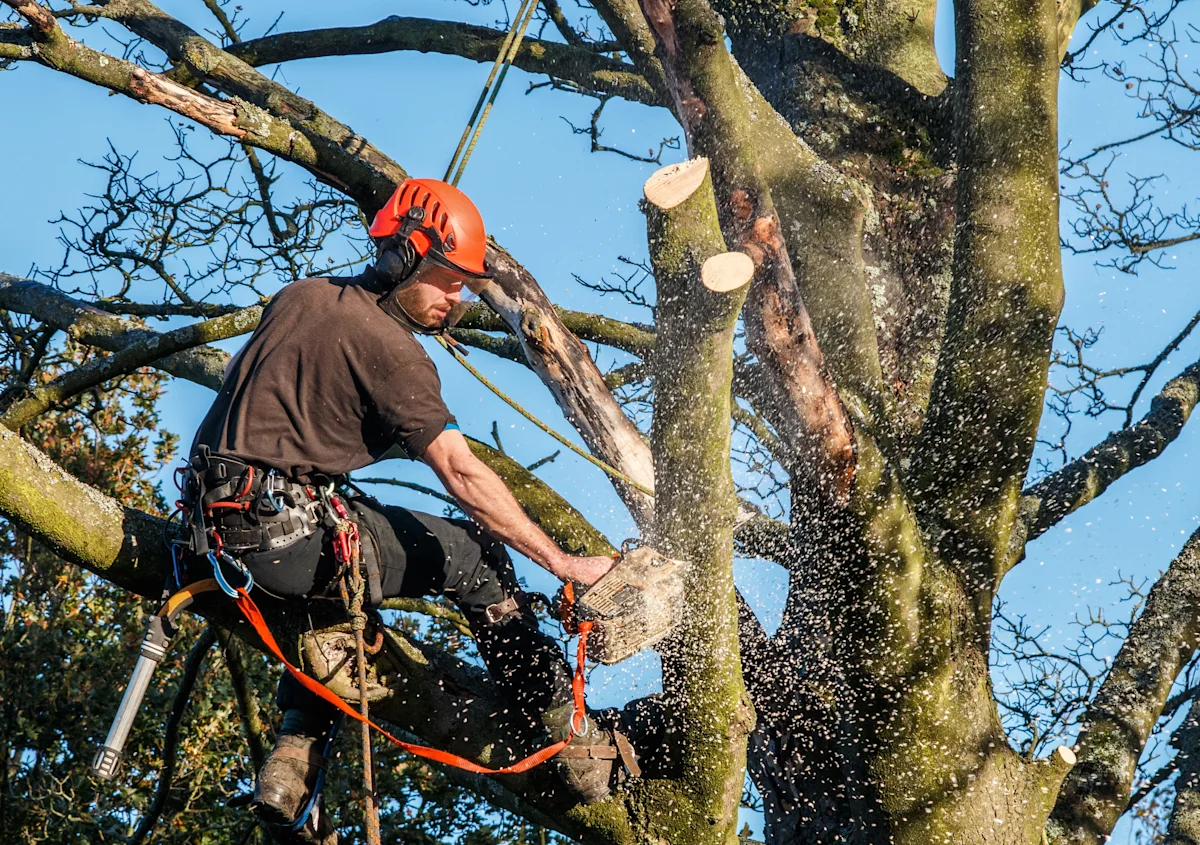
A good tree surgeon should be easy to verify before you commit to booking. Work through this checklist so you know exactly who you're hiring and what you're paying for.
- Confirm they hold current public liability insurance, ideally at least €2.6 million for residential work
- Check for recognised certification, such as accreditation from the International Society of Arboriculture or the Arboricultural Association
- Ask whether waste removal and disposal is included in the quoted price
- Confirm whether stump grinding is included or charged separately
- Ask who will be on-site for the job and how many people make up the crew
- Confirm whether the quoted price includes VAT or whether it will be added
- Check reviews from previous customers, ideally for jobs of a similar size to yours
Working through this list before you book removes almost all the guesswork from hiring a tree surgeon. A company confident in its own standards will usually answer every one of these questions without hesitation.
How do I get an accurate tree surgeon quote?
The more detail you provide upfront, the more accurate your quote will be, and the less likely you are to face a higher bill on the day. Start by taking clear photos of the full tree and its base from a couple of angles.
Note the tree's approximate height, along with anything nearby that could complicate the job, such as a shed, fence, wall or overhead wire. If you know the tree's exact location relative to your house, boundary or driveway, share this too. Access is one of the biggest cost drivers covered earlier.
Always clarify whether the quote includes waste removal, stump grinding and VAT before comparing it against another provider. A quote missing any of these three often looks cheaper on paper but ends up costing the same, or more, once the extras are added.
For anything beyond a small, straightforward tree, most reputable providers will still want to see the site in person before confirming a final price. Treat any phone-only quote for a large or awkward tree with some caution.
How can I maintain my trees to avoid costly problems later?

Regular maintenance is consistently cheaper than emergency work, and the gap between the two can be significant. A routine crown thin at an average of €475 is a fraction of the €1,850 average cost of removing a large tree that's failed after years of neglect.
Book a tree checkup every two to three years for mature trees on your property, particularly ones near your house, a boundary or a driveway. An arborist can spot early signs of disease, decay or structural weakness well before they become a safety issue.
Address pests and disease as soon as you notice them rather than waiting for a problem to worsen. Common issues like fungal growth at the base of a trunk or dieback in the crown are far easier and cheaper to treat early.
Thinking about tree planting and layout as part of your wider garden or landscape plan also pays off long term. Choosing species suited to your garden's size from the outset avoids the expensive height and access problems that come with a tree that's outgrown its space.
Tree surgery in Ireland averages €500 for a small tree removal and rises to around €4,000 for a large or complex job, with pruning and crown work generally costing less than full removal. Location, access and whether a tree is protected all shift the final price from there.
The most expensive mistake isn't hiring the wrong tree surgeon. It's skipping the Tree Preservation Order and felling licence checks before work begins.
Get free, no-obligation quotes from qualified tree surgeons on Bark.
FAQs
Autumn and winter tend to be quieter periods for tree surgeons, since demand often rises in spring and summer. Booking outside the busiest months can make it easier to get a competitive quote and a convenient appointment slot.


