
How much does pressure washing cost in Ireland?
Last updated November 2, 2026
A detailed breakdown of pressure-washing costs across Ireland in 2026, covering surface type, property size, region, add-ons and how to book a fair, professional clean.
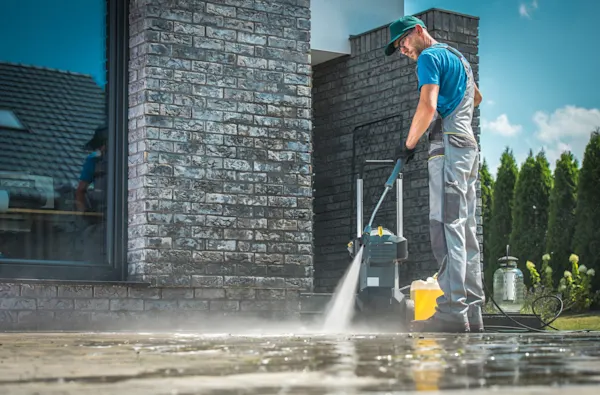
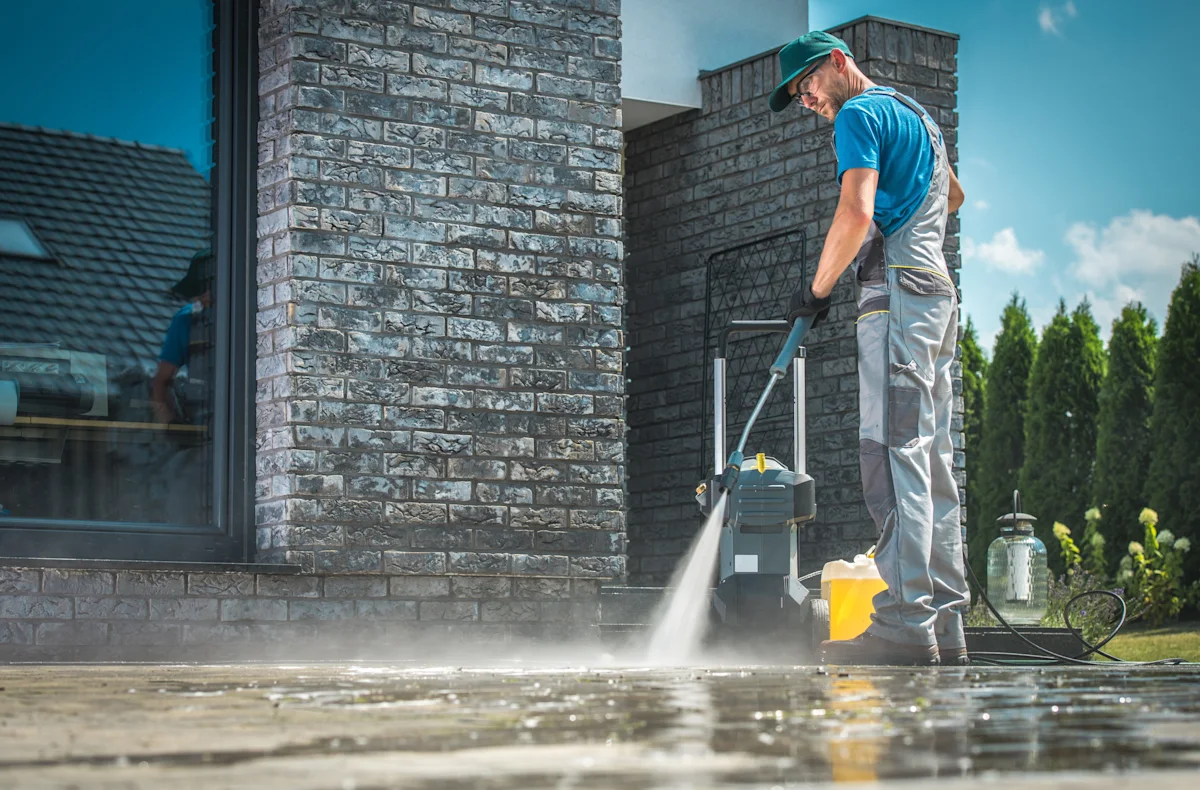
How much does pressure washing cost in Ireland?
Last updated November 2, 2026
A detailed breakdown of pressure-washing costs across Ireland in 2026, covering surface type, property size, region, add-ons and how to book a fair, professional clean.
Written by

Pressure washing in Ireland averages €300 per project. Property size and surface condition drive most price differences. Most professional providers typically charge €3.60 per square metre, or a flat hourly rate of around €50. Based on Bark's analysis of over 295 pressure washing quotes across Ireland in 2026.
Get free quotes from pressure washing contractors near you on Bark
A small driveway with light dirt and a full house exterior with years of algae buildup are both pressure washing jobs. The work involved is nowhere near the same. The final pressure washing price comes down to surface area, surface type and how much buildup needs removing.
This guide breaks down real house pressure washing prices by surface, property size, region and season across Ireland. You'll also learn what counts as a fair add-on cost and what to check before you book.
Note: All prices in this guide exclude VAT unless stated otherwise.
Why does professional pressure washing matter?
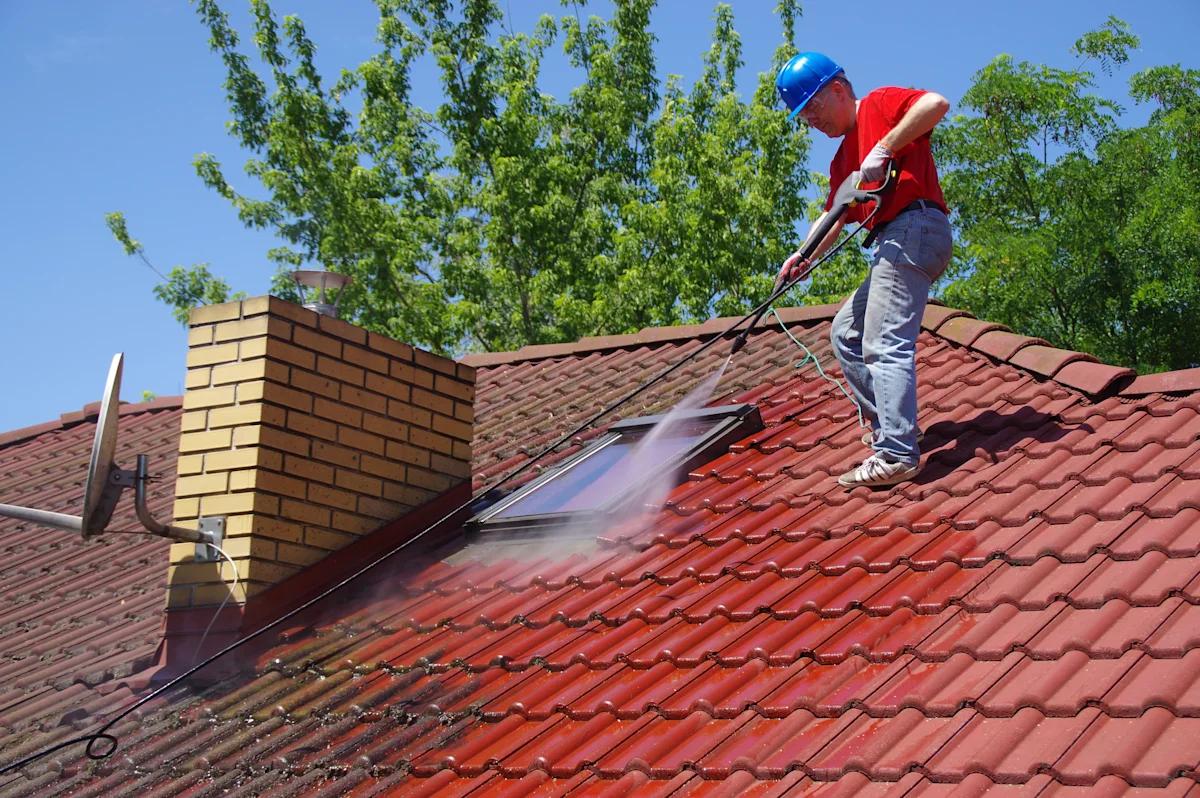
Pressure washing looks simple from the outside, but the wrong pressure or technique can damage a surface rather than clean it. High pressure applied to timber decking can splinter the wood, while excessive pressure on ageing concrete can cause it to fracture.
Professional providers match the technique to the surface, using low-pressure soft-washing on delicate materials and higher pressure where a surface can safely take it. This matters most on older render, natural stone and timber, where a DIY approach with a rented machine carries real risk of lasting damage.
A properly sealed driveway or patio also resists moss and algae regrowth for 12 to 24 months after a professional clean. That's a meaningful gap compared with an untreated surface in Ireland's damp climate, where growth can return within months.
What types of pressure washing are there?
Two main techniques cover almost all residential and commercial jobs. Knowing the difference helps you judge whether a quote matches the work needed.
Soft-washing
Soft-washing uses low pressure combined with specialist cleaning solutions, making it suitable for timber decking, render, roofs and painted surfaces. It removes moss, algae and grime without the physical force that could damage a delicate surface.
Standard pressure washing
Standard pressure washing uses higher water pressure and suits hard, durable surfaces like concrete, tarmac and natural stone paving. It clears ingrained dirt, oil stains and moss more aggressively than soft-washing, but it's unsuitable for surfaces that pressure could physically damage.
Most driveways and patios need standard pressure washing, while decking, roofs and house facades typically call for soft-washing instead. A reputable provider will tell you which technique your job needs rather than defaulting to one method.
What does pressure washing cost by surface?
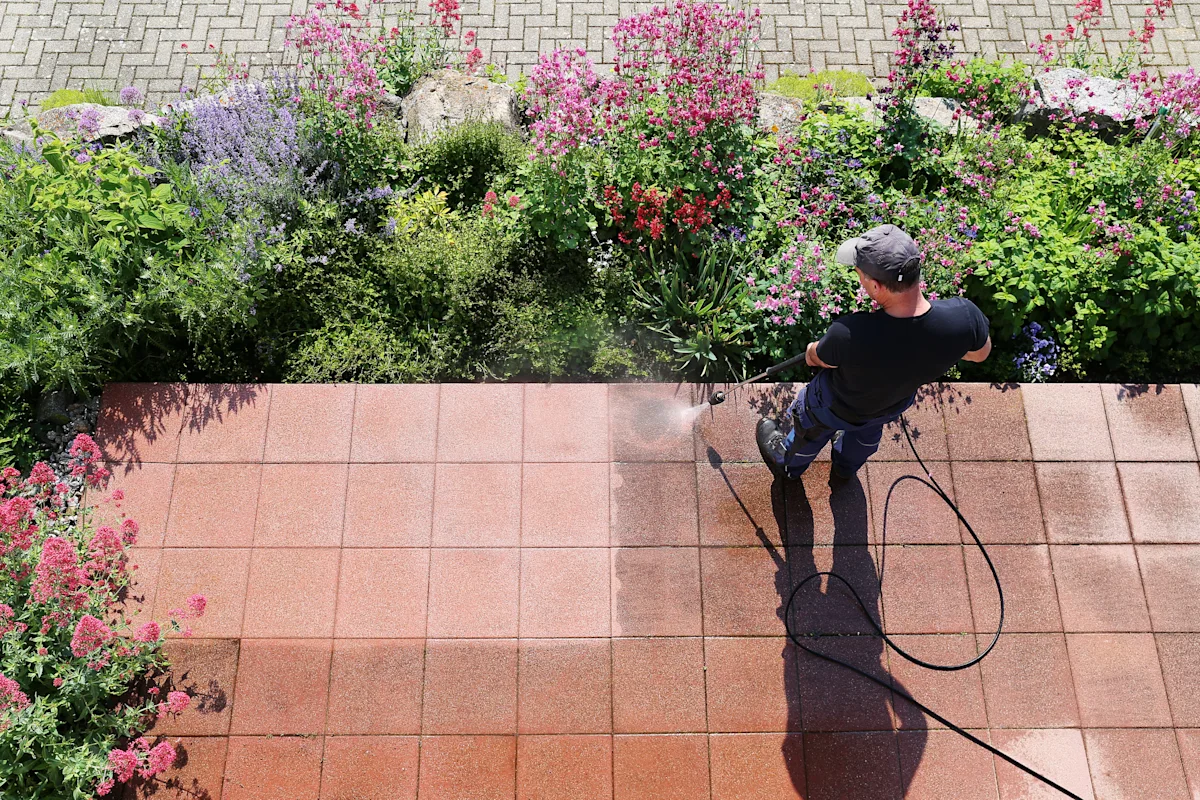
Surface type changes both the price and the technique required, since some materials clean faster and more safely than others. The table below shows average 2026 prices for common residential surfaces across Ireland.
Pressure washing cost by surface (EUR, excluding VAT)
Surface | Average price |
|---|---|
Small driveway or patio (up to 40m²) | €205 |
Medium driveway or patio (40 to 80m²) | €310 |
Decking or boardwalk restoration | €300 |
Full house exterior wash | €550 |
Roof and gutter exterior clean | €450 |
Driveways and patios sit at the lower end of this table because concrete, tarmac and paving can handle standard high pressure without any risk of damage. The surface is flat and accessible, which lets a provider work quickly with no need for specialist low-pressure equipment.
Decking restoration costs more than a driveway of similar size because timber can't take the same pressure without splintering. Providers use a slower soft-wash technique here. Restoration often includes extra steps like removing old stain or algae buildup from between the boards before the surface is properly clean again.
A full house exterior wash sits higher again for two reasons. Render and painted facades almost always need soft-washing rather than standard pressure, and covering an entire building takes considerably longer than a single ground-level surface.
Height is the other factor pushing exterior wash pricing upward. Reaching upper storeys safely needs proper access equipment. That setup time gets built into the price regardless of how straightforward the actual cleaning turns out to be.
Roof and gutter cleaning carries the same access challenge as a house exterior, plus an added layer of care. Slates and tiles can crack or dislodge under the wrong pressure. So providers work more cautiously here than on any ground-level surface, which is reflected in the price.
Compare quotes for your specific surface on Bark
How much does pressure washing cost per square metre?
Per-square-metre pricing gives you the clearest way to compare quotes across jobs of different sizes. On average, pressure washing in Ireland costs €3.60 per square metre, though this varies by surface type.
Pressure washing cost per square metre by surface (EUR, excluding VAT)
Surface | Average price per m² |
|---|---|
Driveways and car parks | €2 |
Patios and paving | €2.50 |
Building facades and cladding | €2.75 |
Chewing gum removal | €4 |
Graffiti removal | €23 |
Driveways and car parks sit at the lower end because the surface is flat, accessible and typically made of durable material like concrete or tarmac. Specialist removal work, such as chewing gum or graffiti, costs considerably more per square metre because it needs targeted treatment.
How does pressure washing cost change by property type?
Property type mainly affects price through the total surface area involved, rather than any single surface costing more to clean. A two-car driveway naturally costs more than a single-car one because there's more ground to cover.
A typical semi-detached home with a standard driveway, small patio and no decking sits toward the lower end of most quotes. A detached property with a larger driveway, full patio area and timber decking adds up quickly once every surface is priced individually.
Bundling multiple surfaces into a single visit is usually cheaper than booking them separately. Providers commonly quote €900 or more for combined driveway, patio and decking jobs.
How are pressure washing jobs priced?
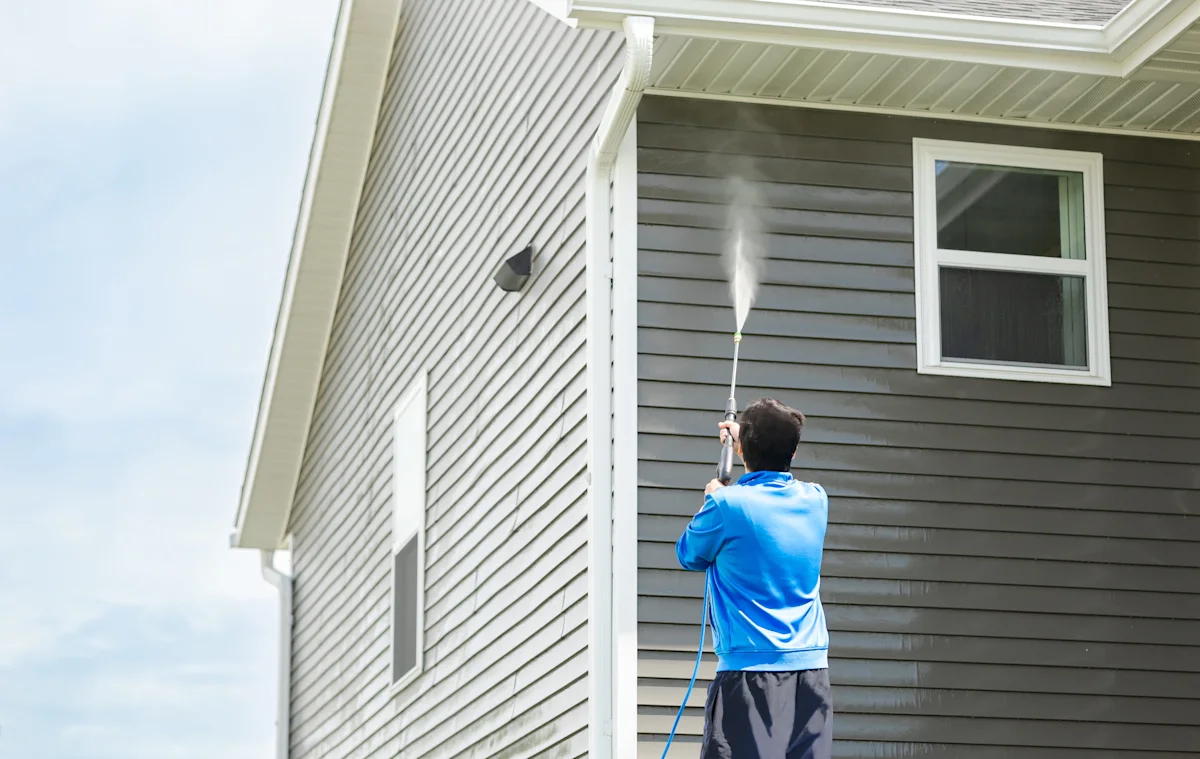
Providers in Ireland generally use one of three pricing models, and knowing which one you're being quoted helps you compare fairly. Most residential jobs use either a flat project price or a per-square-metre rate.
Flat project pricing suits typical driveway, patio or decking jobs where the provider can estimate the area and condition from photos or a quick visit. This is the most common approach for standard residential work and gives you a fixed number upfront.
Per-square-metre pricing suits larger or more variable jobs, particularly commercial work or extra-large residential areas over 100m². It scales naturally with size, so a bigger job costs proportionally more.
Hourly pricing is less common for standard jobs but does appear, with pressure washing hourly rates averaging around €50 per hour. This model suits smaller or unpredictable jobs where the time required isn't easy to estimate in advance.
What factors affect the price of pressure washing?
Beyond surface type and size, four factors consistently move a quote up or down for what looks like a similar job. Understanding them helps you judge whether a price reflects your actual property.
Dirt and growth level
A driveway with light surface dust costs less to clean than one with years of built-up moss and algae. Heavy staining or organic growth typically adds €125 to the base price.
Access
A ground-level driveway with space for equipment and hose runs costs less than a tightly enclosed courtyard or upper-storey balcony. Restricted access adds time, and time is what drives most of the cost in this trade.
Surface material
Delicate materials like natural stone or ageing render need slower, lower-pressure work than durable concrete or tarmac. This isn't just a pricing preference; it's a safety consideration to avoid damaging the surface.
Add-ons
Sealing, re-sanding and stain treatment sit on top of the base clean and are covered in detail later in this guide. A quote that looks unusually low may simply exclude these steps.
How do pressure washing prices vary by region?
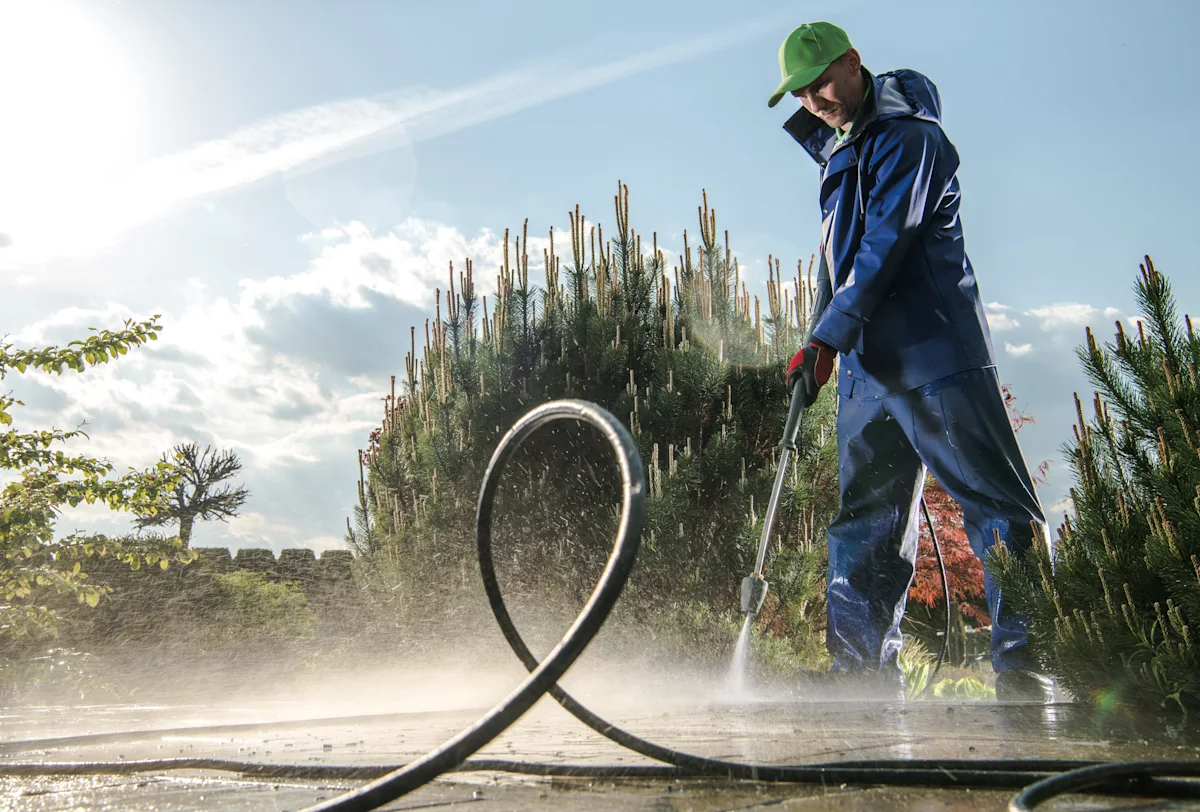
Location affects pressure washing pricing in Ireland much as it does most home services. Dublin and Cork consistently sit above the national average, while rural areas track closer to the baseline figures shown earlier.
Cleaning prices in Dublin and Cork typically run around 15% higher than the rest of the country. This reflects higher operating costs and stronger demand in both cities compared with more rural counties.
If you're based outside Dublin or Cork, it's still worth getting a few local quotes rather than assuming rural pricing automatically applies. Provider density varies by county, and less competition in some areas can offset the usual rural discount.
Find pressure washing contractors on Bark and compare real local pricing
How much does commercial pressure washing cost?
Commercial pressure washing follows a different rhythm from residential work, largely because it's often a recurring contract rather than a one-off job. A typical 50m² commercial forecourt or entrance area costs around €175 per wash.
Retail parks, petrol stations and restaurants commonly schedule pressure washing monthly or quarterly as part of routine facilities management. This regular cadence keeps buildup manageable and generally costs less per visit than letting grime accumulate between occasional deep cleans.
Larger commercial sites are typically quoted per square metre rather than as a flat project price, since commercial premises vary more in scale and layout. Expect a site visit before a firm commercial quote, since access, drainage and surface type all affect the final price.
What additional costs should you expect?
Beyond the base clean, several common add-ons appear regularly on pressure washing invoices. Knowing about them upfront avoids surprises on the final bill.
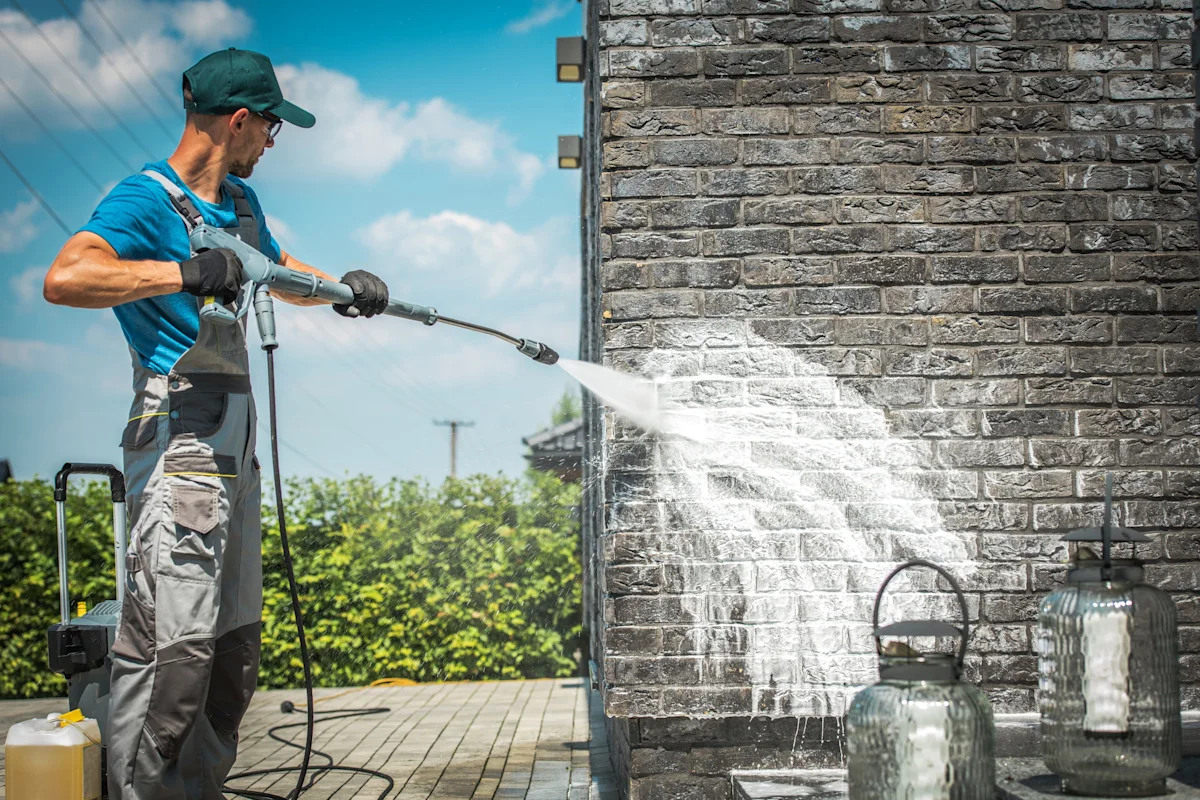
Common pressure washing add-ons (EUR, excluding VAT)
Add-on | Average price |
|---|---|
Soft-washing for delicate surfaces | €100 |
Sealing treatment | €200 |
Re-sanding for cobblelock (minimum) | €40 |
Re-sanding for cobblelock (per m², larger jobs) | €3 |
Heavy staining or organic growth removal | €125 |
Minimum call-out charge | €150 |
Soft-washing costs extra because it's a genuinely different process rather than a gentler version of the same job. It uses specialist biocide solutions alongside low pressure, and the chemicals need dwell time on the surface before rinsing, which adds to the overall time on site.
Sealing is worth genuine consideration even when it's not strictly necessary, since it extends the gap before moss and algae return. The cost reflects both the sealant product itself and the extra pass needed to apply it evenly once the surface has fully dried.
Re-sanding matters specifically for cobblelock and block paving because washing can loosen the joint sand that keeps the blocks stable. The minimum charge covers a small top-up on a driveway that only needs a few joints refilled. The per-square-metre rate applies once a provider has to re-sand the whole surface.
Heavy staining or organic growth removal costs more because it rarely comes out with a single pass. Oil stains and thick moss need pre-treatment and repeated passes over the same section, which takes considerably longer than the general wash surrounding it.
The minimum call-out charge exists to cover a provider's travel and setup time on smaller jobs. Loading equipment, travelling to the property and setting up a water supply takes a similar amount of time regardless of job size. Very small jobs still carry this fixed cost.
If your job is small enough that the per-square-metre calculation comes in under this figure, expect the minimum to apply instead.
How long does pressure washing take?
Most standard pressure washing jobs take between two and four hours, depending on surface area and buildup. A small driveway sits at the shorter end, while a full house exterior or heavily soiled large driveway sits toward the longer end.
Surfaces typically take 24 to 48 hours to fully dry afterwards, depending on the weather. This matters for scheduling, since you'll want to avoid heavy foot or vehicle traffic until a driveway or patio is properly dry.
How often should you pressure wash?
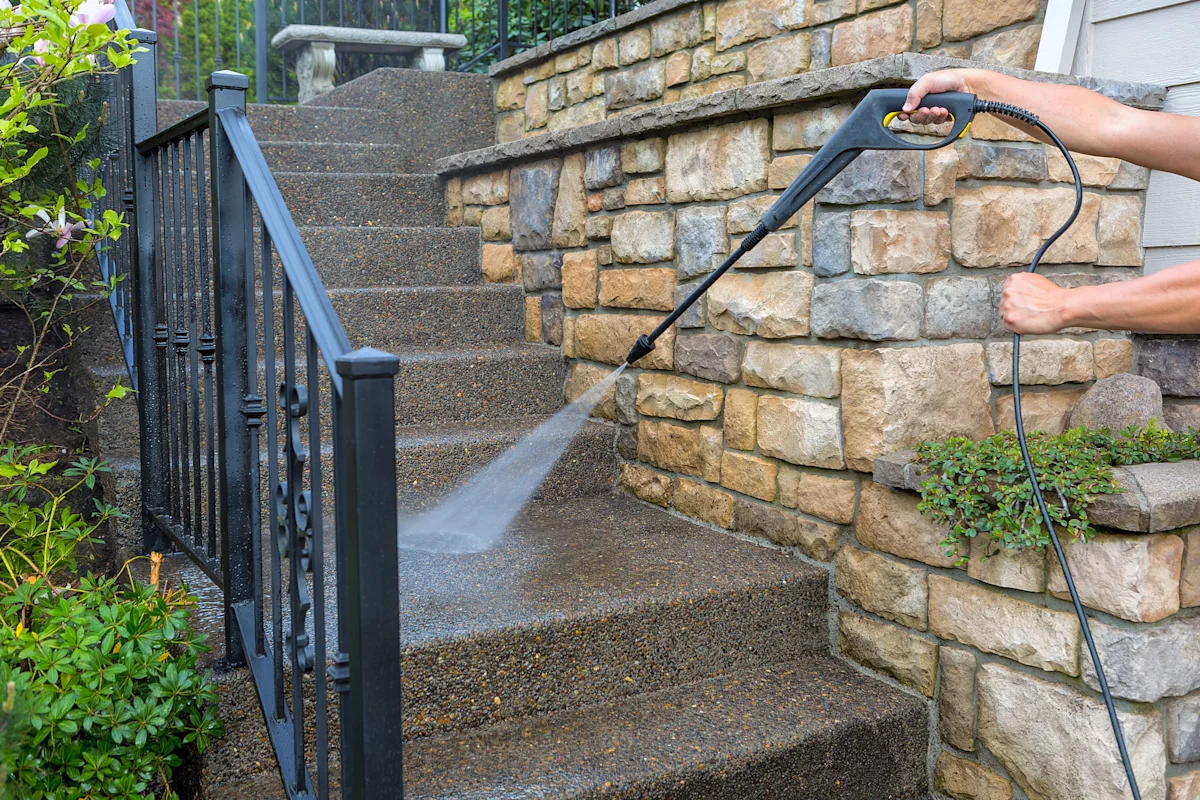
Most surfaces in Ireland benefit from an annual pressure wash, which is enough to keep moss, algae and general grime from building up to a costly level. Moss-prone areas, particularly shaded or north-facing surfaces, do better with a bi-annual clean.
Ireland's damp climate makes this more important than in drier countries, since high rainfall and limited direct sun let moss and algae return faster. A light annual routine works out considerably cheaper than leaving a surface untreated for several years.
What's the best time of year to pressure wash?
Spring and autumn are generally the best times to pressure wash in Ireland, and they're often the cheapest too. Spring clears winter moss buildup, while autumn prepares surfaces before the wettest months set in.
If moss is the main problem, treat it with a moss killer first and wait until it has died back and turned brown before washing. Washing over live moss spreads spores across the surface, which can bring the growth back faster.
Always check the forecast before booking. A dry day or two after the wash gives the surface time to properly dry, while rain soon after can reduce the benefit.
What should you check before hiring a pressure washing service?
Work through this checklist before agreeing to any pressure washing quote, regardless of how small the job seems.
- Confirm whether the quote is a flat project price, per square metre or hourly.
- Ask which technique will be used on each surface, particularly for decking, render or natural stone.
- Confirm whether VAT is included in the quoted price.
- Ask whether sealing, re-sanding or stain treatment are included or charged separately.
- Check for public liability insurance, particularly for commercial or larger residential jobs.
- Confirm what happens if rain interrupts the job partway through.
- Get the quote in writing before work begins.
A provider confident in their pricing will typically answer all of these without hesitation. If a quote comes in noticeably below every other one you've received, check exactly what's included before you book.
Pressure washing in Ireland averages €300 per project, with per-square-metre pricing typically running around €3.60. Surface type, property size and add-ons like sealing or re-sanding can shift the final invoice.
That makes the cheapest quote less important than choosing the right service for your property. A light annual routine can also keep costs down by preventing moss and algae from becoming a bigger job.
Compare free, no-obligation quotes from pressure washing contractors on Bark.
FAQs
Pressure washing hourly rates in Ireland average around €50 per hour where providers charge by time rather than project. Most residential jobs use flat project pricing instead, since it's easier to compare upfront.


