
How much does a hypnotherapist cost?
Last updated May 7, 2026
This 2026 guide covers what hypnotherapists charge across Australia by condition, using Bark pricing data. It covers per-session rates, program costs by condition, session counts, Medicare coverage and private health fund rebates.


How much does a hypnotherapist cost?
Last updated May 7, 2026
This 2026 guide covers what hypnotherapists charge across Australia by condition, using Bark pricing data. It covers per-session rates, program costs by condition, session counts, Medicare coverage and private health fund rebates.
Written by

Hypnotherapists in Australia charge $100 to $250 per session inc. GST in 2026, based on Bark's pricing & research data. Over 27,000 hypnotherapy requests have been fulfilled through Bark over the past couple of years, with more than 350 coming in each month. Initial sessions run 90 minutes and generally cost more than follow-ups.
Get free quotes from hypnotherapists near you on Bark
Not every condition costs the same to treat. A single-session smoking cessation program costs $300 to $450 inc. GST in most cases. A twelve-week gut-directed IBS program costs $800 to $2,000 inc. GST: session count drives the difference more than any individual practitioner's rate.
There is also a real question about whether it is worth trying at all. For specific conditions, the evidence is stronger than most people expect. Here is what Australian practitioners charge in 2026, what the research says works and what to look for before you book.
Does hypnotherapy work?

For specific conditions, yes. Hypnosis is a real and measurable neurological state, not a performance or a placebo. Neuroimaging studies show distinct changes in brain activity during hypnosis, particularly in areas governing attention, perception and self-monitoring.
The American Psychological Association and the American Medical Association both formally recognised hypnosis in 1958. Research has found it produces measurable reductions in anxiety, heart rate and blood pressure during invasive medical procedures. It is now used in cancer care, dental practices and hospital pain management programmes across Australia.
Stage hypnosis is entertainment; clinical hypnotherapy applies the same state of focused attention to structured therapeutic work. The confusion between the two is the main source of public doubt about whether hypnotherapy is real. The results and the comparison are not equivalent.
What does hypnosis do?
Hypnosis narrows attention and increases responsiveness to suggestion. Normal critical thinking temporarily steps aside, making the mind more receptive to targeted input. The physical experience is similar to the moment just before sleep: deeply relaxed but mentally alert.
A standard session moves through 4 stages.
- Induction brings you into a relaxed and focused state.
- Deepening moves you to a more concentrated level.
- Suggestion introduces the therapeutic input specific to your presenting issue.
- Emergence brings you back to full alert consciousness.
About 1 in 4 people respond minimally to standard induction techniques, regardless of how willing they are. A skilled practitioner adapts their approach across sessions but should be honest if progress is not happening after three attempts.
What happens in a hypnotherapy session?

The session opens with a conversation. Your practitioner asks about your goal, your relevant history and any previous experience with hypnotherapy. This intake takes 20 to 30 minutes in an initial appointment.
The hypnotic work itself runs 40 to 60 minutes. You remain conscious, in control and aware of your surroundings throughout. Most clients describe it as a deeply relaxed state where they feel settled but alert, not asleep.
After Emergence, your practitioner reviews what happened and often teaches a self-hypnosis technique to practise between sessions. Initial appointments run 90 minutes in total; follow-up sessions run 60 minutes.
To get the most from your first session, arrive knowing what you want to change and any relevant history you are comfortable sharing. Avoid caffeine for two hours beforehand if you find it makes you restless. There is no need to practise relaxation or prepare your mind in any specific way: the practitioner handles that.
Who should not be hypnotised?
Several clinical situations make hypnotherapy inappropriate. Anyone experiencing active psychosis, including hallucinations or delusions, should not receive hypnotherapy. The same applies to untreated severe depression, untreated drug or alcohol dependency and some presentations of schizophrenia or bipolar disorder.
Chronic pain that has not been medically diagnosed should be assessed by a doctor before any hypnotherapy is started. Treating pain without a diagnosis can mask an underlying condition that needs clinical attention.
People due to give evidence in legal proceedings should avoid hypnotherapy beforehand. Hypnosis can affect memory recall in ways that may compromise witness testimony under Australian evidentiary rules.
Is hypnotherapy right for you?

Hypnotherapy is most likely to be worth trying if your issue has a clear psychological or behavioural component. It works best when you have already tried, or genuinely considered, conventional treatment and want something to run alongside or after it.
The conditions with the strongest evidence base are anxiety, IBS, phobias, chronic pain, smoking cessation and sleep problems driven by mental overactivity. You are also a reasonable candidate if you want something to work alongside an existing treatment.
Hypnotherapy does not need to be the only or primary intervention. Many clients use it alongside CBT, medication or a GP-managed program.
It is less likely to be the right starting point if you have not yet had a medical assessment for your condition. The same applies if your presentation is acute or clinically severe. A practitioner who is honest about fit will tell you this in the first consultation.
Is hypnosis legal in Australia?
Yes. Hypnotherapy is a legal and practised modality in Australia. There is no federal law restricting who can offer it or what title they can use.
It is not regulated by the Australian Health Practitioner Regulation Agency (AHPRA). There is no mandatory government registration requirement, and anyone can legally call themselves a hypnotherapist without any formal qualification.
The Hypnotherapy Council of Australia (HCA), the Australian Hypnotherapists Association (AHA) and the Australian Society of Clinical Hypnotherapists (ASCH) each maintain practitioner registers. Checking membership of one of these bodies is the most direct way to verify that a practitioner is qualified.
What is the difference between hypnosis and hypnotism?

The two words describe the same phenomenon. Hypnotism is an older term, coined by Scottish surgeon James Braid in the 1840s from the Greek word for sleep. Hypnosis emerged later as the preferred clinical and scientific term.
In everyday usage, hypnotism tends to be associated with stage performance and entertainment. Hypnosis is the term used in clinical research, medical literature and professional training frameworks. Both refer to the same neurological state of narrowed attention and heightened responsiveness to suggestion.
Australian practitioners and their professional bodies use hypnosis and hypnotherapy as the standard terms. If a practitioner uses hypnotism in a clinical context, it is not a red flag: it is simply an older convention.
What are the different types of hypnotherapy?
Clinical hypnotherapy is the standard evidence-based approach used across Australian practices. It applies structured hypnotic induction and direct suggestion to a specific presenting issue. Clinical hypnosis and therapeutic hypnosis are interchangeable terms for this modality.
Ericksonian hypnotherapy uses indirect suggestion and metaphor rather than direct commands. Named after American psychiatrist Milton Erickson, it suits people who respond poorly to directive approaches. Many Australian practitioners blend Ericksonian technique with direct suggestion depending on the client.
Gut-directed hypnotherapy is a specialist protocol developed at Monash University specifically for IBS. Regression hypnotherapy works backward through memories to find the origin of a current pattern. Past life regression is a specific form of regression work with no clinical evidence base, offered as an exploratory rather than therapeutic modality.
What is a hypnotist?

A hypnotist is anyone who induces hypnosis. The term covers stage performers, entertainers and clinical practitioners without distinction. In Australia, "hypnotist" is not a protected title and carries no qualification requirement.
A hypnotherapist is a practitioner who applies hypnosis in a structured therapeutic context to address a specific presenting condition. The distinction matters when you are booking for clinical purposes.
A stage hypnotist is not qualified to treat anxiety, IBS or smoking cessation. That is true regardless of how skilled they are at inducing hypnosis on stage.
The practical check in Australia is professional association membership. AHA, HCA or ASCH membership confirms a therapeutic training qualification. A stage hypnotist will not hold one.
How much does a hypnotherapist charge per session in Australia?
Hypnotherapists in Australia charge $100 to $250 per session inc. GST, based on Bark pricing data. The rate varies with session length, the practitioner's experience and their location.
What Australian hypnotherapists charge per session (2026, inc. GST)
Session type | Typical rate (inc. GST) |
Initial consultation (90 min) | $150–$250 |
Standard follow-up (60 min) | $100–$180 |
Short session (30–45 min) | $70–$110 |
Online session (60 min) | $90–$170 |
Premium specialist (90 min) | $280–$400 |
Source: Bark pricing data, 2026. All rates inc. GST.
Initial sessions cost more because they include a full intake assessment before the therapeutic work begins. Follow-up sessions pick up where the previous session ended and run shorter. Online sessions run 10% to 15% cheaper than in-person equivalents at most practices.
How much does hypnotherapy cost by city in Australia?
Location creates a consistent pricing differential. CBD practices in Sydney and Melbourne carry higher overheads than suburban or regional equivalents, and this flows into session rates.
Hypnotherapy cost by city: per-session rates (2026, inc. GST)
City | Per session (inc. GST) |
Sydney | $150–$350 |
Melbourne | $130–$300 |
Brisbane | $120–$280 |
Perth | $120–$270 |
Adelaide | $110–$250 |
Canberra | $120–$260 |
Hobart | $100–$220 |
Darwin | $100–$230 |
Regional and rural | $90–$200 |
Source: Bark pricing data and 2026 Australian market benchmarks. All rates inc. GST.
For a six-session anxiety program, the difference between a Sydney CBD rate and a regional practitioner can reach $600 to $900 in total. Online sessions with any practitioner across Australia remove the location differential entirely.
Should I choose online or in-person hypnotherapy?
Online hypnotherapy produces comparable results to in-person sessions for most presenting conditions. Remote delivery expanded rapidly between 2020 and 2022, and clinical outcomes were maintained across formats for anxiety, phobias and smoking cessation.
Online sessions cost 10% to 15% less than in-person equivalents. A standard follow-up runs $90 to $170 inc. GST online compared to $100 to $180 in person. For a full six-session program that difference saves $60 to $120, and removing travel time adds to it.
The exceptions are regression-based work, where some practitioners prefer in-person settings for safety reasons. The other is clients who cannot relax at home due to noise or interruption. For most people seeking help with anxiety, sleep, phobias, smoking or weight, online is a practical and cost-effective default.
How much does hypnotherapy cost to treat specific conditions?
The most useful cost number is not a session rate. It is what a full treatment program costs for your specific condition. The table below shows indicative program ranges based on standard session counts and current Australian rates.
Hypnotherapy program costs by condition (2026, inc. GST)
Condition | Sessions needed | Typical program cost (inc. GST) |
Quit smoking | 1–4 | $300–$700 |
Weight loss | 4–6 | $450–$1,100 |
Gastric band hypnotherapy | 3–5 | $900–$1,500 |
Anxiety and stress | 4–8 | $500–$1,400 |
Sleep and insomnia | 3–6 | $350–$1,000 |
Simple phobia or fear | 1–3 | $150–$500 |
IBS (gut-directed) | 6–12 | $800–$2,000 |
Past life regression | 1–3 | $150–$500 |
Depression (as adjunct) | 6–10 | $700–$1,600 |
Gambling and addiction | 3–6 | $400–$1,000 |
Alcohol and drinking cessation | 4–8 | $500–$1,200 |
Chronic pain | 6–10 | $700–$1,800 |
Hypnobirthing | 4–6 | $500–$900 |
Performance and sports | 3–6 | $400–$900 |
Source: Bark pricing data and 2026 Australian practitioner market benchmarks. All figures inc. GST.
Hypnotherapy for weight loss
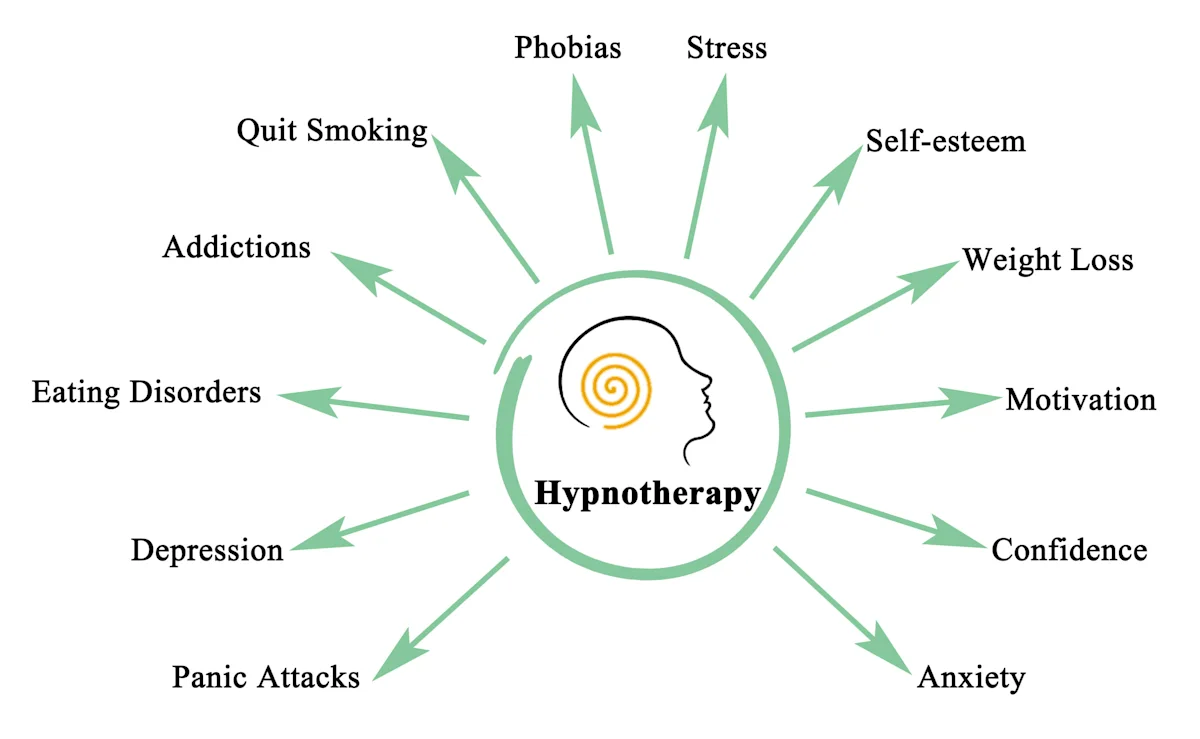
Hypnosis for weight loss and hypnotherapy for weight loss show mixed results as standalone treatments. The evidence is stronger when either is combined with nutritional guidance and behavioural support. A four-to-six-session weight loss program costs $450 to $1,100 inc. GST.
Gastric band hypnotherapy uses visualisation to simulate a gastric band procedure. Programs run three to five sessions and cost $900 to $1,500 inc. GST. Results vary considerably between individuals.
Sleep hypnosis for weight loss combines sleep improvement work with appetite-regulation suggestions. A practitioner offering this specialism charges within the standard weight loss program range.
Hypnotherapy to quit smoking
Hypnotherapy to give up smoking is among the most requested applications in Australia. A pack-a-day smoker at 2026 Australian prices spends around $18,250 per year on cigarettes. A quit-smoking program costs $300 to $700 inc. GST: for most clients, that is recouped within days of stopping.
The evidence supports multi-session programs over a single session approach. Many practitioners offer a written guarantee of additional free sessions if you smoke again within 90 days. A good quit-smoking hypnotherapist near you will explain the program structure, session count and guarantee terms before taking any payment.
Find a quit-smoking hypnotherapist near you on Bark
Hypnosis for sleep & insomnia
Hypnosis for sleep targets the anxiety and mental overactivity that delay sleep onset. Many people turn to sleep hypnosis or self-hypnosis techniques as an alternative to medication when looking for ways to fall asleep faster. A standard program runs three to six sessions at a total cost of $350 to $1,000 inc. GST.
Research into insomnia has found hypnosis reduced sleep-onset latency and nighttime waking in people with primary insomnia. The effect was strongest where anxiety was the main driver of the sleep difficulty.
Self-hypnosis techniques taught during sessions extend the benefit beyond the formal program. Most practitioners include audio recordings or guided scripts for home use between sessions.
Hypnotherapy for anxiety and depression
Hypnotherapy for anxiety has strong clinical backing. It is used alongside cognitive behavioural therapy (CBT) and referenced in clinical guidelines from the Royal College of Psychiatrists.
A four-to-eight-session anxiety program costs $500 to $1,400 inc. GST. For depression, hypnotherapy is used as an adjunct to established treatment, not as a primary option. A psychologist should manage the primary treatment plan for any clinical depression diagnosis.
Six to ten sessions alongside a CBT program is the standard support structure. Demand for hypnotherapy as an adjunct to depression treatment has been rising in Australia. Most of that growth comes from people already in clinical care who want additional support between appointments.
Can hypnosis help with fear and phobias?
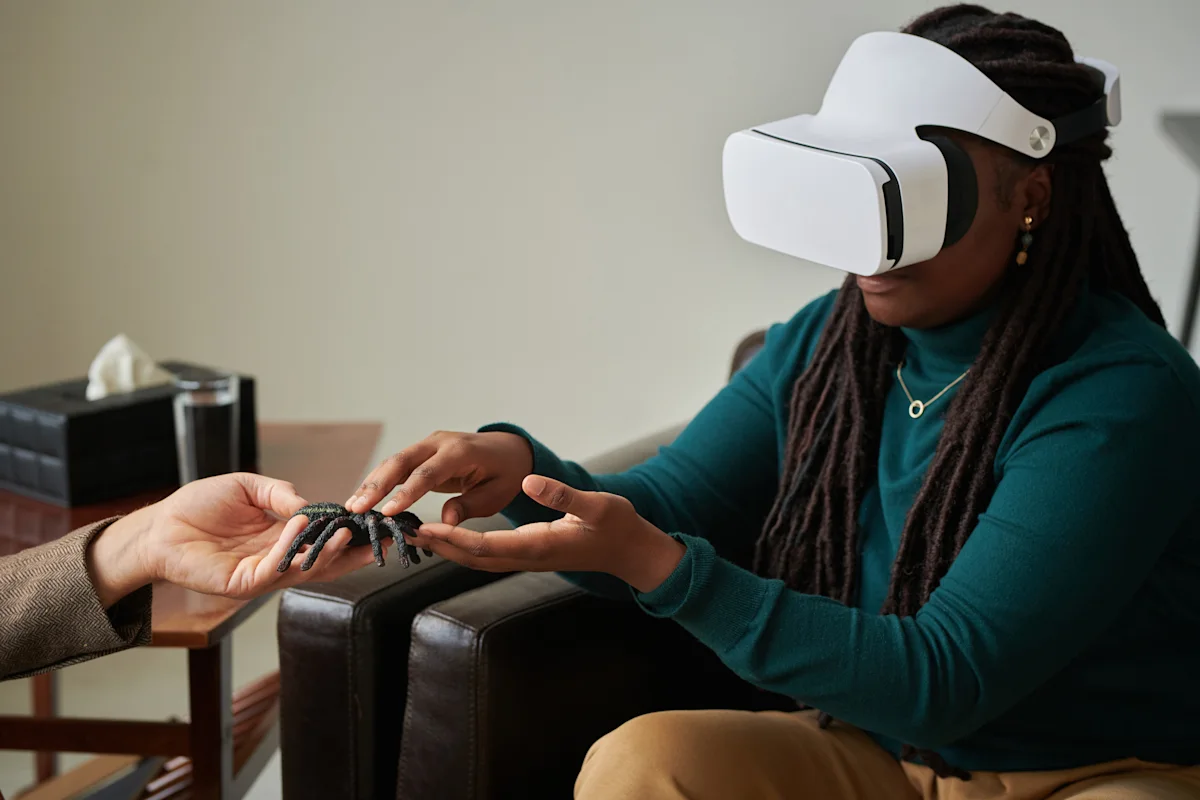
Yes. Simple phobias are one of the best-supported applications in clinical hypnotherapy. Most practitioners resolve a straightforward single phobia in one to three sessions at a cost of $150 to $500 inc. GST.
Hypnosis works well for fear because phobias are learned responses, not fixed traits. The hypnotic state lets the mind process the trigger without the usual fear response, often in fewer sessions than talking therapies alone.
A fear of flying or spiders resolves quickly in most cases. Generalised anxiety with multiple triggers takes longer and costs more.
Gut-directed hypnotherapy for IBS: Does it work and what does it cost?
Gut-directed hypnotherapy is the most evidence-supported application in the entire field. Monash University research has shown significant IBS symptom improvement maintained at twelve months post-treatment.
The Monash protocol is delivered over six to twelve sessions using relaxation techniques and visualisations targeting the gut-brain connection. IBS specialist sessions cost $150 to $300 inc. GST per session. A full program costs $800 to $2,000 inc. GST.
IBS affects around one in seven Australians. Gut-directed hypnotherapy is now referenced in Australian clinical gastroenterology guidelines as an evidence-based first-line option for moderate-to-severe IBS.
Nerva is a digital gut-directed hypnotherapy app backed by research from Monash University. It delivers a structured six-week audio program at around $100 AUD for six months of access. Clinical trial data show meaningful symptom improvement in around 70% of participants. It is not a replacement for in-person sessions with a qualified IBS hypnotherapist. It covers the core Monash protocol, but cannot adapt to your individual response the way a practitioner can.
Past life regression and hypnotic regression

Past life regression is a form of regression hypnotherapy where the client explores experiences believed to originate in a previous lifetime. It has no peer-reviewed clinical evidence base and is not endorsed by mainstream psychology or medical bodies in Australia.
Sessions cost $150 to $350 inc. GST. Most clients complete one to three sessions. Interest in regression work has grown steadily in Australia, with past life hypnotherapy and previous life regression among the more commonly requested specialist applications.
The HCA recommends regression work only with a practitioner specifically trained in regression techniques. It is considered an exploratory modality, not a clinical treatment.
Hypnobirthing
Hypnobirthing uses hypnotherapy techniques to prepare expectant parents for labour and birth. It covers breathing techniques, deep relaxation, visualisation and positive suggestion to reduce fear and pain perception during delivery. Most programs are completed in the third trimester.
A standard hypnobirthing program runs four to six sessions at a total cost of $500 to $900 inc. GST. Some practitioners offer group hypnobirthing programs at $200 to $400 per couple, which reduces the cost significantly. Online delivery is common and works equally well for this application.
The evidence base includes reductions in epidural use and improved maternal satisfaction with the birth experience. Hypnobirthing does not replace standard obstetric care and should be discussed with your midwife or obstetrician before starting.
Hypnotherapy for performance and sport
Performance hypnotherapy addresses the psychological barriers that limit achievement in sport, public speaking, exam preparation and creative work. It targets anxiety, negative self-talk and the mental blocks that affect output under pressure.
A three-to-six-session program costs $400 to $900 inc. GST. Sports hypnotherapy is used by professional athletes across Australia for performance anxiety, focus and pre-competition preparation. Public speaking and presentation anxiety are the most common non-sport applications.
This area sits between clinical hypnotherapy and coaching. A life coach may offer overlapping work. The choice depends on whether the barrier is primarily psychological (hypnotherapy) or strategic and skills-based (coaching).
Hypnotherapy for gambling, drinking and addiction
Gambling and addiction hypnotherapy addresses compulsive patterns and the emotional triggers that drive addictive behaviour. Three to six sessions is the standard approach for gambling at a total cost of $400 to $1,000 inc. GST.
Hypnotherapy for quitting drinking follows a similar structure. Alcohol cessation programs run four to eight sessions at a total cost of $500 to $1,200 inc. GST. Because alcohol dependency has a physical component, hypnotherapy works alongside medical supervision rather than replacing it. A GP assessment before starting is strongly recommended.
Because alcohol dependency has a physical component, hypnotherapy works alongside medical supervision rather than replacing it. A GP assessment before starting is strongly recommended.
Hypnotherapy works best alongside counselling or a structured addiction program for both gambling and drinking. It is not a recognised standalone treatment for severe addiction under Australian clinical guidelines.
If gambling is causing serious financial or relationship harm, the National Gambling Helpline is available on 1800 858 858. For alcohol dependency, the DrinkWise helpline is available on 1800 250 015.
How many sessions of hypnotherapy will I need?
The Royal College of Psychiatrists states that sessions range from one to twenty, depending on the condition and the person's responsiveness to hypnosis.
Sessions needed by condition
Condition | Typical session range |
Simple phobia or fear | 1–3 |
Smoking cessation | 1–4 |
Past life regression | 1–3 |
Bruxism (teeth grinding) | 3–4 |
Sleep and insomnia | 3–6 |
Weight loss | 4–6 |
Anxiety or general stress | 4–8 |
Depression (as adjunct) | 6–10 |
Chronic pain | 6–10 |
IBS (gut-directed) | 6–12 |
PTSD or complex trauma | 6–12+ |
Hypnobirthing | 4–6 |
Performance and sports | 3–6 |
Source: Royal College of Psychiatrists guidelines, Monash University research and 2026 Australian practitioner data.
A meaningful first session produces a noticeable shift in how you feel about the presenting issue. If nothing has changed after three full sessions, ask your practitioner directly what is driving the lack of progress.
Is hypnotherapy free or covered by Medicare in Australia?

Medicare does not cover hypnotherapy. There is no Medicare Benefits Schedule item for hypnotherapy and it cannot be accessed through a Mental Health Treatment Plan.
Private health insurance covers hypnotherapy under Extras policies at several funds. The rebate per session runs $50 to $80 inc. GST depends on your policy.
Private health fund coverage for hypnotherapy (2026)
Fund | Covers hypnotherapy? |
HBF | Yes (Extras) |
GU Health | Yes (Extras) |
Health Partners | Yes (Extras) |
Navy Health | Yes (Extras) |
Health Care Insurance Ltd | Yes (Extras) |
BUPA | No |
HCF | No |
NIB | No |
Medibank | Limited (older policies only) |
Australian Unity | Limited (older policies only) |
Source: AHA and ASCH practitioner guidance, 2026. Coverage terms change frequently. Verify directly with your fund before booking.
To claim a health fund rebate, your practitioner must hold a current AHA or ASCH membership and a Diploma from a recognised training provider. They also need professional indemnity insurance of at least $2,000,000. Ask for their provider number before booking if you intend to claim.
Compare qualified hypnotherapists near you on Bark
How do I find a hypnotherapist near me?
Searching "hypnosis near me" or "hypnotherapist near me" returns a mix of qualified clinical practitioners and wellness providers without clinical training. Proximity matters less than experience with your specific condition. A practitioner who has treated fifty IBS clients delivers a different service from one whose practice covers a broad mix of presenting issues.
The HCA maintains a national register at the Hypnotherapy Council of Australia, searchable by location and condition specialism. The AHA member directory covers practitioners holding at least a Diploma-level qualification.
Ask any practitioner directly: How many clients have you treated for this specific condition in the past year? What does a typical program look like for someone in my situation?
Post your request on Bark and receive quotes from hypnotherapists in your area
What qualifications should a hypnotherapist have in Australia?
Without mandatory AHPRA registration, checking qualifications is the most important step you can take before booking. Qualification standards vary widely between training providers.
A properly qualified practitioner should hold a minimum of a Diploma of Clinical Hypnotherapy from an AHA or HCA-recognised training provider. The Diploma requires between 600 and 1,528 contact hours, depending on the institution. The ASCH requires a minimum of 1,000 hours for membership from January 2025.
What to check before booking a hypnotherapist
Credential | What it means |
Diploma of Clinical Hypnotherapy | Minimum qualification standard |
AHA, HCA, ASCH or GoAH membership | Independently verified qualification |
Professional indemnity insurance | Min $2,000,000 |
Ongoing CPD requirement | Active professional standards |
Condition-specific experience | Not just general practice |
Source: AHA, HCA and ASCH membership standards, 2026.
Any guarantee of a specific outcome is a red flag under both Australian Consumer Law and Australian hypnotherapy industry standards. A qualified practitioner gives you a realistic assessment after reviewing your situation. They cannot promise a result before seeing it.
A reasonable guarantee is a structured one: additional sessions at no charge if you do not achieve the stated goal within a defined period. The smoking cessation guarantee is the most common: free follow-up sessions if you smoke again within 60 to 90 days. Ask for the terms in writing before your first session.
Success rates quoted by individual practitioners are not independently verified and should not drive a decision. Ask instead about the practitioner's experience with your condition: how many clients treated, what a program looks like, and what limits progress when it occurs.
Can I use self-hypnosis instead of seeing a practitioner?

Self-hypnosis is a real and teachable skill. Most reputable hypnotherapists include self-hypnosis instruction within their programs as a way to extend the benefit between sessions. Self-hypnosis and self-hypnotherapy refer to the same practice.
Standalone self-hypnosis apps and audio programs are available for free on YouTube, and guided platforms cost $20 to $80 per month. They work well for sleep, stress, general relaxation, and clearing mental clutter between sessions. They are not a substitute for clinical sessions addressing a specific condition.
The most effective model is clinical hypnotherapy for the initial program, with self-hypnosis for ongoing maintenance. Ask in your first consultation whether home practice is included in the program structure.
Explore therapy options near you on Bark
What is the bottom line on hypnotherapy costs in Australia?
Hypnotherapists in Australia charge $100 to $250 per session inc. GST in 2026, based on Bark pricing data. Initial 90-minute sessions cost $150 to $250 inc. GST; standard 60-minute follow-ups run $100 to $180 inc. GST.
The total program cost matters more than the per-session rate. A quit-smoking program runs $300 to $700 inc. GST. Anxiety treatment runs $500 to $1,400 inc. GST across four to eight sessions. Gut-directed IBS therapy costs $800 to $2,000 inc. GST over six to twelve sessions.
If cost is a concern, check whether your private health fund covers hypnotherapy under Extras. Rebates of $50 to $80 per session are available through several funds, bringing the out-of-pocket rate to around $50 to $150 per appointment.
FAQs
A hypnotist is anyone who induces hypnosis: the term covers stage performers and clinical practitioners without distinction. A hypnotherapist is a practitioner who uses hypnosis in a structured therapeutic context to address a specific presenting issue.
In Australia, neither title is protected by law. The practical check is professional association membership: AHA, HCA or ASCH membership confirms a therapeutic qualification. A stage hypnotist will not hold one.
Other guides you might be interested in


Explore all guides about personal and physical growth
Find expert guides on nutrition, fitness, wellbeing, and mindset to build healthier habits. Learn when a coach, trainer, or therapist can help you grow with Bark.