
How much does a wedding photographer cost?
Last updated March 10, 2026
A complete guide to wedding photography prices in Australia, including Bark cost ranges, coverage hour breakdowns, package inclusions, image counts, delivery timelines and the hidden extras that can increase your final total.
How much does a wedding photographer cost?
Last updated March 10, 2026
A complete guide to wedding photography prices in Australia, including Bark cost ranges, coverage hour breakdowns, package inclusions, image counts, delivery timelines and the hidden extras that can increase your final total.
Written by

Wedding photographer costs in Australia range from $3,000 to $6,000 including GST for full-day coverage, with the national average at $3,567 per event.
Bark data from wedding photography requests across Australia shows pricing varies by state, coverage hours and package inclusions. Smaller ceremonies start from $800, while experienced photographers with premium packages exceed $6,000.
See what wedding photographers would quote for your wedding
Two photographers can both advertise "8 hours coverage" yet deliver completely different services, final image counts and post-production quality. A $2,000 quote and a $5,000 quote might list identical coverage hours but include vastly different editing work, backup systems and deliverables. Most couples fall somewhere in the middle of the $3,000 to $6,000 range, but struggle to understand what justifies the price difference.
This guide shows you exactly what drives these pricing variations. You'll see state-by-state costs, how coverage hours affect your final bill, what's actually included in packages, and the factors that separate budget quotes from premium ones.
How much does a wedding photographer cost in Australia?
Most couples find wedding photography quotes confusing because the same coverage hours can carry vastly different price tags. Understanding what's typical for your state and wedding size helps you spot fair pricing versus inflated rates. Australian wedding photographers structure their pricing around coverage length, experience level and what's included in the package, not just time spent at your event.
Location affects pricing more than many couples expect. Demand, operating costs and local competition all shape what you'll pay.
Average wedding photographer cost by state (including GST)
State | Average cost |
New South Wales (NSW) | $3,865 |
Victoria (VIC) | $3,597 |
Queensland (QLD) | $3,190 |
Western Australia (WA) | $3,332 |
South Australia (SA) | $3,421 |
Tasmania (TAS) | $2,579 |
Sydney and Melbourne sit at the higher end due to strong demand and elevated business costs. Tasmania and regional areas typically come in lower.
With over 4,000 wedding photographers on Bark across Australia, availability and local competition influence your final quote. Bark has facilitated 18,000+ wedding photography connections since 2022, giving couples access to professionals across every price range and style.
GST note: All prices listed include GST unless stated otherwise. Some newer photographers may not be registered for GST, which can change the final amount you pay. Always check whether a quote includes or excludes GST before comparing prices.
Find a wedding photographer near you on Bark
What is a good wedding budget for photography in Australia?
Industry research suggests allocating 10 to 15% of your total wedding budget to photography. A couple spending $35,000 on their wedding would typically budget $3,500 to $5,250 for photography. This percentage reflects the lasting value of photography as one of the few tangible investments you keep long after your wedding day.
Your ideal percentage depends on how much you value having professional images. Some couples view photos as their most important wedding investment because they're the primary way to relive the day. Others prioritize venue, catering or entertainment more heavily.
Questions to ask yourself before setting your photography budget
- Will you display your photos prominently? If you're planning to hang large prints or create gallery walls, invest in a photographer whose style matches your home aesthetic.
- Do you want a physical album? Coffee table albums add $600 to $1,500 but provide a tangible heirloom. Digital-only packages cost less upfront.
- How comfortable are you being photographed? If you're camera-shy, prioritise photographers who excel at candid, documentary coverage rather than heavy posing. An engagement shoot ($400 to $800) can help you relax before the big day.
Photographers typically get booked 12 to 18 months before wedding dates, making them the third vendor couples secure after venues and celebrants.
Waiting until closer to your wedding date limits your options as the best photographers fill their calendars early. Some photographers also raise their rates as availability decreases during peak season.
How long should pictures take at a wedding?
Eight hours is the most common wedding photography coverage in Australia. This provides enough time for preparation shots, ceremony coverage, formal portraits, cocktail hour and reception highlights without feeling rushed. Most photographers structure packages around specific hour blocks that suit different wedding sizes and schedules.
Coverage length directly affects both your final image count and total cost. Longer coverage means more of your story gets documented.
Wedding photography coverage and pricing by hours
Coverage length | Best suited for | Typical price range (inc. GST) |
1–2 hours | Registry weddings, small ceremonies, elopements | $800 to $1,500 |
3–4 hours | Ceremony and formal portraits only | $1,500 to $2,500 |
5–6 hours | Ceremony through early reception | $2,200 to $4,000 |
8 hours | Full day from preparation to first dance | $3,000 to $5,000 |
10+ hours | Extended coverage, multiple locations | $4,500 to $6,500+ |
What each coverage block captures
2-hour coverage - Captures your ceremony and immediate family portraits. You'll miss preparation moments, venue details and reception atmosphere. This works for intimate weddings where you value a few key shots over the full story.
4-hour coverage - Adds time for bridal party portraits and some cocktail hour candids. You still won't have getting-ready photos or late reception coverage. Suitable for small weddings with tight timelines.
6-hour coverage - Typically covers preparation through early reception. Your photographer might leave before speeches or the first dance. Good for couples prioritising ceremony and portrait coverage over party documentation.
8-hour coverage - This is the sweet spot for most weddings. Your photographer arrives during hair and makeup, captures ceremony preparation, stays through formal portraits and reception highlights, including speeches, first dance and some dance floor moments. This provides a complete narrative without gaps.
10-plus hour coverage - Suits large weddings with multiple locations, extended travel between venues or couples who want full documentation of their entire day and evening.
Working with a wedding planner helps optimise your timeline so photographers can capture everything within your booked hours. Tight schedules reduce the need for overtime charges.
How many photos should I get from my wedding?
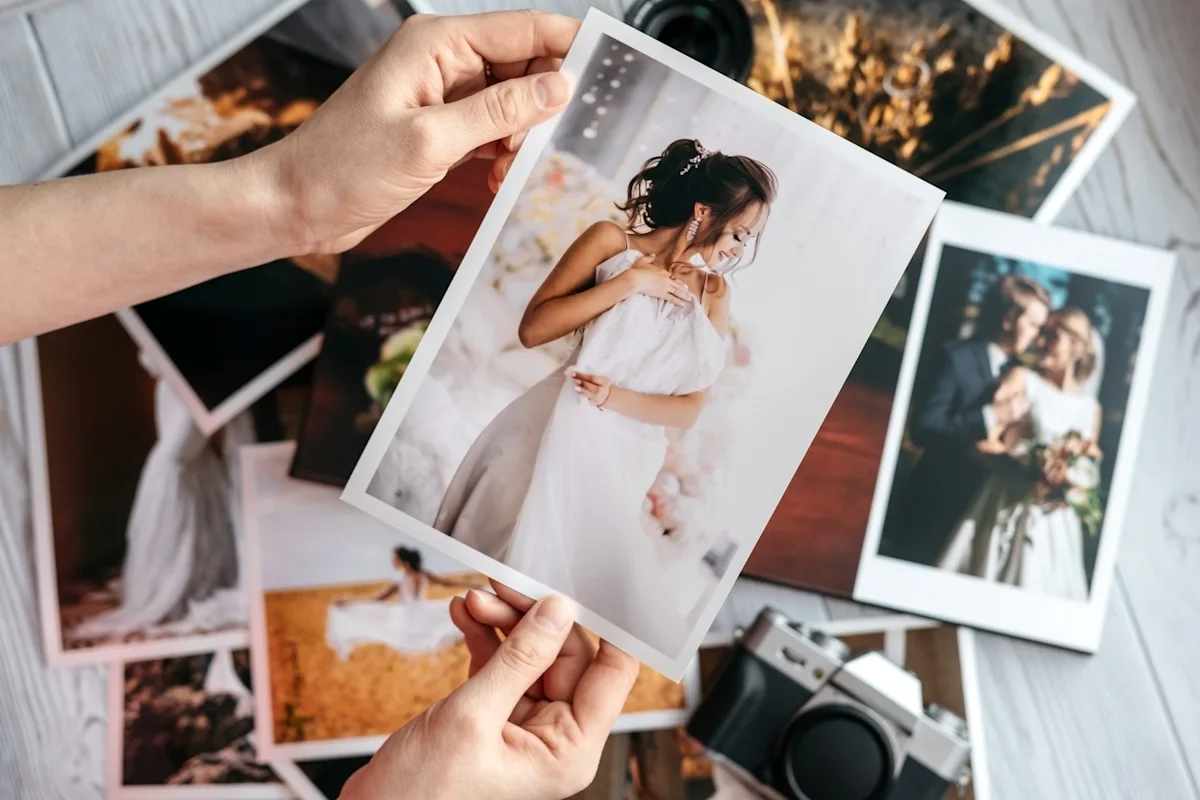
Most couples receive 500 to 900 fully edited images from 8 hours of wedding coverage. The exact number varies based on your photographer's shooting style, how active your wedding is and your coverage length. Documentary photographers who capture continuous candid moments typically deliver more images than those focusing on carefully composed editorial shots.
Your final image count reflects curated, professionally edited photos rather than every single frame captured. Photographers review thousands of images, select the best shots and apply consistent editing before delivery.
Typical edited image counts by coverage
Coverage length | Approximate edited images | What you're getting |
1–2 hours | 50 to 150 images | Key ceremony moments and formal family portraits |
3–4 hours | 150 to 300 images | Ceremony, portraits and venue details |
5–6 hours | 300 to 500 images | Ceremony through early reception with more variety |
8 hours | 500 to 900 images | Full wedding story from preparation to reception |
10+ hours | 800 to 1,200+ images | Extended coverage with comprehensive documentation |
Why edited image counts vary
Your photographer's style affects deliverable numbers. A documentary photographer might deliver 100 images per hour. An editorial photographer focusing on magazine-quality compositions might deliver 60 per hour. Neither approach is better, they're just different.
Wedding activity level matters too. A 150-guest wedding with a large bridal party, multiple ceremony readings and a packed dance floor generates more photo opportunities than an intimate 30-guest celebration.
What about raw files?
Most photographers don't provide unedited raw files because they're unfinished and don't represent the photographer's work. Raw files require specialised software to view and edit. If raws matter to you, discuss this upfront, as some photographers offer them for an additional $300 to $800.
Ask your photographer for a realistic image estimate based on your specific timeline, guest count and venue. Review their full wedding galleries, not just portfolio highlights, to see actual delivery numbers.
What's included in a wedding photography package?
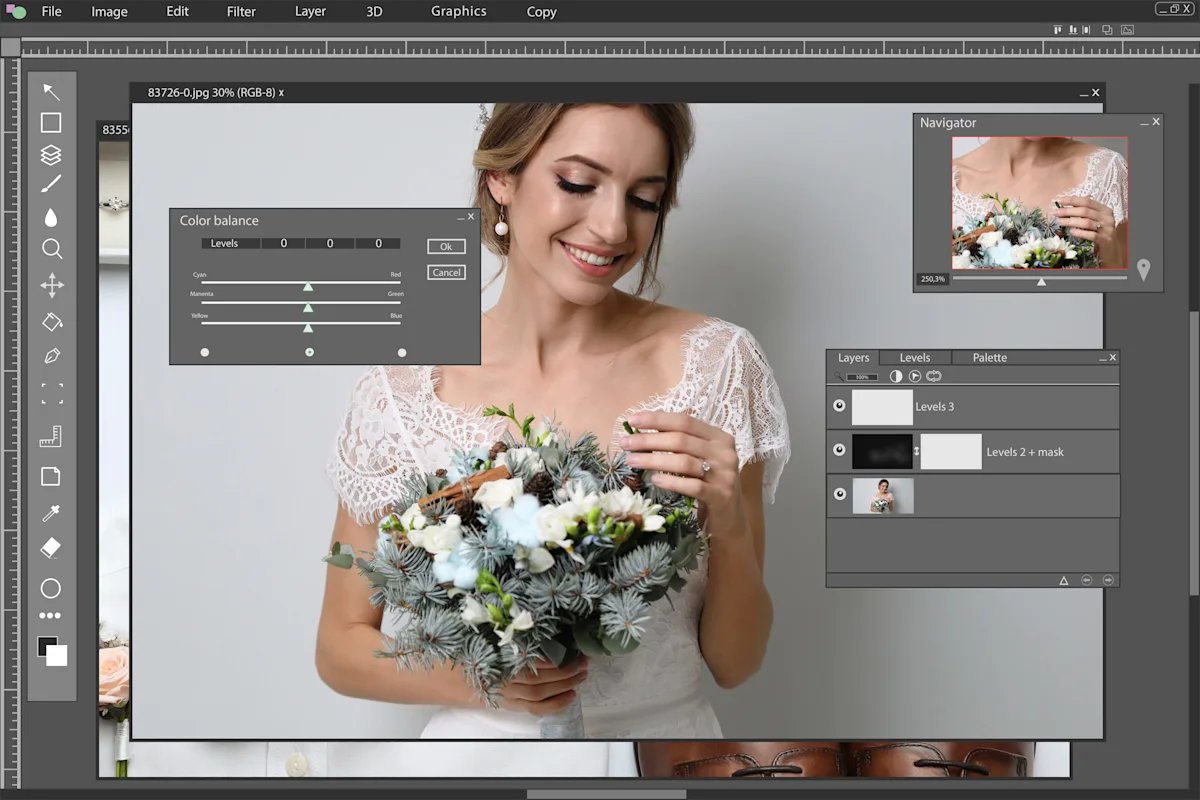
Standard Australian wedding packages include coverage hours, professional editing of all delivered images and digital delivery through an online gallery. Most packages priced between $3,000 and $5,000 for full-day coverage provide high-resolution files with personal printing rights. The package covers preparation, your wedding day and the post-production work that happens weeks after your event.
Understanding what's standard versus what costs extra helps you compare quotes accurately and avoid surprise charges.
Pre-wedding planning and consultation
Before your wedding, most photographers schedule consultations to walk through your timeline, discuss lighting conditions at your venue, plan family photo combinations and address any restrictions. Some venues have specific rules about ceremony photography or preferred photographer positions.
This planning stage keeps your day running smoothly. A well-prepared photographer captures more in less time. They'll coordinate with your wedding planner to ensure the schedule allows adequate time for photos without delaying other vendors like caterers.
Wedding day coverage
Coverage spans the hours you've booked. Your photographer arrives at the agreed time, typically during hair and makeup for 8-hour packages. They document preparation, travel to ceremony and reception venues if different, capture formal portraits and stay through your booked timeline.
Professional photographers bring backup camera bodies, multiple lenses and extra memory cards. This equipment redundancy protects against technical failures. They swap memory cards throughout the day to prevent data loss.
Professional editing and image selection
After your wedding, the real time investment begins. Photographers review hundreds or thousands of images, select the strongest frames, adjust exposure, correct colour, straighten horizons and apply consistent styling.
Industry benchmark: Editing commonly takes three to four times longer than shooting hours. An 8-hour wedding often requires 24 to 32 hours of post-production before your gallery is ready.
Standard packages include full editing of all delivered images. This covers colour correction, exposure adjustment, cropping and the photographer's signature style application. Light retouching like removing temporary blemishes or minor distractions, is typically included.
Digital delivery through secure galleries
Once editing finishes, images arrive through a password-protected online gallery. You'll receive high-resolution JPEG files suitable for printing at any size. Most photographers provide personal usage rights, meaning you can print images, share them online and use them for personal keepsakes.
Downloadable galleries usually stay active for a set period, commonly 6 to 12 months. Some photographers offer extended or lifetime gallery hosting for an additional fee. Always download your full gallery when first delivered rather than relying on indefinite access.
File backup and security systems
Professional photographers maintain multiple backup systems. During your wedding, they use dual memory card slots that write files to two cards simultaneously. After the event, files are backed up to multiple hard drives and cloud storage.
This file management is invisible to couples but critical for protecting your images. It's part of what separates professional photographers from hobbyists and justifies higher pricing.
What affects wedding photography pricing in Australia?
Wedding photography pricing is driven by photographer experience, editing time, shooting style, location and included products. Two photographers offering "8 hours coverage" can quote vastly different prices because the service extends far beyond the time spent at your wedding.
In Australia, full-day wedding photographers range from $2,000 to $6,000+. For most couples, hiring a solid mid-range professional is expected to cost around $3,000 to $5,000.
Editing time, not just wedding day hours
Wedding photography isn't priced like hourly casual work. Much of the labour happens after the wedding. The editing time is built into the package price. Cheaper packages often come with fewer images, lighter retouching or less consistency in the final look.
Photography style changes the workload
Photography style directly impacts post-production workload, which is why two photographers with similar shooting experience can quote differently.
The style you choose determines how much time your photographer spends editing each image after your wedding. Heavy colour grading, skin retouching and tonal adjustments require more labour hours than straightforward colour correction and exposure balancing.
Here's how common wedding photography styles differ in editing workload and complexity:
- Documentary coverage - Involves continuous candid shooting with minimal posing. Post-production focuses on consistent colour correction and exposure adjustment. This style typically requires less per-image editing time but generates more total images.
- Editorial or fine art photography - Includes more direction during formal portraits and detailed retouching later. Photographers spend more time perfecting each image's composition, lighting and tonal quality.
- Dark and moody styles - Rely on heavier colour grading, shadow recovery and selective lighting adjustments. This intensive editing adds substantial post-production time.
- Light and airy styles - Requires tighter exposure control during shooting and cleaner tonal work in editing. Maintaining bright, luminous images without blown highlights demands technical skill.
When choosing between photographers, review their full wedding galleries rather than just portfolio highlights. Consistent style across an entire wedding indicates more editing time, and that's priced accordingly.
Experience shows when things go wrong
Experienced wedding photographers charge more because they know weddings rarely run exactly to schedule. They factor in delays, changing light, tight spaces and last-minute adjustments. They adapt without missing key moments.
A photographer with 10+ weddings under their belt handles unexpected rain, difficult family dynamics, poor venue lighting and timeline changes without panic. That reliability is one of the biggest reasons a quote moves from $2,500 to $4,500 for similar hours.
Newer photographers often deliver beautiful work in ideal conditions. Experienced professionals deliver beautiful work regardless of conditions.
Location and travel requirements
Sydney and Melbourne photographers typically charge 10 to 20% more than regional areas due to higher operating costs. Commercial studio rent, equipment insurance, business licences and general cost of living affect pricing.
Two photographers can quote differently because one is local and the other is travelling. Some include a travel radius within their base price. Others charge separately for fuel and long distances, parking fees, accommodation or flights for interstate weddings.
Getting married outside capital cities? Ask for travel costs early so you're comparing like-for-like. Hiring local photographers near your wedding venue eliminates these charges entirely.
Add-ons can move a quote by $2,000 or more
Base packages look similar until you compare inclusions. Common upgrades affect the final cost.
Upgrade | Typical add-on cost (inc. GST) | What you get |
Second photographer | $500 to $1,200 | Multiple angles and simultaneous coverage |
Engagement shoot | $400 to $800 | Pre-wedding session, practice run and additional couple portraits |
Wedding album | $600 to $1,500 | Professionally designed printed album |
Extra coverage hour | $300 to $600 per hour | Extended timeline coverage and overtime flexibility |
Rush delivery | $300 to $600 | Expedited editing and faster gallery turnaround |
Drone footage | $300 to $800 | Aerial photos of the venue and surroundings |
GST note: These prices may include GST or be quoted plus GST depending on whether the photographer is GST-registered. Always clarify before comparing.
When a second photographer is worth it
A second shooter isn't automatic. It depends on your day's structure.
You're more likely to benefit if you have 120+ guests generating multiple simultaneous moments, two separate getting-ready locations far apart, a large bridal party requiring coordination, a tight ceremony to reception timeline with limited portrait time or a venue with multiple spaces in use at once.
For a small wedding in one location, a strong solo photographer is often sufficient. For bigger weddings, the second shooter provides full coverage. While the lead photographer captures you walking down the aisle, the second photographer captures your partner's reaction and guest emotions.
Turnaround time can change pricing
Most photographers have standard delivery windows. Faster delivery costs more because it requires prioritising your wedding over other bookings.
Typical delivery expectations: Sneak peek images arrive within a few days to two weeks. Full gallery delivery takes 4 to 12 weeks. Peak seasons (spring and summer) can extend timelines.
If you need photos quickly for thank-you cards or announcements, ask about rush delivery costs upfront. Standard turnaround is usually included in base pricing.
How much should I pay a photographer for half-day coverage?

Half-day wedding photography coverage (4 to 6 hours) typically costs $1,700 to $4,000, including GST in Australia. This option suits couples who want coverage from the ceremony through the early reception, without preparation shots or late-night documentation.
Your final price depends on the photographer's experience level, your location and whether you include add-ons like a second shooter.
Half-day coverage works well for specific wedding types and schedules.
When 4 to 6 hours is enough
- Small guest counts under 60 people reduce the time needed for formal family portraits. You can complete all group shots in 20 to 30 minutes rather than an hour.
- Simple ceremony-focused weddings where the reception is casual or brief. If you're having a ceremony and lunch rather than a full evening reception, half-day coverage captures the main events.
- Budget-conscious couples who prioritise professional coverage of key moments over full documentation. You get a ceremony, formal portraits and some reception atmosphere without paying for full-day rates.
- Late-start weddings starting at 3 pm or 4 pm. Coverage from the ceremony through dinner and first dance fits within 5 to 6 hours without needing preparation shots.
What you miss with half-day coverage
Half-day packages typically exclude getting-ready moments, venue detail shots and late reception coverage. Your photographer usually leaves before the dance floor gets busy.
If your timeline runs late, there's no flexibility once your booked hours end. Overtime charges of $300 to $600 per additional hour apply if you want your photographer to stay longer.
Consider full-day coverage (8 hours, $3,000 to $5,000) if you want complete storytelling from preparation through evening celebrations. The extra $1,000 to $2,000 provides more coverage and final images.
What costs extra in a wedding photography package?
Common add-ons not included in base packages are wedding albums ($600 to $1,500), second photographers ($500 to $1,200), engagement sessions ($400 to $800) and extra coverage hours at agreed rates. Understanding what's standard versus optional helps you budget accurately and avoid surprise costs.
Not all packages include the same products or services. Many photographers offer a base package focused on digital delivery, then provide optional upgrades depending on what you want to add.
Wedding albums and print products
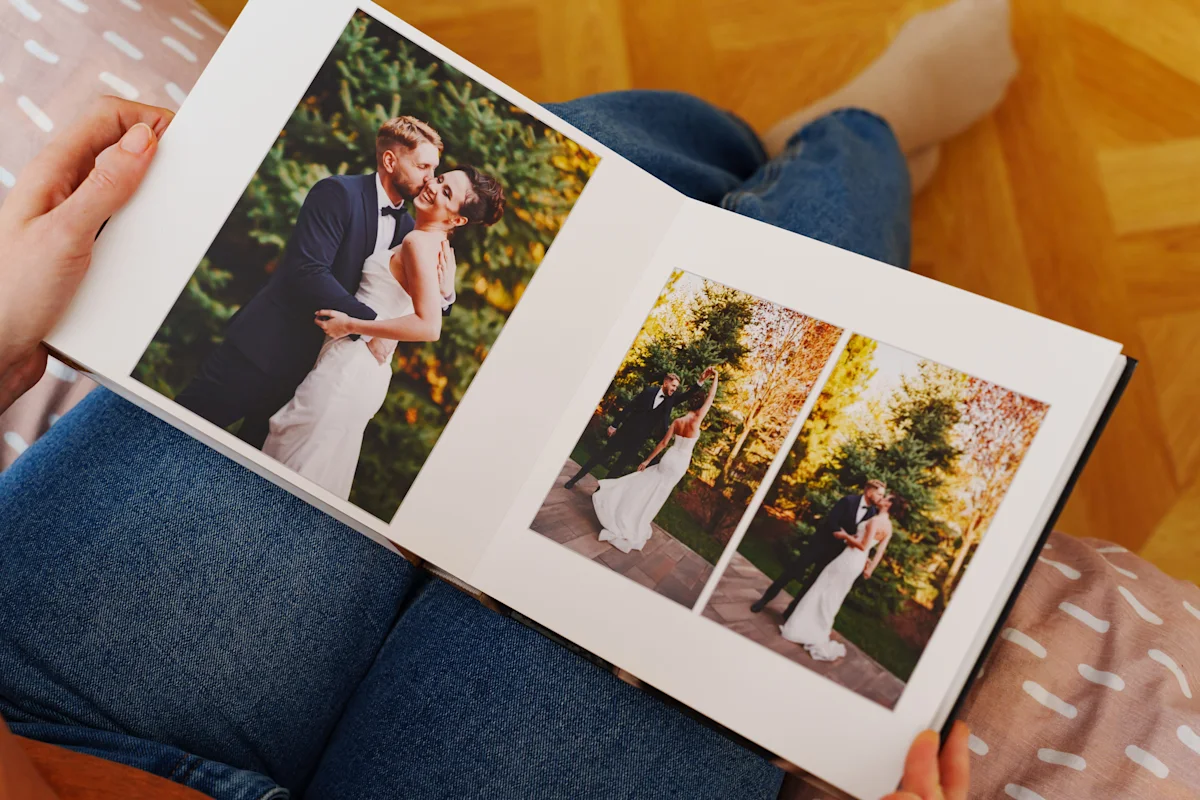
Physical albums are one of the clearest reasons two packages with identical coverage hours can be priced differently. A $3,500 full-day package might include digital files only. A $4,800 package from the same photographer may include a professionally designed album.
Albums involve layout design, multiple revision rounds and premium materials like leather or linen binding. It's not just printing pages; it's curating your wedding story into a cohesive physical product.
Australian album pricing:
- Entry-level albums cost $600 to $900 (20 to 30 pages, basic materials).
- Premium albums run $1,000 to $1,500 (40+ pages, leather or linen, lay-flat binding).
- Parent albums cost $300 to $600 each (smaller duplicate versions).
Some couples choose digital-only packages initially and design albums later. Post-wedding album creation often costs the same or slightly more than bundling it in your original package. You also need to invest time selecting and arranging images yourself.
If you care about having something tangible, check what's included. Size, finish, page count and upgrade options all affect final cost.
Second photographer benefits
A second shooter provides simultaneous coverage of different spaces and perspectives. They are usually experienced professionals in their own right, not assistants. They work independently to capture complementary angles and moments that the lead photographer might miss.
You benefit most from a second shooter if you have two getting-ready locations, large guest counts or multiple ceremony and reception spaces in use simultaneously. For intimate weddings under 60 guests in one location, a single experienced photographer is usually enough.
Engagement sessions explained
Engagement shoots serve multiple purposes beyond just providing more couple photos. They're essentially a practice run that helps you feel comfortable in front of the camera before your wedding day.
What happens during an engagement session:
- You'll spend 1 to 2 hours at a location meaningful to you.
- You'll receive 50 to 150 edited images.
- You'll see your photographer's working style.
- You'll practice posing and interacting naturally while being photographed.
Couples who do engagement sessions often look more relaxed in their wedding photos because they've already worked through camera awkwardness. These images are also useful for save-the-date cards, wedding websites and reception displays.
Photographers charge $400 to $800 for standalone engagement sessions. Many offer package discounts if you book engagement and wedding coverage together.
Travel fees and expenses
Some photographers include a travel radius in their base price, typically 50 to 100 kilometres. Beyond that, expect additional charges.
Travel costs you might encounter:
- Long-distance driving costs $1 to $2 per kilometre beyond the included radius.
- Parking fees run from $20 to $100, depending on venue location.
- Accommodation costs $150 to $300 if an overnight stay is required.
- Flights cost $400 to $1,500+ for interstate or destination weddings.
Destination weddings or regional venues in remote areas can add $800 to $2,000+ to your photography budget. Hiring a local photographer eliminates these costs entirely.
Overtime and extra hours
Many packages include set hours with overtime charged per hour or in half-hour blocks. Typical overtime rates are $300 to $600 per additional hour.
If your reception timeline is flexible or speeches tend to run long, discuss overtime arrangements before your wedding. Some photographers build buffer time into quotes. Others charge strictly by the hour. Knowing the policy prevents awkward conversations on your wedding day.
See what wedding photographers quote for your coverage needs
What is the cheapest month to get married in Australia?
Winter months (June, July and August) are typically the cheapest for weddings in Australia, with photography potentially costing 5 to 15% less than peak season. On a $3,500 photography package, that represents savings of $175 to $525. Weekday weddings (particularly Fridays and Sundays) also command lower rates from most vendors, including photographers.
Off-season booking provides additional benefits beyond just cost savings.
Why winter weddings cost less
Demand drops in winter. Most couples prefer spring (September to November) and summer (December to February) for outdoor ceremonies and pleasant weather. This seasonal concentration creates pricing tiers.
Peak season photographers are often booked solid every weekend. They have no incentive to discount rates. Winter weekends, however, have fewer bookings. Photographers may offer lower rates to fill their calendars.
Venue costs also drop in winter, sometimes by 20 to 30%. Your overall wedding budget decreases, making it easier to allocate adequate funds to photography, videography, styling and other priorities.
The tradeoffs of winter weddings
Weather unpredictability is the biggest concern. Winter in southern Australia means shorter daylight hours and possibility of rain. Your photographer needs backup indoor portrait locations at your venue.
Guest availability can be better or worse depending on your circle. Some people travel less in winter. Others appreciate avoiding holiday season conflicts.
Aesthetic considerations matter if you want lush gardens or outdoor ceremonies. Many venues and floral arrangements look different in winter compared to spring blooms.
Other cost-reduction timing strategies
Sunday weddings typically cost 10 to 20% less than Saturdays. Most vendors, including photographers, offer Sunday rates because demand is lower. Guests may appreciate shorter travel if they have Monday work.
Friday weddings can also reduce costs, though less dramatically than Sundays. You might save 5 to 10% on vendor fees. Consider whether guests need to take time off work to attend.
Avoid major holiday weekends like Easter, Christmas and New Year's. Demand spikes push prices up. Vendor availability also becomes extremely limited.
Discuss seasonal pricing openly with photographers. Many adjust rates based on demand rather than fixed peak and off-peak schedules. You might negotiate better rates even in popular months if you book far in advance.
How can I reduce wedding photography costs?
The most effective ways to reduce photography costs are booking fewer hours, skipping optional add-ons like albums and second shooters, hiring local photographers to avoid travel fees and choosing off-season dates. These strategies can save $1,000 to $3,000 without necessarily compromising the quality of your core coverage.
If you're working with tighter finances, these eight approaches help control costs while still securing professional images.
Book fewer coverage hours
An 8-hour wedding package typically costs $2,500 to $4,600. Dropping to 4 to 6 hours ($1,700 to $4,000) or even 2 to 3 hours ($800 to $1,500) makes an immediate impact on your budget.
Shorter coverage works for small weddings, registry ceremonies or couples who value key moments over full storytelling. You'll get ceremony, formal portraits and some reception coverage. What you sacrifice is preparation documentation, venue details and late reception atmosphere.
Calculate your actual needs. If your ceremony starts at 4 pm and you only want coverage through the first dance at 8 pm, that's 4 hours. Why pay for 8?
Choose digital-only packages
Albums typically add $600 to $1,500 to package costs, depending on size, materials and design. Removing the album reduces initial expense and leaves you with digital files only.
You can design and print an album later if priorities change. Many online services offer DIY album creation for $200 to $400. The tradeoff is time investment, and albums rarely get created once wedding excitement fades.
If physical photos aren't important to you, digital-only packages provide substantial savings without losing image quality.
Skip the second photographer
Smaller, intimate ceremonies generally suffice with a single experienced photographer. Not hiring a second shooter saves $500 to $1,200.
Second photographers provide value for large weddings with multiple simultaneous activities. If you're having 80+ guests, two getting-ready locations or a venue with separate ceremony and reception spaces, the extra coverage may justify the cost.
For intimate weddings under 60 guests in one location, a skilled solo photographer captures everything important. You're not missing coverage, you're just getting one perspective instead of two.
Hire emerging photographers
Up-and-coming photographers building their portfolios may charge $1,800 to $3,000 for 8 hours instead of $2,500 to $4,600. That difference of $700 to $1,600 is substantial.
Look for photographers who've built experience shooting weddings as second shooters or assistants for established professionals but are now building their own lead photographer business. They often have professional training and equipment without the premium rates of established names.
The risk is less experience in handling unexpected situations. Weddings are fast-paced and emotionally charged. Newer professionals may not adapt as quickly as veterans. Review their full wedding galleries, not just highlights, before booking.
Book off-season or weekday dates
Winter months and weekdays (particularly Fridays and Sundays) often reduce photography pricing by 5 to 15%. On a $3,500 package, that saves $175 to $525.
Many photographers adjust rates based on demand. A Saturday in October commands higher rates than a Sunday in July. If you're flexible on dates, ask photographers directly about their pricing calendar.
The compromise is practical. Winter weather can be unpredictable, affecting outdoor portraits and guest comfort. Weekday weddings may limit guest attendance if people need to take time off work.
Eliminate optional extras
Drone coverage ($300 to $800), engagement sessions ($400 to $800), rush delivery ($300 to $600) and premium retouching all increase final totals. Removing them can save $500 to $2,000+, depending on what's included.
You lose some variety and polish but retain core coverage. Prioritise what matters most. If you're camera-shy, an engagement session helps you relax. If you love your venue's grounds, drone footage showcases it beautifully. But if the budget is tight, these are the first things to cut.
Hire local photographers
If a photographer needs to travel interstate, expect $800 to $2,000+ in added costs for accommodation, flights and travel time. Booking someone local to your area removes that entirely.
Local photographers also know your venue and the surrounding areas. They understand the best light conditions, backup portrait locations and any venue-specific restrictions. In smaller regions, stylistic options may be narrower than sourcing from capital cities, but the cost savings are substantial.
Negotiate package customisation
Many photographers offer standard packages but will customise based on your actual needs. If a package includes 8 hours plus an album, but you only want 6 hours with no album, ask if they'll adjust pricing.
Some photographers are inflexible with packages. Others appreciate clients who know exactly what they want. The worst they can say is no. You might save $500 to $1,500 by removing inclusions you don't value.
What should I ask before booking a wedding photographer?

Essential questions cover coverage hours and deliverables, turnaround time, backup equipment and contingency plans, usage rights, overtime policies and cancellation terms. These questions protect your budget, clarify expectations and help you compare photographers on factors beyond just portfolio quality.
Many couples book photographers based primarily on visual style, then encounter surprises about what's included or how the business operates. Asking detailed questions upfront prevents misunderstandings.
Organize your questions into these key areas to cover all bases:
Coverage and deliverables
- What exactly is included in this package price? Get specifics on coverage hours, the number of edited images, whether a second shooter is included, whether an album or prints are provided, and what format you receive files in. Packages vary wildly. One photographer's "full day" might be 8 hours, another's might be 10 hours. Don't assume anything is included unless explicitly stated.
- How many edited images will we receive? Photographers have different delivery philosophies. Some deliver every decent shot (800+ images). Others curate heavily (300 to 400 images). Neither approach is wrong, but your expectations should match their process. Ask to see full wedding gallery examples, not just portfolio highlights.
Timeline and delivery
- What is your typical turnaround time? Standard delivery is usually 4 to 12 weeks for full galleries. Peak season (spring and summer) can push this longer if photographers are shooting weddings every weekend. If you need photos quickly for thank-you cards or announcements, ask about rush delivery options and associated costs. Some photographers include sneak peek images within a week at no extra charge.
- Do you charge overtime? At what rate? Many packages include set hours with overtime charged if the day runs long. Typical rates are $300 to $600 per additional hour. Understanding this policy upfront prevents awkward conversations if speeches run late or you want your photographer to stay through the last dance.
Equipment and contingency
- Do you have backup equipment? What happens if something fails? Professional photographers carry backup camera bodies, extra lenses and multiple memory cards. Camera failure shouldn't end coverage. Ask specifically about their gear redundancy. Do they use dual card slots that write to two cards simultaneously? This protects against memory card failure, which is more common than camera body failure.
- Are you insured? Professional liability insurance protects you if something goes wrong. It also indicates the photographer runs a legitimate business rather than a casual side project. Public liability insurance covers accidents at your venue. Some venues require proof of insurance from all vendors.
- What happens if you're sick or unable to attend? Established photographers maintain relationships with trusted backup photographers who match their style. They have contingency plans for emergencies. Get this in writing. If they don't have a formal backup arrangement, that's a red flag.
Files and usage rights
- Do you provide raw files? Most professional photographers deliver only edited JPEGs. Raw files are unfinished and don't reflect the photographer's vision or skill. They also require specialised software to view. If raw files matter to you, discuss this upfront. Some photographers offer them for an additional $300 to $800.
- What rights do we have to the images? In Australia, copyright typically remains with the photographer. What you receive are personal usage rights. You can print images, share them online and use them for personal keepsakes. Commercial use or resale is usually restricted. Check IP Australia's copyright guidelines for detailed information about image ownership and usage rights.
Policies and coordination
- What is your cancellation and rescheduling policy? Weddings are booked months or years in advance. If you need to change your date, photographers may not be able to accommodate a new date. Deposits are typically non-refundable because photographers reserve your date and turn away other bookings.
- How do you handle family portrait organisation? Large family portrait sessions can take 30 to 60 minutes if poorly organised. Experienced photographers have systems for grouping people efficiently. Ask about their process. Do they need a shot list from you? How do they keep things moving?
- Can we see full wedding galleries, not just highlights? Portfolio images showcase a photographer's best work. Full wedding galleries show their consistency, actual delivery volume and range across an entire event. Most photographers willingly share full galleries with serious potential clients.
Asking detailed questions accomplishes three things. First, it clarifies exactly what you're paying for and prevents surprise costs. Second, it reveals how the photographer runs their business. Third, it helps you compare photographers on substance rather than just visual style.
What do couples value most in wedding photographers?
Bark’s industry research shows 42% of couples prioritise capturing the right moments as the most important photographer skill. Style comes second at 25%, followed by photo quality at 21% and friendliness at 12%. This data reveals couples increasingly want photographers who can direct them for the best shots, even when seeking "candid" photography.
Understanding what matters to most couples helps you evaluate photographers effectively and prioritise your own decision criteria.
Photography style preferences in Australia
Recent survey data shows clear preferences for specific approaches: Candid and natural photography leads at 44%. A mix of traditional and candid follows at 37%. Film photography sits at 7%. Highly edited or fine art reaches 5%. Traditional posed pictures come in at 4%. Flash photography rounds out at 3%.
Candid and natural styles dominate Australian preferences, but nearly 40% of couples still want some traditional posed family portraits alongside documentary coverage. Most experienced wedding photographers blend both approaches, adapting to different wedding segments.
Ceremony coverage tends toward documentary. Family portraits require traditional posing. Couple portraits blend gentle direction with natural interaction. Reception coverage returns to documentary.
Why capturing the right moments matters most
Technical skill, equipment quality and artistic vision all matter. But missing a key moment ruins the best photography. You can't recreate your partner's face when they first see you, your grandmother's tears during vows or your father's speech.
Experienced photographers anticipate moments before they happen. They position themselves strategically. They understand the wedding timeline flow. They know when to be close for emotion and when to step back for context.
This is why experience often trumps raw talent. A newer photographer with stunning portfolio shots may still miss important moments due to poor positioning or timing. A veteran photographer delivers full coverage because they've seen hundreds of weddings unfold.
Professional recognition and trust signals
While not the top priority for most couples, professional credentials provide reassurance about photographer quality and reliability.
Australian Institute of Professional Photography (AIPP) accreditation indicates photographers have met industry standards through assessment. AIPP members must demonstrate technical proficiency and maintain professional practices. Master Photographers represent the highest accreditation level.
Not all excellent photographers pursue AIPP membership. Some of Australia's top wedding photographers aren't accredited. But if you're considering an AIPP Master Photographer, expect premium pricing and limited availability.
Publications and features in respected wedding magazines and blogs indicate quality. Industry awards provide another quality indicator. Professionally adjudicated awards like APPA (Australian Professional Photography Awards), WPPI (Wedding and Portrait Photographers International) and IWP (International Wedding Photographer) involve expert panel assessment rather than public voting.
The communication and personality factor
Technical skill matters less if you don't enjoy being around your photographer. They're with you for 6 to 10 hours on one of your most important days. Personality fit affects your comfort level, which shows in photos.
Schedule consultations with shortlisted photographers before booking. Video calls work if in-person meetings aren't possible. Assess whether their communication style matches yours. Do they listen to your vision? Do they offer helpful suggestions without being pushy? Do you feel relaxed around them?
If something feels off during the consultation, trust your instinct. There are over 4,000 wedding photographers on Bark. You'll find someone whose work you love and who you enjoy being around.
Wedding photographer cost in Australia averages $3,567 for full-day coverage, with typical pricing between $3,000 and $6,000. Your final price depends on your state, the photographer's experience and what's included. Eight-hour coverage delivers 500 to 900 edited images after 24 to 32 hours of post-production work.
Choose a photographer whose full wedding galleries you love, not just their portfolio highlights. Verify they have backup plans for emergencies, insurance coverage and clear policies on deliverables and timelines. If the budget is tight, book fewer hours or choose off-season dates rather than compromising on photographer quality.
FAQs
Only if they’re authorised to perform the work where the property is located. Licensing and mutual-recognition rules differ between jurisdictions.
Confirm their authority before sending the contract or paying a fee.


Other guides you might be interested in


Explore all party planning and event related guides
Whether you're planning a 40th birthday party, searching for the perfect wedding entrance song, or organising a corporate event, Bark is here to guide and inspire you every step of the way.