Benefits of shoulder shrugs and how to do them
Last updated February 5, 2026
Build stronger traps and better posture with a deceptively simple lift. This guide breaks down the benefits of dumbbell shrugs, the muscles they work and the right way to execute them for real results.
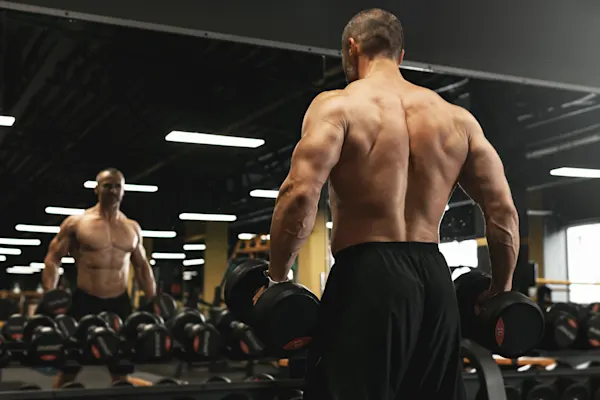
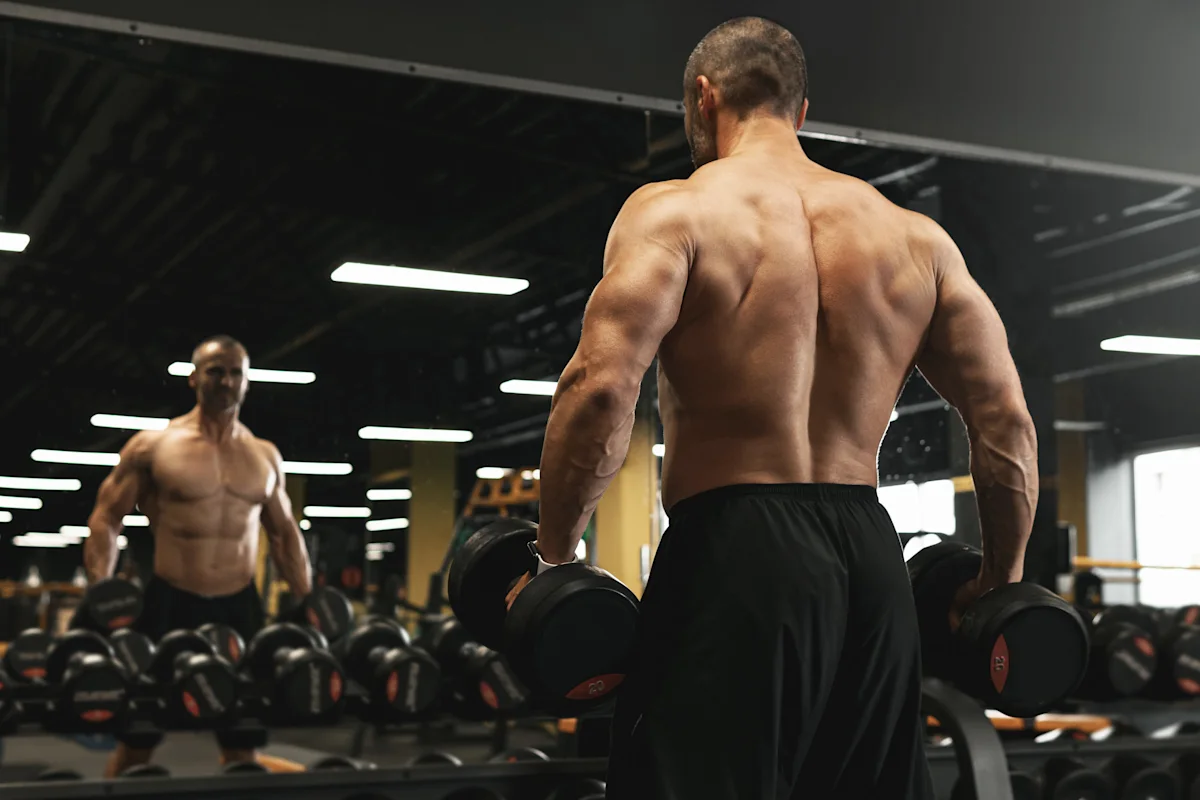
Benefits of shoulder shrugs and how to do them
Last updated February 5, 2026
Build stronger traps and better posture with a deceptively simple lift. This guide breaks down the benefits of dumbbell shrugs, the muscles they work and the right way to execute them for real results.
Written by

Shoulder shrugs, often performed with dumbbells (aka dumbbell shrugs or db shrugs), are simple but highly effective. They target specific upper body muscles that are often neglected, and carry benefits beyond muscle size. Whether you’re training for strength, posture, or neck health, knowing what muscles shrugs work and how to execute them correctly is key to getting real value.
In this guide, we’ll cover:
- The main benefits of dumbbell shrugs
- Shrugs workout what muscles they engage
- How to perform shrugs with correct form
- Variations, programming tips, and safety cues
Here is what you need to know.
What muscles do shrugs work?
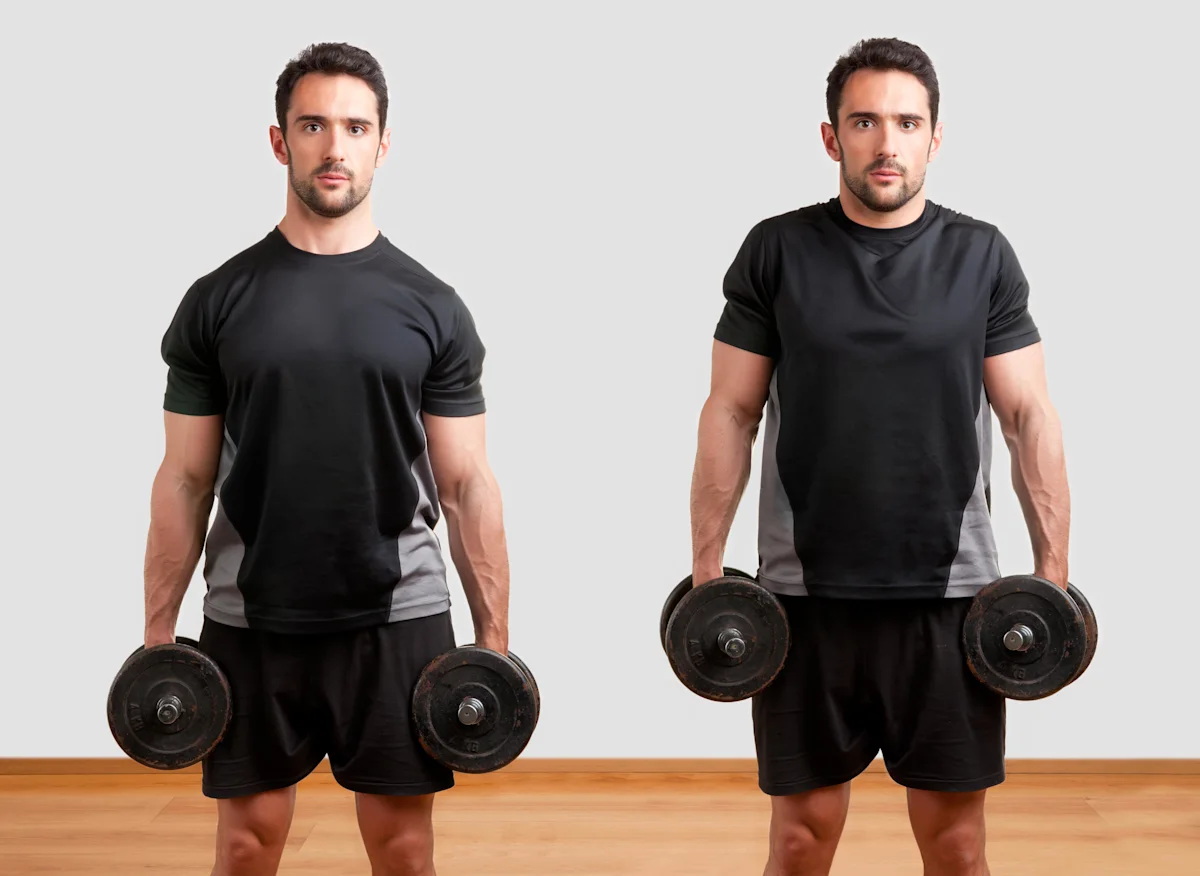
Shrugs are an isolation exercise, primarily targeting the trapezius muscles, especially the upper part.
But that’s not all. Supporting and stabilising muscles also get involved. Here’s a breakdown:
Muscle/region | Role in shrugs |
Upper trapezius | Main mover. It elevates the shoulder blades (scapulae) upward. |
Middle/lower trapezius | Helps stabilise and control scapular motion (especially during the lowering phase). |
Levator scapulae | Assists in shoulder blade elevation. |
Rhomboids | Helps stabilise the shoulder blades, though their involvement is secondary. |
Forearms/grip Muscles | Hold the dumbbells securely through a static contraction in the hands and forearm muscles. |
Core and stabilisers | To maintain upright posture, control sway, and support the spine (though not the primary focus) |
When done properly, shrugs reinforce the role of the traps and upper back in posture, shoulder stability, and movement.
Benefits of dumbbell shrugs
Here are the key advantages of incorporating shrugs or dumbbell shrugs into your training:
- Stronger and more defined traps: Directly isolates the upper trapezius, helping increase strength and hypertrophy in that area.
- Improved posture and reduced neck/shoulder tension: Strong traps pull the shoulders back and down, combating forward-slumped posture common with desk work. Shrugs may also help reduce neck and upper back tightness.
- Better shoulder and scapular stability: The traps play a structural role in stabilising the shoulder girdle. Stronger traps help with overhead presses, carries and general shoulder health.
- Grip strength carryover: Because you must grip the weights firmly, shrugs give an ancillary boost to grip endurance.
- Low injury risk if done properly: The motion is simple (straight up/down, not rolling the shoulders), making it lower risk compared to more complex upper-body lifts.
- Functional benefits: Everyday activities like carrying loads, lifting boxes, or even posture under load benefit from stronger traps.
- Versatile and scalable: You can perform shrugs with dumbbells, barbells, bands, or machines—adjusting intensity as needed.
Because of these benefits, shrugs are a useful accessory exercise in many training plans.
How to do dumbbell shrugs (the correct technique)
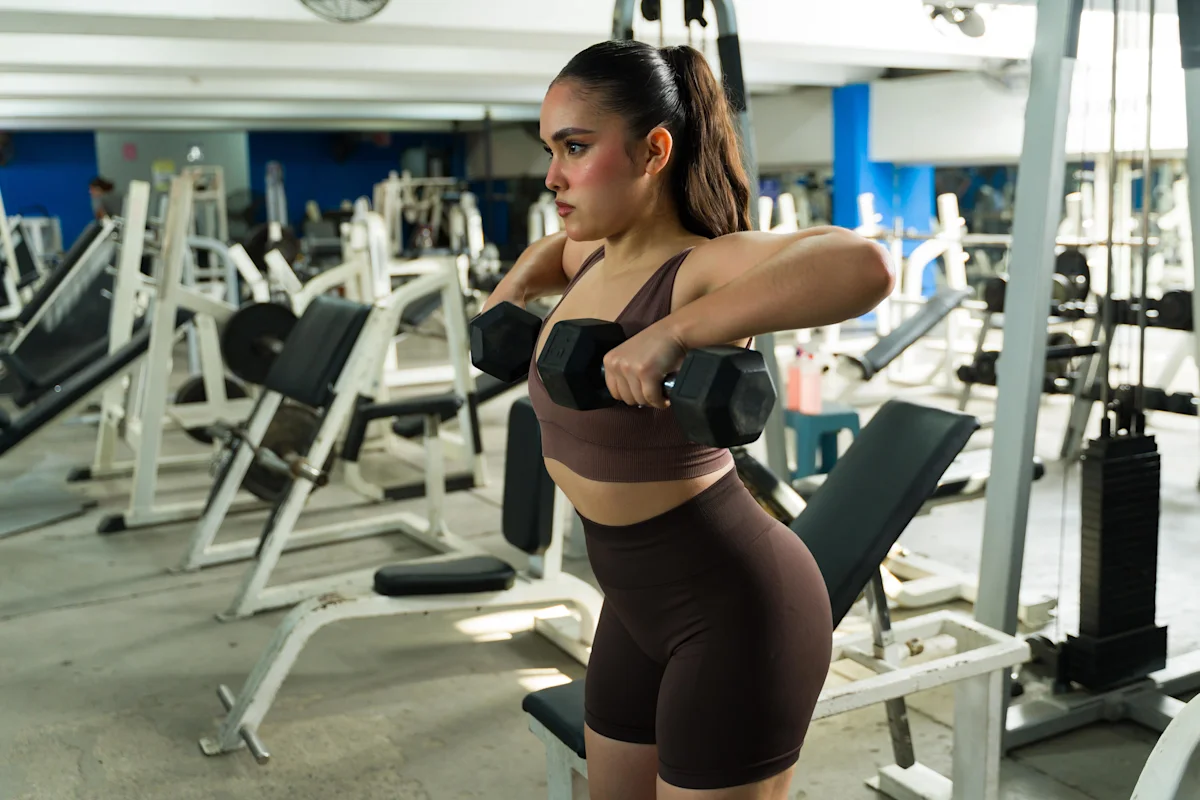
Doing it with good form ensures you reap the benefits and minimise risk. Here’s a step-by-step guide:
Setup and starting position
- Stand with your feet about shoulder-width apart.
- Hold a dumbbell in each hand with arms relaxed by your sides (palms facing inwards).
- Keep your core engaged and spine neutral. Your head should stay in line with your body. Avoid pushing your chin forward.
- Shoulders relaxed, not forced down.
Execution
- Raise the shoulders upward Elevate your shoulders straight up toward your ears as high as possible. Keep the movement vertical and don’t roll your shoulders forward or backward.
- Lower with control Slowly lower the shoulders back to the starting position, resisting gravity. Control the lowering phase to keep the traps engaged and protect the shoulder joints.
- Breathe properly Exhale as you lift; inhale as you lower.
Reps, sets & load
- Beginners can start with 3 sets of 10-15 reps using a moderate weight.
- For hypertrophy, go to 8–12 reps with a heavier load.
- As a finisher or accessory, sets of higher reps (15–20) are useful too.
- Progress by increasing weight gradually, or adding holds at the top.
Common mistakes to avoid
- Rolling the shoulders: Avoids direct trap engagement and stresses joints.
- Using momentum/jerking: The movement should be controlled and smooth.
- Shrugging with bent elbows: That shifts work to arms rather than traps.
- Using too heavy a load too soon: Focus on quality over quantity.
- Neck movement or forward head posture: Keep the neck neutral.
Programming & integration tips
- Include shrugs on upper back/pull days or shoulder accessory days.
- Because traps recover relatively quickly, 1–2 sessions per week is sufficient for most users.
- Use shrugs as a finisher after compound lifts to completely fatigue the traps.
- Mix in variation over time (see below) to avoid adaptation.
- Watch for shoulder soreness; moderate volume is often best.
Variations & alternatives
To keep your training fresh or adapt to equipment availability:
- Barbell shrugs: Allows heavier loads but less independent arm motion.
- Behind-the-back shrugs: Changes line of tension.
- Single-arm dumbbell shrugs: Helps to iron out imbalances.
- Resistance band shrugs: Accessible option if weight equipment is unavailable.
- Trap bar shrugs: More neutral grip and safer lift path.
Evidence and Australian professional guidance
Research from La Trobe University in Victoria has shown that a variation of the shrug, known as the upward-rotation shrug, activates both the upper and lower trapezius more effectively than the standard version. This has been used in rehabilitation programmes for people with shoulder instability or drooping shoulders, confirming that shrug variations can strengthen the muscles responsible for shoulder-blade control.
In Australia, several professional bodies support the inclusion of upper-back and shoulder-girdle strengthening in regular training:
- AUSactive (formerly Fitness Australia) recommends resistance training for all major muscle groups two to three times a week, including both multi-joint and single-joint exercises as strength improves.
- Exercise & Sports Science Australia (ESSA) advises regular training of the scapular stabilisers and posterior shoulder muscles to support shoulder function and reduce the risk of overuse problems. This is emphasised in their guidelines for populations such as people with spinal cord injuries, where shoulder health is critical.
- The Australian Strength and Conditioning Association (ASCA) also highlights the importance of shoulder-girdle strength and control in performance programmes, and coaches commonly include shrugs as part of their upper-trap and scapular-control work.
Taken together, the research and guidance support the role of exercises like dumbbell shrugs and db shrugs in improving trap strength, posture and overall shoulder stability.
Final word
Dumbbell shrugs are simple, effective, and accessible, and when done correctly, they deliver far more than just bigger traps. They support posture, stabilize shoulders, and strengthen a muscle group that often gets overlooked.
To maximise your results and ensure your form is on point, working with a personal trainer can make all the difference. Especially when first integrating shrugs into your programme. Bark makes it easy to connect with trusted trainers in Australia who can guide you safely toward stronger, healthier upper back development.
References: AUSactive (formerly Fitness Australia), Exercise & Sports Science Australia (ESSA), The Australian Strength and Conditioning Association (ASCA)
FAQs
Use a weight you can lift with good form for your target rep range. It’s better to start lighter and progressively increase weight than to use too heavy and lose form.


Other guides you might be interested in


Explore all guides about personal and physical growth
Find expert guides on nutrition, fitness, wellbeing, and mindset to build healthier habits. Learn when a coach, trainer, or therapist can help you grow with Bark.