
How much does a DJ cost in Australia?
Last updated September 30, 2026
This guide covers DJ hire costs across Australia using real Bark stats and market research. It details hourly rates, event type pricing, city comparisons, equipment, famous Australian DJs and what to look for when booking your DJ.
How much does a DJ cost in Australia?
Last updated September 30, 2026
This guide covers DJ hire costs across Australia using real Bark stats and market research. It details hourly rates, event type pricing, city comparisons, equipment, famous Australian DJs and what to look for when booking your DJ.
Written by

DJ hire in Australia costs $350 to $750 inc. GST for a standard booking. The average quote is $550 inc. GST, based on Bark's data from customer requests. For larger or premium events, quotes regularly reach $1,200 to $2,000 inc. GST. Bark has received over 36,690 DJ hire requests in Australia over the past couple of years, with 550 or more coming in every month.
Where you land in that range depends almost entirely on your event type, how long you need the DJ and what equipment they bring.
This guide covers what DJ hire actually costs across every event type, city and experience level. It also covers what a professional DJ brings and how to choose the right one for your budget.
What are the different types of DJs?

Not every DJ suits every event. The type you hire affects cost, setup requirements and what you can expect on the night.
Mobile DJ
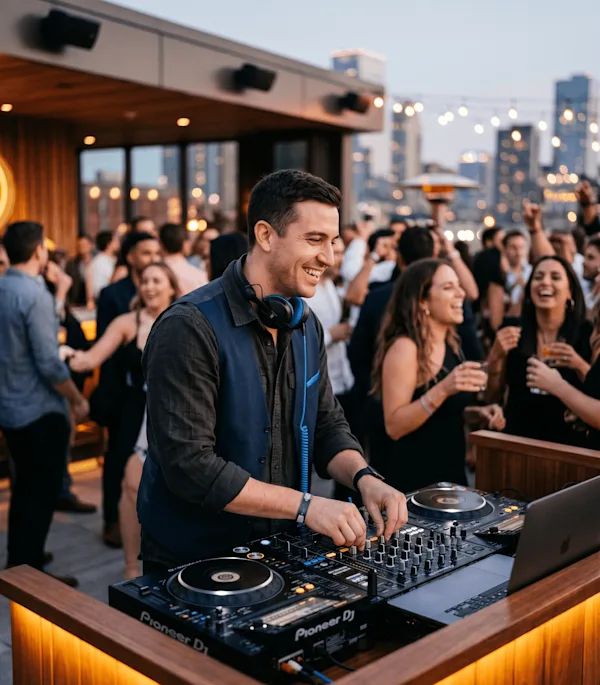
The most common choice for private events. Mobile DJs bring their own equipment (decks, speakers, lighting) and work weddings, birthdays and corporate functions. They price in packages rather than by the hour.
Wedding DJ
A specialist category within mobile DJing. Wedding DJs manage ceremony and reception music, coordinate timing with venues and often include an MC function. Expect to pay a premium for this level of service.
Corporate event DJ
Works conferences, gala dinners and product launches. Rates sit above party bookings due to professional presentation requirements and MC duties.
Resident DJ
Based at a specific venue such as a bar, club or hotel. The venue supplies equipment and the DJ is paid for playing time only, usually $100 to $200 per hour inc. GST.
Club or touring DJ
Performs at ticketed events and festivals. Rates range from $300 inc. GST per set for emerging artists to $10,000 inc. GST or more for headline acts. Most work through booking agents.
Rave DJ
Specialises in electronic music events. Rates vary widely with profile and event size. For private event hire, post your event on Bark to receive quotes from DJs who match your brief.
How much does a DJ cost by event type?
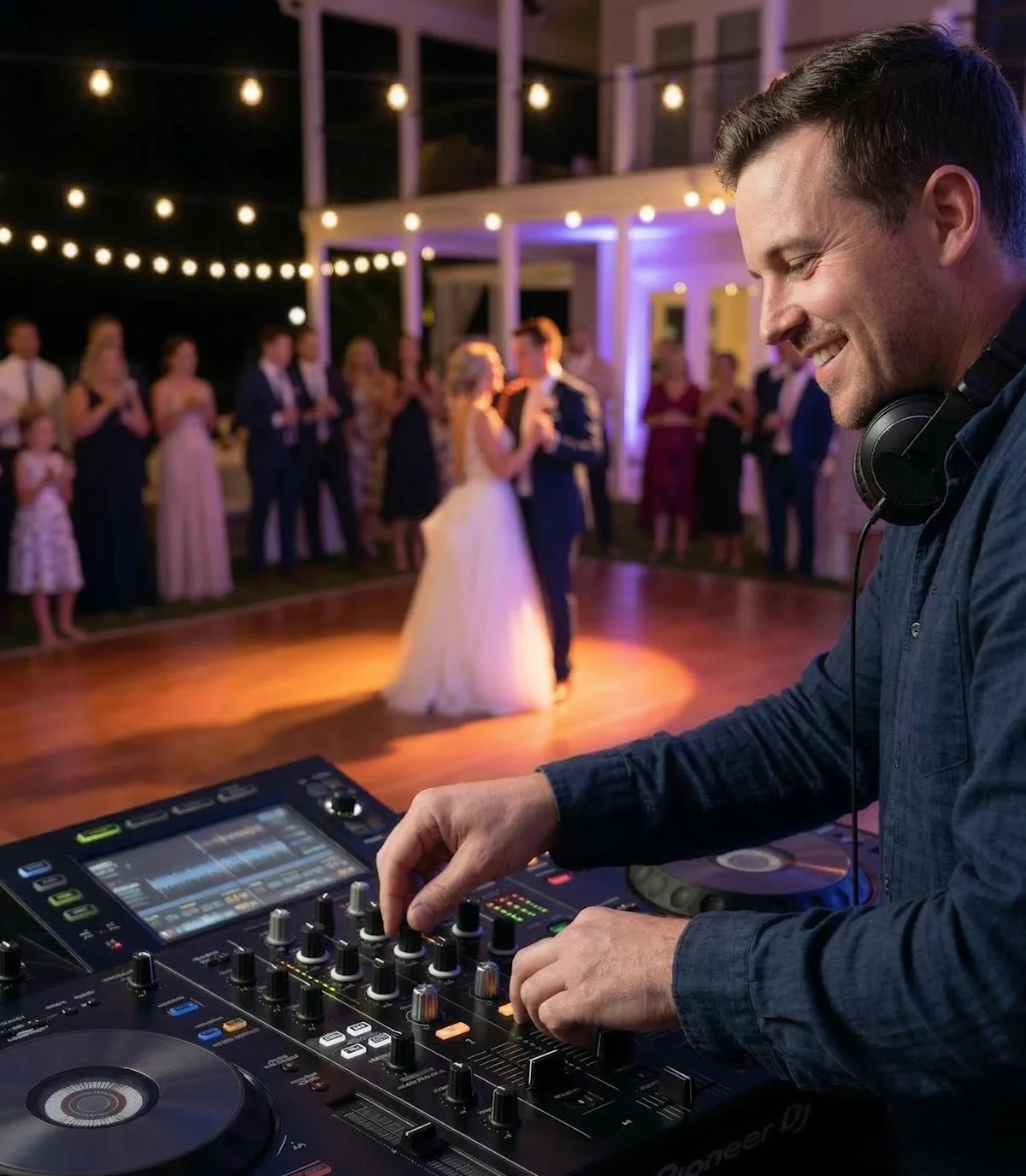
Event type is the single biggest driver of your total DJ cost. A wedding DJ carries a completely different scope of work from a party DJ, and the price reflects that. Here's what to expect across the three most common booking types.
Wedding DJ cost in Australia
A wedding DJ in Australia costs $1,300 to $2,500 inc. GST for a mid-range 5 to 6-hour reception package. Premium or specialist wedding DJs charge $2,500 to $5,000 inc. GST, particularly in Sydney and Melbourne.
Wedding DJ costs include more than music. Pre-event planning, ceremony sound, wireless microphones and coordination with your venue and wedding planner all factor into the total. Most wedding DJs sell defined packages, not hourly rates.
Wedding DJ cost in Australia by package tier
Package tier | Total cost (inc. GST) | Typical inclusions |
Budget | $850–$1,500 | Basic PA, music, limited song planning |
Mid-range | $1,300–$2,500 | Full PA, lighting, wireless mic, setup and pack-down |
Premium | $2,500–$3,500 | Full lighting rig, MC duties, pre-event consultations, backup equipment |
Luxury | $3,500–$5,000+ | Full production, video integration, top-tier DJs |
If you're weighing a DJ against live band entertainment, Bark has listings for both so you can compare quotes side by side.
Birthday and party DJ cost in Australia
A party DJ in Australia costs $550 to $900 inc. GST for a standard 3 to 4-hour booking for up to 100 guests. A small informal gathering with a budget operator and minimal equipment can start from $350 to $450 inc. GST. A premium birthday with full lighting and effects sits closer to $1,100 to $1,500 inc. GST.
Corporate event DJ cost in Australia
Corporate DJ hire costs $700 to $1,600 inc. GST for a standard 3 to 4-hour event. DJs working conferences and gala dinners charge at the higher end of that range because a professional MC presentation is built into the brief.
Event entertainment at a corporate level often pairs a DJ with additional services. A DJ and MC together is a common package, with combined pricing often starting from $1,500 inc. GST.
An MC or host handles the running order and program while the DJ manages the music. Splitting the roles works well for gala dinners and product launches where timing matters.
Searching on your own takes time and availability fills quickly, especially around peak weekends. Post your event details and let DJs come to you with quotes.
Find a DJ for your event on Bark
How much is a 3-hour DJ in Australia?
A 3-hour DJ booking costs $350 to $700 inc. GST depending on the city, equipment included and the DJ's experience level. Budget operators with minimal equipment start from around $300 to $350 inc. GST for 3 hours. A professional DJ with full sound and lighting starts at $500 to $700 inc. GST for the same duration.
The catch is that many professional DJs enforce a 4-hour minimum when bringing their own equipment. Set-up and pack-down time on top of a 3-hour playing window makes shorter bookings uneconomical for them. If a DJ quotes a 3-hour rate, confirm whether a minimum booking applies.
How much for a 4-hour DJ?
A 4-hour booking costs $550 to $900 inc. GST for a professional setup with equipment. This is the most common booking length for birthdays and parties and the minimum most mobile DJs will accept.
DJ hire cost by booking duration (inc. GST)
Duration | Cost range (inc. GST) | Typical use |
2–3 hours | $300–$700 | House party, small gathering |
4–5 hours | $550–$900 | Birthday, corporate event |
5–6 hours | $1,300–$2,500 | Wedding reception |
Full day (8+ hours) | $2,500–$5,000+ | Wedding full day, large event |
What affects the cost of hiring a DJ?
Two quotes for the same event type and duration can look very different. These are the variables that explain the gap.
How does experience level affect DJ hire cost?
Experience is the single biggest pricing variable. An entry-level DJ charges $100 to $120 per hour inc. GST. A seasoned professional with 10 or more years of event work and premium equipment charges $220 to $330 per hour inc. GST or more.
Experience isn't only about reading a crowd. It includes backup equipment, contingency planning, venue coordination and the professional conduct that keeps an event on track when something goes wrong.
DJ hourly rate by experience level
Experience level | Hourly rate (inc. GST) | Best suited to |
Entry-level | $100–$120 | House parties, small casual events |
Experienced | $120–$220 | Birthdays, corporate functions |
Specialist or premium | $220–$330+ | Weddings, large events |
Does equipment affect what I pay for DJ hire?
Most professional DJs bring $10,000 to $20,000 worth of equipment to an event. That includes Pioneer CDJ players, a mixer, a full PA system, wireless microphones and a lighting rig.
When equipment is included in the package price, it effectively disappears from the itemised quote. When your venue already supplies sound, a DJ-only rate (closer to $100 to $150 per hour inc. GST) is often available. Equipment add-ons such as lighting rigs, smoke machines and extra wireless microphones add $100 to $300 inc. GST when not bundled.
Does location affect DJ hire costs?
Your DJ's travel distance affects the final cost. DJs in Sydney and Melbourne charge slightly higher base rates due to demand. Regional bookings may attract a travel or accommodation surcharge on top of the standard rate.
How much does a DJ cost in Sydney, Melbourne and other cities?
Where you're based affects both availability and base rate. Here's how DJ hire costs compare across Australia's major cities for a standard 4-hour party booking and a 5 to 6-hour wedding.
DJ hire cost by city (inc. GST)
City | Party/event DJ (4 hrs) | Wedding DJ (5–6 hrs) |
Sydney | $700–$1,600 | $1,500–$2,500+ |
Melbourne | $550–$900 | $850–$2,200+ |
Brisbane | $600–$1,000 | $1,800–$2,800+ |
Perth | $550–$950 | $1,500–$2,500+ |
Adelaide | $500–$850 | $1,500–$2,500 |
City pricing reflects demand and operating costs, not necessarily quality. A DJ in regional Queensland with strong event credentials can outperform a city-based DJ charging twice the rate on name recognition alone.
What famous DJs are from Australia?
Australia produces a disproportionate number of globally recognised DJs for a country of its size. If you're wondering what a professional DJ brings to a room, these names show what the ceiling looks like.
Top Australian DJs by international recognition
DJ / Act | Genre | Recognised for |
Timmy Trumpet | Hard dance, electro house | Ranked #5 in the DJ Mag Top 100 DJs 2025; Australia's highest-ranking DJ |
Flume | Future bass, electronic | Grammy Award winner; pioneered Australian future bass |
FISHER | Tech-house | DJ Mag Top 100; global festival headline act |
Alison Wonderland | Trap, future bass | Coachella's highest-billed female DJ in 2018 |
Dom Dolla | House, tech-house | Global breakout act 2023 to 2025; Beatport chart leader |
RÜFÜS DU SOL | Indie electronic, deep house | Coachella headliners with global touring presence |
NERVO | Electro/progressive house | Co-wrote David Guetta's "When Love Takes Over" |
Will Sparks | Melbourne bounce | Pioneered Melbourne bounce; DJ Mag Top 100 since 2015 |
The DJ you hire for your event isn't competing with Flume or FISHER. The same qualities matter at every level: reading the room, technical skill and the professionalism to keep things running smoothly.
DJ decks, booths and equipment: What does a professional DJ bring?
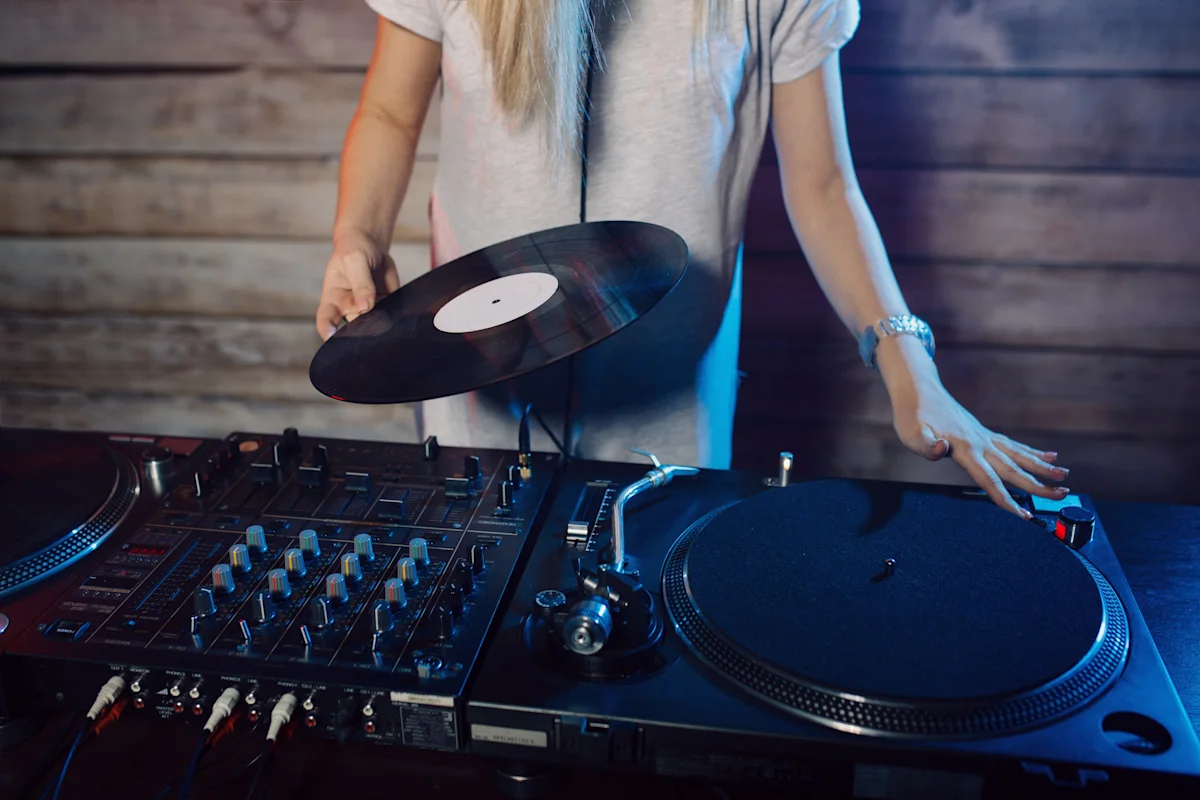
Equipment is a significant part of what you're paying for when you hire a professional DJ. Understanding what they bring helps you assess whether a package price is reasonable and what questions to ask before you book.
Are they called DJ decks?
Yes. "DJ decks" is the correct and widely used term for the playback hardware a DJ uses at a show. In modern setups, this means CDJs (digital media players) or a DJ controller rather than vinyl turntables, though vinyl setups still exist in specialist contexts.
What is the most popular DJ deck?
The Pioneer CDJ-2000NXS2 and the newer CDJ-3000 are the club and event standard across Australia. Most professional DJ booths are built around these units. A pair of CDJ-2000NXS2 players with a Pioneer DJM-900NXS2 mixer costs approximately $10,000 AUD new.
For mobile and event DJs, the Pioneer DDJ-1000 and DDJ-FLX10 are popular controller options. Standalone systems like the Pioneer XDJ-RX3 are increasingly common for mobile work because they remove the need for a laptop. Pioneer DJ remains the dominant brand across Australian venues and events.
What does a standard DJ setup include?
A complete mobile DJ setup includes CDJs or a controller, a mixer, a PA system, cabling, lighting and a wireless microphone. Premium setups add uplighting, LED dance floors and effects units. DJ hire packages bundle all of this, which is why package prices reflect significantly more than playing time alone.
What is a virtual DJ and what is CrowdDJ?
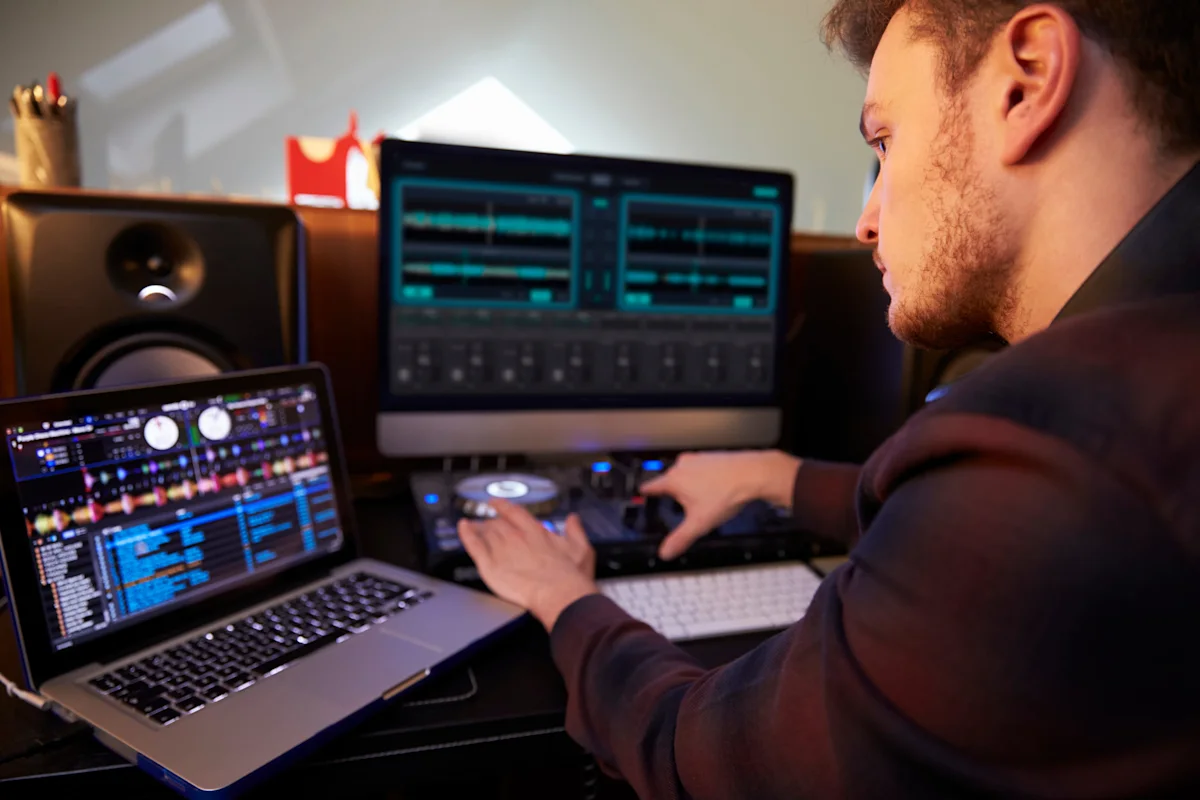
Both terms come up frequently in DJ-related searches but refer to very different things. Neither is a substitute for hiring a professional DJ for your event.
What is Virtual DJ software?
Virtual DJ is a software application that lets DJs mix, cue and process music from a laptop or standalone controller. It is one of the most widely used DJ software platforms globally alongside Serato DJ Pro and Pioneer Rekordbox. For event hire purposes, the software a DJ uses doesn't affect what you pay.
What is CrowdDJ and is it free?
CrowdDJ is an interactive music request app built by Nightlife Music, based in Brisbane. It runs in bars, pubs and hotels across Australia and New Zealand. Guests download the free app, browse a venue-approved song library and queue requests from their phone.
For guests, the app is free to download and use. For venues, CrowdDJ is an add-on to a Nightlife Music commercial subscription. It is not a replacement for a live DJ at a private event.
Is it legal to DJ with Spotify in Australia?
No. Spotify's terms of service limit the platform to personal, non-commercial use. Using it to perform at a paid event or in a public venue breaches those terms. Professional DJs use licensed track libraries and perform at venues that hold a valid music licence through OneMusic Australia. See the FAQ below for the full licensing breakdown.
How to keep your DJ costs down
Being flexible on a few variables can reduce your DJ cost by 20 to 30 per cent without compromising the night.
Book on an off-peak date
Weekdays and off-peak months cost less than Saturday nights in spring and summer. Many DJs offer lower rates for Sundays and mid-week corporate events.
Trim the booking window
If your event has a defined peak music period, book the DJ for that window only. Cocktail hour music can often run from a playlist.
Skip the extras you won't notice
Smoke machines and elaborate uplighting add cost and are rarely missed if the core sound is right. Ask which extras are essential for your venue size.
Book locally
A DJ based near your venue doesn't need to charge travel time or accommodation. This matters more for regional events than city bookings.
Add a photo booth or other entertainment as a bundle
Some suppliers offer a discount when you book a DJ and photo booth together through the same provider.
Compare at least three quotes
Experienced event planners will tell you that quality and price don't move in lockstep. Post your event details on Bark and let the professionals come to you.
How to choose a DJ for your event
The DJ you hire controls the energy in the room for 4 to 6 hours. These are the questions worth asking before you commit.
"Have you DJed at my venue before?"
Venue familiarity matters. A DJ who knows the room's acoustic profile and power layout sets up and runs the night more smoothly than one who doesn't.
"What happens if your equipment fails? "
Professional DJs carry backup equipment. A vague answer here is a red flag.
"Can I hear recordings from similar events?"
A corporate event mix and a wedding reception mix differ in tone, pace and selection. Ask for examples that match your event type.
"What's included in the package?"
Confirm setup and pack-down time, the equipment provided, whether MC duties are included and the travel charge policy.
"How do you handle song requests on the night?"
Most DJs welcome requests. The question is how they balance them against the agreed playlist and the room's energy.
Compare DJ profiles and read real reviews from Australian customers on Bark.
What does DJ hire cost? A quick summary
Most Australians pay $350 to $750 inc. GST for a standard DJ booking, based on Bark data from over 36,690 customer requests. Wedding receptions cost $1,300 to $2,500 inc. GST at the mid-range. A professional 4-hour party DJ with full equipment costs $550 to $900 inc. GST.
The quality gap between a DJ charging $300 inc. GST and one charging $700 inc. GST for the same duration is real. Equipment, experience and professional reliability are all embedded in the price difference.
FAQs
No, not for commercial or public performance. Spotify's terms of service restrict the platform to personal, non-commercial use. Playing it at a paid event or public venue breaches those terms regardless of any other licence you hold.
Australian copyright law requires two separate licences to publicly perform music commercially: one for musical compositions (APRA AMCOS) and one for sound recordings (PPCA). Since 1 July 2019, these have been available jointly through OneMusic Australia. Professional DJs use purchased track libraries from platforms like Beatport and Traxsource, and perform at venues that hold a valid OneMusic licence. Spotify is not a compliant option for commercial event work.

Other guides you might be interested in


Explore all party planning and event related guides
Whether you're planning a 40th birthday party, searching for the perfect wedding entrance song, or organising a corporate event, Bark is here to guide and inspire you every step of the way.