
What is workplace bullying and what can you do about it in Australia?
Last updated June 16, 2026
Workplace bullying in Australia means repeated, unreasonable behaviour that risks your health and safety. This guide covers the legal definition, how it differs from harassment, reporting options and when you may be entitled to compensation.


What is workplace bullying and what can you do about it in Australia?
Last updated June 16, 2026
Workplace bullying in Australia means repeated, unreasonable behaviour that risks your health and safety. This guide covers the legal definition, how it differs from harassment, reporting options and when you may be entitled to compensation.
Written by

This guide is general information, not legal advice. For advice on your specific situation, speak to a qualified employment lawyer.
What is workplace bullying in Australia?
Workplace bullying is defined under section 789FD of the Fair Work Act 2009 as repeated, unreasonable behaviour directed at a worker that creates a risk to their health and safety. Two things must both be true: the behaviour has to be repeated, and it has to put your health or safety at risk, which is why a single incident usually doesn't meet the legal threshold even when it's harmful. The harder question is often where reasonable management action ends and unlawful bullying begins, and that line isn't always obvious.
The difficulty is that the line between tough management and unlawful bullying isn't always obvious. What feels targeted and unfair to the person experiencing it may be treated by law as reasonable management action. At the same time, conduct that is described as 'workplace banter' may, in some circumstances, amount to harassment or other unlawful behaviour.
This guide explains what the law says, how bullying differs from harassment, what your reporting options are and when you may be entitled to compensation.
What is workplace bullying under Australian law?
Under section 789FD of the Fair Work Act 2009 (Cth), a worker is bullied at work when an individual or group repeatedly behaves unreasonably towards them and that behaviour creates a risk to their health and safety.
Two elements must both be present: the behaviour must be repeated and it must create a health and safety risk. The Fair Work Act focuses on patterns of behaviour rather than isolated events. This means a single incident will not usually qualify as workplace bullying under the Act, although it may still be inappropriate, harmful or unlawful depending on the circumstances.
Work health and safety (WHS) laws across Australia also classify bullying as a workplace hazard. Under WHS legislation, employers are legally required to eliminate or minimise the risk of bullying in the same way they would manage any other safety risk at work.
What constitutes bullying in the workplace in Australia?

Bullying in the workplace law sets a specific threshold: the behaviour must be both unreasonable, assessed against an objective standard, and repeated over time. The Fair Work Ombudsman (FWO) and Safe Work Australia (SWA) identify several categories of conduct that commonly meet it.
Bullying takes both direct and indirect forms, and both are equally serious under the law. Direct conduct is visible and overt, such as verbal abuse or intimidation. Indirect conduct, like excluding someone from meetings or withholding the information they need to do their job, can be just as damaging even though it's harder to spot. Cyberbullying counts too: if the behaviour happens through work email, messaging apps or social media in a work context, it falls under the same legal definition as in-person conduct.
Type of bullying | Examples |
Direct | Verbal abuse, threats, belittling or humiliating comments, unjustified criticism, intimidation |
Indirect | Excluding someone from meetings, withholding information needed to do their job |
Workload-based | Impossible deadlines, unrealistic workloads aimed at one person |
Reputational | Spreading gossip or rumours, taking credit for someone's work |
Cyber | Bullying via work email, messaging apps or social media |
What is the difference between bullying and harassment at work?
This is one of the most commonly confused distinctions in employment law. The two terms often overlap but operate differently under Australian legislation.
Bullying requires repeated behaviour. The Fair Work Act focuses on ongoing patterns of conduct, so a single incident will not usually be classified as workplace bullying under the Act.
Harassment at work, by contrast, can be established by a single incident if it’s serious enough. Under anti-discrimination legislation, harassment is defined as any unwelcome conduct that a reasonable person would consider offensive, intimidating, humiliating or threatening.
The other key difference is the connection to a protected attribute. Harassment is linked to characteristics protected under anti-discrimination law, including sex, race, disability, age, religion and sexual orientation. Bullying does not need to be connected to any protected characteristic to be unlawful.
If the mistreatment is connected to a protected attribute, it may constitute both bullying and unlawful harassment. Harassment in the workplace is primarily governed by the Sex Discrimination Act 1984 (Cth), the Racial Discrimination Act 1975 (Cth), the Disability Discrimination Act 1992 (Cth), and relevant state and territory anti-discrimination legislation.
What counts as reasonable management action?
The Fair Work Act specifically excludes 'reasonable management action carried out in a reasonable manner' from the definition of workplace bullying. This is an important carve-out that employers frequently rely on.
Performance management, disciplinary action, restructuring roles and giving critical feedback are all things an employer is entitled to do. The test is whether the action itself was reasonable and whether it was carried out in a reasonable way.
A manager may need to raise performance concerns with an employee. Doing so in a private meeting is very different from humiliating that employee in front of their colleagues, even if the underlying feedback is the same.
Where this becomes complicated is when actions that look like management are actually being used to target a specific person. Employment law professionals on Bark can help you assess whether what you're experiencing crosses the legal threshold.
What should you do if you're being bullied at work?
The most important first step is to document what is happening. Keep a written record of each incident, including the date and time, what was said or done, where it happened and who was present. Save any written evidence such as emails and messages.
If it’s safe to do so, raise the issue internally first. You can speak to your manager (if they are not the person involved), your HR team or a workplace health and safety representative. Put your complaint in writing and request written confirmation that it has been received and will be investigated.
If internal processes don't resolve the situation, you have the right to escalate formally through the Fair Work Commission or your state WHS authority. You can also do so if it isn't safe to raise the issue internally.
How do I report workplace bullying?

For most employees covered by the national industrial relations system, the primary formal avenue is the Fair Work Commission (FWC). You apply for a 'stop bullying order' by lodging Form F72 through the FWC website. There is no application fee.
Once your application is submitted, the FWC notifies your employer and the individuals named in your complaint, giving them seven days to respond. The Commission then aims to hold a preliminary discussion with all parties within two weeks of receiving the application. Most cases are resolved within 16 weeks, often through a voluntary conciliation process.
If you work for a state government or local council, the FWC does not have jurisdiction over your matter. In those cases your state WHS authority is the primary reporting body.
SafeWork NSW, WorkSafe Victoria, Workplace Health and Safety Queensland, and their equivalent regulators in other regions can investigate bullying as a workplace safety issue. They may also issue improvement notices or conduct workplace inspections.
You can also contact the FWO for general advice on your rights at any stage of the process.
Can I sue my employer for workplace bullying?
Yes, in certain circumstances. The Fair Work Commission can issue a stop bullying order but it cannot award financial compensation. If you've suffered a psychological or physical injury as a result of bullying, there are two main legal pathways available.
The first is a workers compensation claim. If workplace bullying has caused you a diagnosable psychological condition and you are unable to work, you may be entitled to weekly income payments.
You may also receive coverage of medical and treatment expenses and, depending on the severity of the injury, a lump sum for permanent impairment. Each state and territory administers its own workers compensation scheme, so entitlements vary by location.
The second pathway is a common law negligence claim. If your employer knew about the bullying (or reasonably should have known) and failed to take action, they may be liable for breaching their duty of care. WorkCover Queensland’s annual report indicates that the average common law payout for 2024-2025 was approximately $207,467.
Proving negligence requires medical evidence of a diagnosed condition and documented proof of the bullying. You also need to present evidence that the employer failed in their duty of care despite being aware of the situation.
Many employment and personal injury lawyers in Australia offer no-win no-fee arrangements for these types of claims.
Wondering if you're owed compensation? Compare employment lawyers on Bark
What are an employer's obligations around workplace bullying?
Under Australian WHS law, employers have a duty to ensure workers are not exposed to health and safety risks, including from bullying. Safe Work Australia classifies bullying as a psychosocial hazard that employers are legally required to manage.
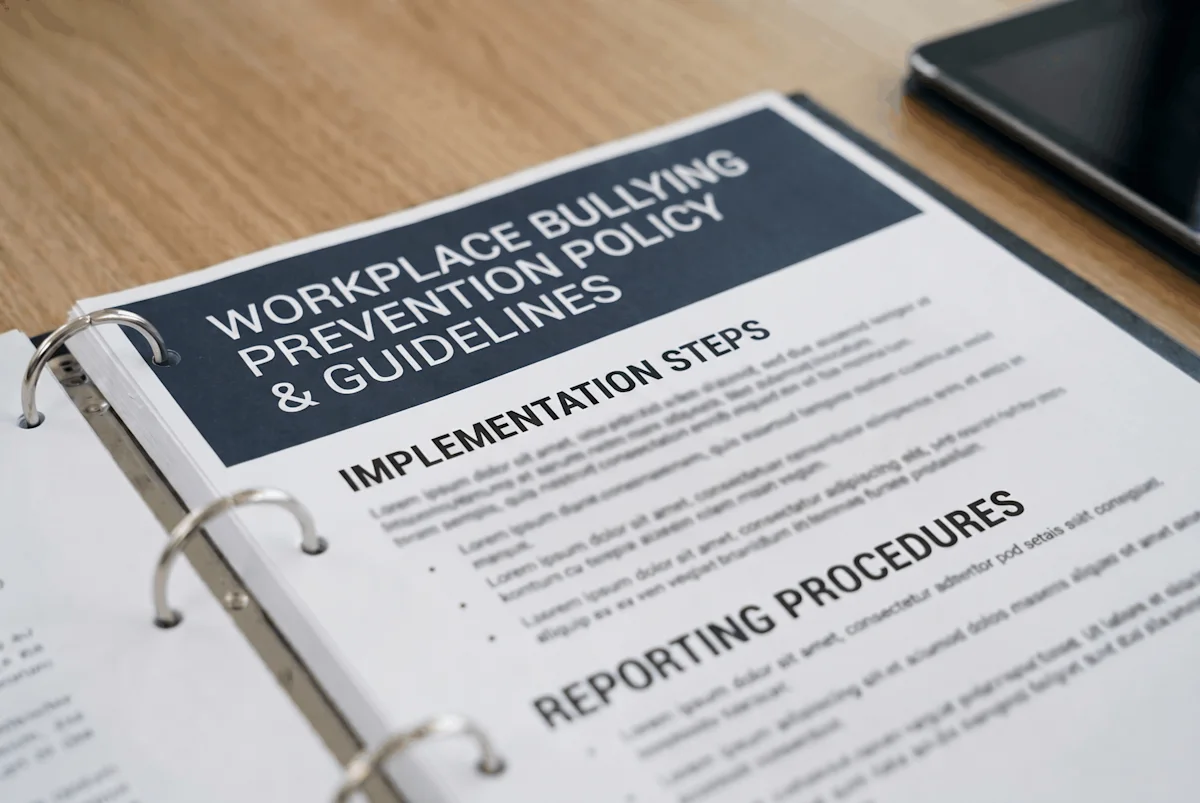
In practical terms, this means having a workplace bullying prevention policy in place and having a clear internal process for reporting and investigating complaints. It also means acting promptly when a complaint is made and taking preventive steps before problems arise. Training managers and staff is part of meeting this obligation under WHS legislation.
If an employer fails to act on a bullying report they were aware of, they risk breaching their WHS duty and may be held personally liable for the resulting harm. Australian courts have found employers liable where they failed to respond to known bullying, with significant compensation awarded to the workers affected. HR consultants can help businesses put the right policies and procedures in place before issues escalate.
Workplace bullying in Australia has a specific legal meaning: repeated, unreasonable behaviour that creates a risk to health and safety. It’s distinct from harassment, which can arise from a single incident and must be connected to a protected attribute under anti-discrimination law. Depending on your circumstances, you can report bullying to the Fair Work Commission or your state WHS authority.
If what you're experiencing feels persistent, targeted and is affecting your health, don't wait for it to escalate before getting advice.
FAQs
Yes, workplace bullying under the Fair Work Act can be carried out by a colleague, a group of colleagues, a manager or a contractor. The law applies to behaviour that occurs 'at work', which includes work-related functions and events outside the office. If a third party such as a client or contractor is bullying you, your employer still has a WHS obligation to protect you from it.


Other guides you might be interested in


Explore all guides about life's legal and financial hurdles
Your essential guide to family law, estate planning, and financial security. Learn when you need expert guidance and help with Bark.