How much does a cleaner cost?
Last updated January 16, 2026
Planning a one-off deep clean, a regular weekly service or a move-out clean? This guide breaks down house cleaner prices in Australia, by hourly vs flat rate, home size and city—plus money-saving tips, example briefs and what to expect on the day.


How much does a cleaner cost?
Last updated January 16, 2026
Planning a one-off deep clean, a regular weekly service or a move-out clean? This guide breaks down house cleaner prices in Australia, by hourly vs flat rate, home size and city—plus money-saving tips, example briefs and what to expect on the day.
Written by

What is the average price for a cleaner?
According to the latest Bark data, the average cost of a house cleaner in Australia is $50 per hour. However, house cleaner prices vary depending on things like the size of your home, how much work needs doing and any extras you add on.
Most cleaning services offer either hourly rates or flat-rate packages (like a fixed price for a 2-bedroom home), and you can expect the total to climb if you include add-ons such as carpet steam cleaning, oven cleaning or exterior window washing.
If you’re just after a straightforward weekly or fortnightly clean for a typical 2- or 3-bedroom place, a simple rule of thumb helps: budget around $120 – $220 per visit. That usually covers about 1.5 to 3 hours of work, depending on where you live, how thorough the checklist is, and whether the cleaner brings their own products. It’s a practical, no-fuss benchmark that makes it easier to plan your regular cleaning budget without any surprises.
House cleaner prices per hour in Australia
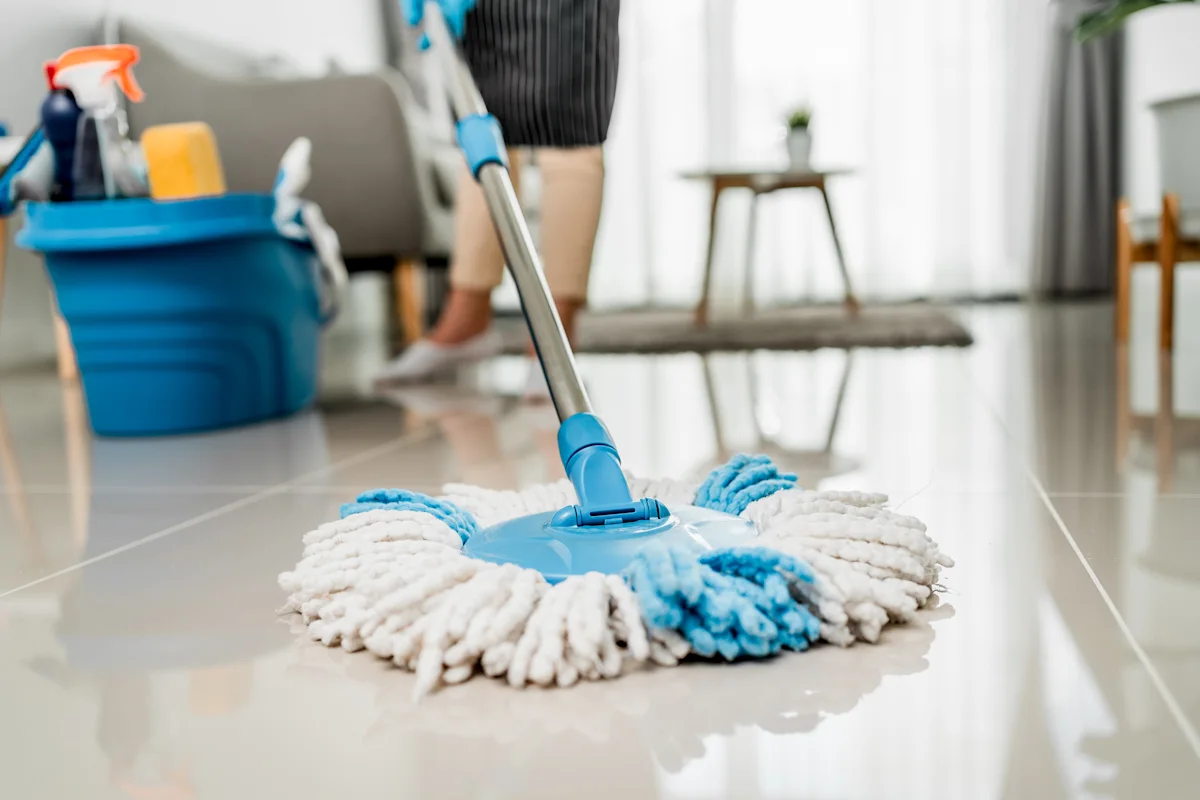
Most Aussie house cleaners charge somewhere between $35 and $60+ per hour, depending on factors like their experience, whether they’re insured, and if they bring their own gear and supplies. This range pops up in most national cleaning cost guides, so it’s a pretty solid benchmark when you’re comparing house cleaner prices.
House cleaner prices by location
Across Australia, most domestic house cleaners charge by the hour, typically ranging from the mid-$40s to low-$60s per hour. Prices tend to be higher in major cities. For example, one major provider’s data shows Melbourne cleaners averaging between $30-$60 per hour, while smaller cities and regional areas sit closer to $40 per hour. While indexes vary slightly, the trend is consistent: bigger cities usually mean higher cleaning rates.
Location | Average cost per hour |
|---|---|
Australia (country average) | $30–$60 |
Melbourne | $35–$65 |
Sydney | $50–$60 |
Perth | $30–$80 |
Adelaide | $50–$80 |
Flat-rate house cleaning price (by size)
A lot of Aussie cleaning services now offer flat-rate packages based on the size of your home, which makes things way easier for budgeting. This suits anyone who prefers predictable house clear prices over hourly variations. These usually come with a set checklist covering the basics—kitchen, bathrooms, living areas and bedrooms. Extras like internal windows, tracks or oven cleaning are often not included unless you add them on.
Most providers make it clear that flat rates only cover a certain scope. So if the place needs way more work than expected, like a seriously grimy oven or heavy grout build-up, they’ll apply an extra-time or overage policy. This keeps pricing fair while still giving you a predictable starting cost, without having to calculate everything by house cleaner price per hour.
Home size (typical) | What’s usually covered | Indicative flat-rate band |
|---|---|---|
1-bed / 1-bath | Whole-home tidy incl. kitchen & bath, surfaces, floors | $120 – $180+ |
2-bed / 1–2-bath | As above plus extra wet area & storage | $150 – $230+ |
3-bed / 2-bath | Larger footprint; more cabinetry/windows | $180 – $280+ |
4-bed / 2+-bath | Multiple bathrooms; more detailing | $220 – $350+ |
Tip: Choose flat-rate for full-home resets; hourly for extras like ovens or blinds.
What affects the cost of house cleaning?
House cleaning prices also depend on several key factors, including the size of your home, how much work is required and any add-on services. Costs are influenced by whether you choose hourly or flat-rate pricing, opt for a standard clean or a deep clean, have multiple bathrooms or pets, or face access issues like stairs or limited parking. Smaller or targeted jobs are usually priced hourly, while full-home cleans often come as flat-rate packages. Below we'll discuss how these different factors can increase or decrease the cost of your house clean.
🏠 Home size & bathrooms
The bigger the place, the bigger the bill - it’s as simple as that. More bedrooms, more bathrooms, more glass, more grout… it all adds time. Bathrooms, especially, are a major time sink, which is why they’re such a big factor in cleaner pricing. Both national cost guides and provider websites consistently point out that home size and wet areas are the number one driver of cleaning costs.
For example: Adding a second bathroom can easily add 30–45 minutes to the job.
🧹 Condition & clutter
A tidy home with clear benches is way quicker to clean than a post-party disaster zone or a kitchen that hasn’t been touched in months. Most cleaning companies mention that their flat rates assume 'typical' levels of mess. If your home needs extra elbow grease, they’ll usually apply a fair-use or extra-time fee—basically, they charge for the extra work instead of trying to rush the job.
For example: Heavy grease build-up in the kitchen can turn a 30-minute clean into a 60+ minute task.
🗓️ Service type
Not all cleaning is priced the same:
- Regular maintenance cleans are the cheapest per visit because they’re quicker and more predictable.
- Deep or spring cleans cost more because cleaners spend extra time on detail—think skirting boards, blinds, oven interiors, tracks, and all the little spots you don’t normally get to.
- End-of-lease cleans are the priciest of the lot. These are super detailed, come with strict real estate standards, and often require add-ons like carpet steam cleaning or blind cleaning.
For example: A regular 2-bed clean might take 2 hours, while an end-of-lease for the same home could take 5–7 hours.
🧴 Add-ons & consumables
Extras can bump up the cost fast. Carpet steam cleaning, oven detailing, blind cleaning, exterior windows, balconies, garages, post-reno dusting—these usually aren’t included in standard packages. Many cleaners recommend booking an extra hourly block for anything outside the standard checklist. Think of these as optional upgrades to make your cleaning more customised.
For example: Oven detailing alone can add 45–90 minutes to a booking.
📍 Location & access
Your location can also nudge the price up or down. Cleaners in big cities generally charge more because demand is higher and travel/parking is trickier. Things like CBD parking fees, dealing with lifts, long walks from the car, or peak-time bookings can increase the total because they slow down the job. Provider cost guides regularly show higher hourly rates in major metro areas compared to smaller towns.
For example: A CBD apartment with paid parking can cost $20–$40 more than a suburban house.
What you actually get for the price
Most reputable Aussie cleaning services follow a fairly standard checklist. Your house cleaner price usually covers kitchen benches and splashbacks, stovetop and appliance wipe-downs, bathroom fixtures and shower screens, dusting, skirting boards, internal sills, switches and handles. Plus, a full vacuum and mop is also included as standard. It’s a clear baseline that shows exactly what you’re paying for.
Flat-rate packages also tend to be clear about what isn’t included. Things like cleaning inside the oven, washing internal windows and tracks, or dealing with blinds usually cost extra unless the provider specifically says otherwise.
Tip: Ask for the cleaner’s checklist and confirm what’s not included before booking.
End-of-tenancy (move-out) cleaning: Where costs land
End-of-lease or move-out cleaning in Australia usually costs more than standard cleans because they’re designed to meet inspection-level detail. Think oven and range hood degreasing, stubborn shower-screen de-scumming, grout work, wiping out cupboards, cleaning internal windows and tracks, skirting boards, and all those high-touch spots agents love to check.
Most providers either set this up as a flat rate with optional add-ons or recommend booking hourly blocks if they can’t gauge the property’s condition. And honestly, that’s fair—national pricing guides all say the same thing: it’s not just the size of the place that drives the cost, it’s the scope of the job.
If you’re booking one of these cleans, it’s worth giving the provider a realistic idea of the current condition (and any 'problem areas'). The clearer you are upfront, the more accurate the quote—and the smoother your final inspection.
How to save on your house cleaner price (without cutting quality)

- Clear surfaces first: Clutter adds minutes to every room. A 10-minute pre-tidy can shave 0.5 to 1 hour across the visit. Provider pages recommend hourly bookings for 'partial' tasks—so make those hours count.
- Prioritise key areas: If on an hourly booking, list must-do rooms (e.g., kitchen, 2 bathrooms) and nice-to-haves. The team starts where value is highest.
- Book regular visits: Regulars usually clean faster; some providers (and many cleaners) reflect this in the recurring rate vs once-off.
- Choose flat-rate packages: When you need a full reset, a flat rate and a clear checklist avoids surprises; go hourly for extras like blinds, oven or balcony where time is variable.
- Share photos for quotes: Photos help the team judge condition and set the right time block, reducing over- or under-scoping (and follow-up fees).
Ready to compare options confidently? Tell us about your home and get quotes from trusted cleaners on Bark. See prices, availability and reviews in one place, then book with confidence. Even if you’re not booking yet, understanding what affects pricing helps you plan and brief more confidently.
FAQs
The average price for a cleaner in Australia is around $35–$60+ per hour. Most cleaners quote by the hour, with total visit costs typically ranging from ~$120–$220 for a basic tidy of a typical 2–3 bedroom home, depending on location and scope. Larger homes, deep or spring cleans and move-out detailing generally cost more.


Other guides you might be interested in


Explore all guides about moving, buying and settling in to a new home
Find step-by-step guides for moving, deep cleaning, organising, and understanding legal essentials like Wills with Bark.