How to reply to new leads quickly and still sound professional
Last updated March 4, 2026
Respond fast, stay calm and turn enquiries into real conversations


How to reply to new leads quickly and still sound professional
Last updated March 4, 2026
Respond fast, stay calm and turn enquiries into real conversations
Responding quickly to new leads matters, but speed alone is rarely what wins work. Many professionals reply fast and still lose the job because the message feels rushed, generic or overly eager. The client sees the reply, but something about it creates hesitation rather than confidence.
This blog looks at how to respond to new leads quickly while still sounding calm, credible and worth trusting. It’s written for professionals who use Bark and want better reply rates without chasing, overselling or overexplaining.
Why speed matters more than you think
When a new lead comes in, the client is usually doing several things at once. They may be comparing options, thinking about their budget or fitting the task around work and family commitments. A prompt reply signals that you’re attentive and reliable, not just available.
Speed works best when it’s paired with relevance. A fast response that feels copied or automated can actually create doubt. Clients often interpret generic replies as a sign that the professional hasn’t fully understood the job or may not give it proper attention later.
Fast does not mean frantic
A common concern among professionals is that replying too quickly makes them look desperate. In practice, that impression usually comes from tone rather than timing.
A calm, timely response suggests you’re organised and in control of your workload. Frantic messages, long explanations or aggressive follow-ups are what make a reply feel off. When a response is clear and measured, speed simply feels efficient.
What your first reply actually needs to do
Your first message doesn’t need to close the job or prove everything you know. Its role is much simpler.
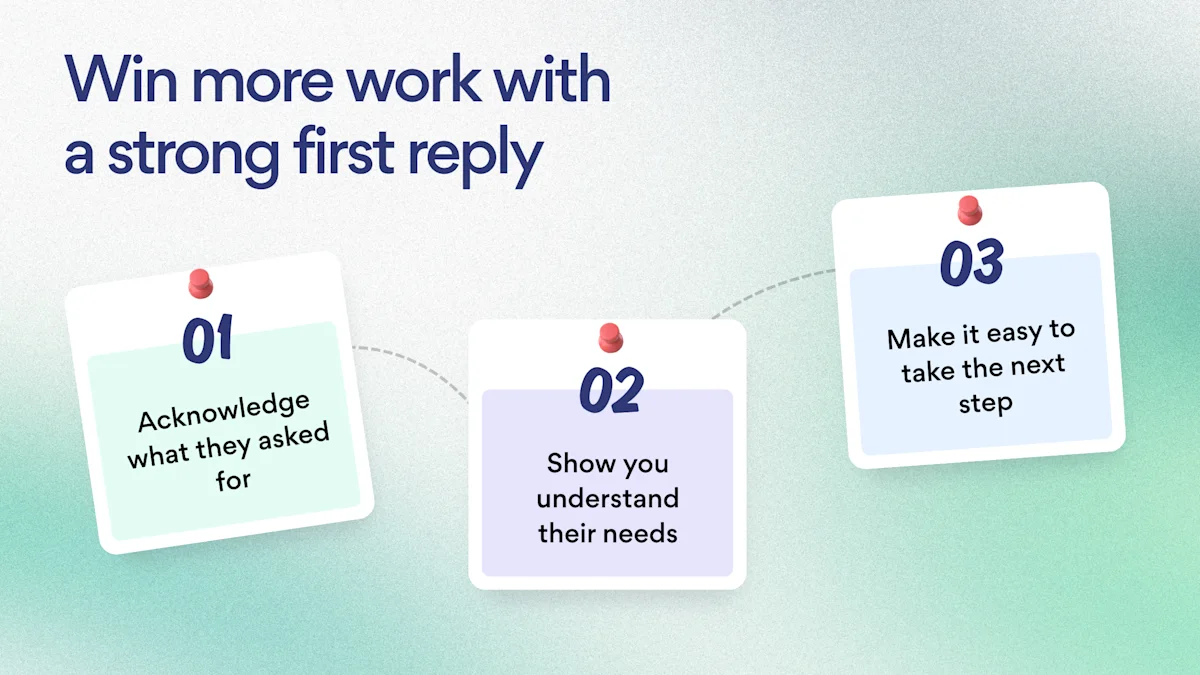
That’s it. Long pitches, detailed pricing breakdowns and full explanations can wait unless the client specifically asks for them. At this stage, the goal is to open a conversation, not finish it.
Use the details they shared
Clients can tell when a response is generic. Referring to one or two details from the request immediately separates you from templated replies.
Mentioning the service type, timeframe or location shows that you’ve read the brief and are responding with intention rather than automation. Even small references can make a reply feel more human and considered.
Keep the tone steady and professional
Trying too hard to sound enthusiastic can backfire. Overly friendly language, excessive punctuation or urgency cues often make messages feel salesy.
Short, clear sentences tend to build more trust. A steady tone feels confident and easier to engage with, especially for clients who are already unsure about who to choose.
Suggest a next step without pressure
People are more likely to reply when the next step is obvious. This could be a quick call, a site visit or answering a specific question.
The key is to frame it as an option rather than a push. Invitations tend to convert better than demands because they leave the client feeling in control of the decision.
Speed comes from systems, not personality
If you consistently respond to leads quickly, it’s rarely because you’re checking your inbox all day. It’s usually because you’ve put simple systems in place that make replying easier.

These systems help you move fast while keeping your tone steady and professional, which is what clients tend to respond to.
When a slower reply can still work
Not every lead needs an instant answer. For more complex jobs, a brief acknowledgement followed by a thoughtful response can be effective.
Letting someone know when you’ll follow up helps manage expectations and keeps trust intact. Silence creates uncertainty, but clarity buys you time.
A better way to think about lead responses
Responding quickly isn’t about chasing work. It’s about reducing uncertainty.
When your replies are timely, relevant and easy to understand, clients don’t feel pressured. They feel supported. And that’s often what turns an enquiry into a genuine conversation.